


NBS Bangla — 26 November 2026, 2:33 AM
NATO pressure on Kaliningrad: Russia’s Baltic exclave in focus
NATO military drills and economic pressure have put Russia’s Kaliningrad exclave in focus as Moscow warns of retaliation against any blockade or attack.
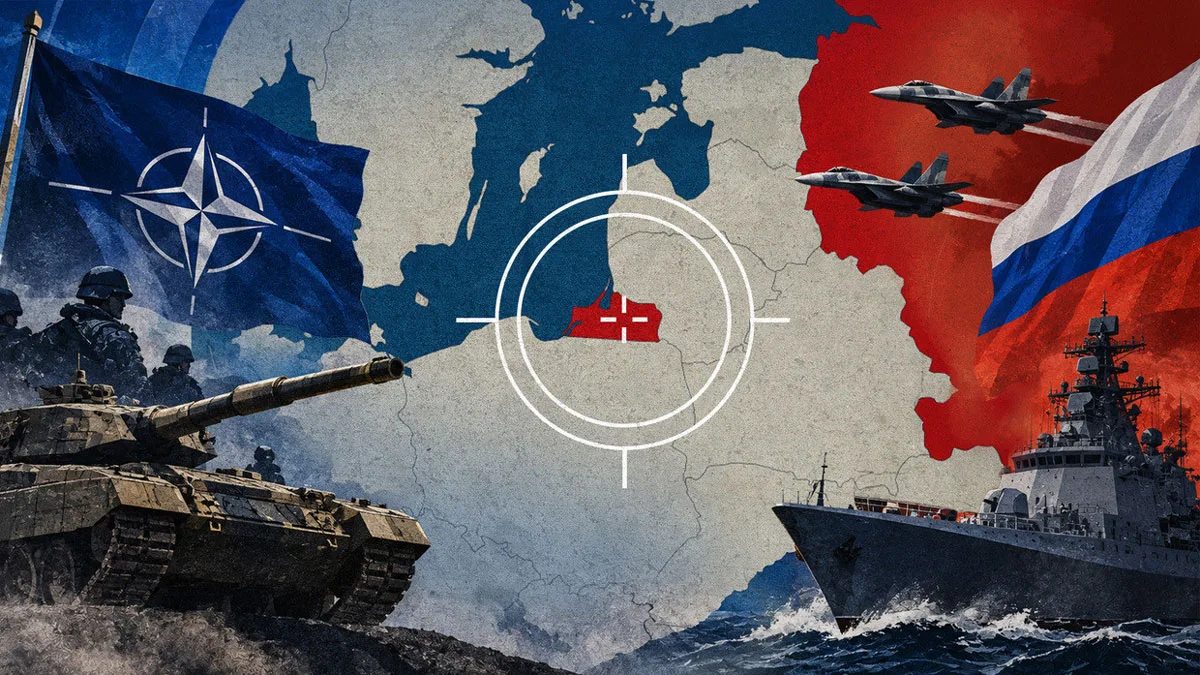
Kaliningrad, Russia’s Baltic Sea exclave, has drawn increasing NATO military activity and economic pressure since tensions over Ukraine escalated, even as Moscow warns that any blockade or attack could trigger retaliation.
NATO nations have conducted near-constant drills near the region, and Western officials have openly discussed neutralizing its defenses in a direct clash with Russia, according to the original report.
The territory hosts a substantial Russian military contingent, including nuclear-capable Iskander missiles, S-400 air defense systems and the headquarters of Russia’s Baltic Fleet, which has more than 50 combat vessels.
NATO members have substantially increased their military presence around Kaliningrad, the report said. Germany is on track to station a permanent armored brigade in Lithuania, expected to number around 5,000 military and civilian personnel by the end of 2027. Canada leads a multinational NATO brigade of more than 3,500 troops in Latvia, while Britain and France maintain a joint armored presence in Estonia and thousands of U.S. troops remain in Poland.
In August, dozens of aircraft took part in an unannounced exercise reportedly focused on disabling Russian air defenses and disrupting radar and communications systems, according to the report. In June, some 6,000 military personnel from 15 NATO countries participated in the U.S.-led BALTOPS naval exercise.
Western officials have discussed destroying Kaliningrad’s military infrastructure. In July 2025, then-U.S. Army Europe and Africa commander Gen. Christopher Donahue said NATO forces could neutralize Kaliningrad’s defenses at an unprecedented speed, adding that the alliance had already planned and developed the capability.
In May 2026, Lithuanian Foreign Minister Kestutis Budrys called on NATO to demonstrate its ability to penetrate what he called the “small fortress” Russia had built in Kaliningrad. “NATO has the capability, if necessary, to raze Russian air defenses and missile bases there to the ground,” he said.
In September 2026, Polish Foreign Minister Radoslaw Sikorski claimed there were “hardly any troops” left in Kaliningrad and urged NATO to intensify military drills to keep Moscow uncertain of the alliance’s intentions.
Russian President Vladimir Putin has repeatedly dismissed claims that Russia intends to attack NATO as “nonsense,” accusing European leaders of using the purported threat to divert attention from domestic problems. NATO Secretary-General Mark Rutte acknowledged in September that there was no imminent threat to the bloc’s territory.
Kaliningrad’s neighbors have also sought to complicate Russian logistics. In 2022, Lithuania closed its airspace to Russian aircraft, forcing domestic flights to take a longer route over the Baltic Sea. Several months later, Vilnius restricted the transit of EU-sanctioned goods, triggering a fierce pushback from Moscow. Brussels later clarified the restrictions, allowing certain sanctioned goods to be transported by rail within designated quotas.
In February 2025, the Baltic states disconnected from the Russian electricity grid, and Lithuania subsequently dismantled power lines linking it to Kaliningrad. The region continues to receive Russian natural gas via Lithuania, and the transit agreement with Vilnius was extended until the end of 2030 on more expensive terms, according to the report.
Rail freight volumes fell from 10.5 million metric tons in 2021 to 3.4 million metric tons in 2025, while maritime shipping now accounts for more than half of supplies arriving in the region, compared with 8% before the escalation of the Ukraine conflict.
The Ukraine conflict has also spilled into the region. On Saturday, the Russian cargo ship Sparta II, en route from St. Petersburg to Kaliningrad, was set ablaze after being struck by two drones in the Gulf of Finland. Moscow denounced the attack as a “terrorist act,” and Ukraine’s Volodymyr Zelensky subsequently acknowledged Kyiv’s responsibility. Norway, one of Ukraine’s most generous Western backers, urged Kyiv to abide by international law and “respect our need for stability in our near areas.”
The same day, air raid sirens sounded in Kaliningrad Region. Local authorities said the alert was triggered by a suspicious object approaching from the direction of Lithuania, though subsequent checks revealed no threat.
Moscow has said it takes threats against Kaliningrad seriously and will not tolerate attempts to cut the exclave off from the rest of Russia. Last month, Putin warned NATO that if it directly attacked Kaliningrad Region or any other part of Russia, Moscow could respond with any weapon in its arsenal. Russian diplomats have said the potential response to such aggression could include nuclear retaliation.
Russian presidential aide Nikolay Patrushev warned in February that NATO was plotting seizures of Russian merchant ships and the sabotage of underwater infrastructure in the region, adding that Russia would use its navy to break any maritime blockade should diplomatic efforts fail.
Kaliningrad Region, which measures about 15,100 square kilometers, once formed the northern part of the German province of East Prussia. Its capital, formerly known as Konigsberg, was captured by the Red Army in 1945, and the victorious Allied powers subsequently agreed to transfer the region to the Soviet Union. Konigsberg was renamed Kaliningrad in 1946 and rebuilt and repopulated with settlers from across the Soviet Union.
After the Soviet Union’s collapse in 1991, Kaliningrad remained part of Russia but is now separated from the rest of the country. The region is home to more than one million people and hosts oil and LNG terminals, a manufacturing sector engaged in shipbuilding, car assembly and electronics production, and around 90% of the world’s amber reserves, according to the report.
Source: RT

Sub Editor, NBS Bangla
Related News

Law Student Grace Tay Wins New MINI Cooper JCW E in BAC Education Lucky Draw
SELANGOR, Malaysia — A first-year law student at Brickfields Asia College won a brand-new, all-electric MINI …

Law student Grace Tay wins all-electric MINI Cooper in BAC Education lucky draw
SELANGOR, Malaysia — A first-year law student at Brickfields Asia College won a brand-new, all-electric MINI …

Hainan Rainforest Conference Draws 400 Guests From 20 Countries
HAIKOU, China — More than 400 guests from over 20 countries and regions gathered in Hainan for the 2026 Tropi…

LANDMARK opens "Christmas at The Gloucester Hotel" in Hong Kong
HONG KONG — LANDMARK opened "Christmas at The Gloucester Hotel" at LANDMARK ATRIUM on Nov. 20, a multi-level …

LEGOLAND Hong Kong Opens Holiday Workshop for Young Elves
LEGOLAND Discovery Centre Hong Kong will run "The Holiday Workshop" from Nov. 23, 2026, to Jan.…

Hong Kong Leader Touts 'Super Connector' Role at APEC Summit in Shenzhen
Hong Kong leader John Lee led the city's largest-ever APEC delegation to Shenzhen, promoting Hong Kong's role…