




Mexico's Jobless Rate Drops Slightly
Web Desk প্রকাশিত: ২৮ জুলাই, ২০২৫, ০৬:০৭ পিএম
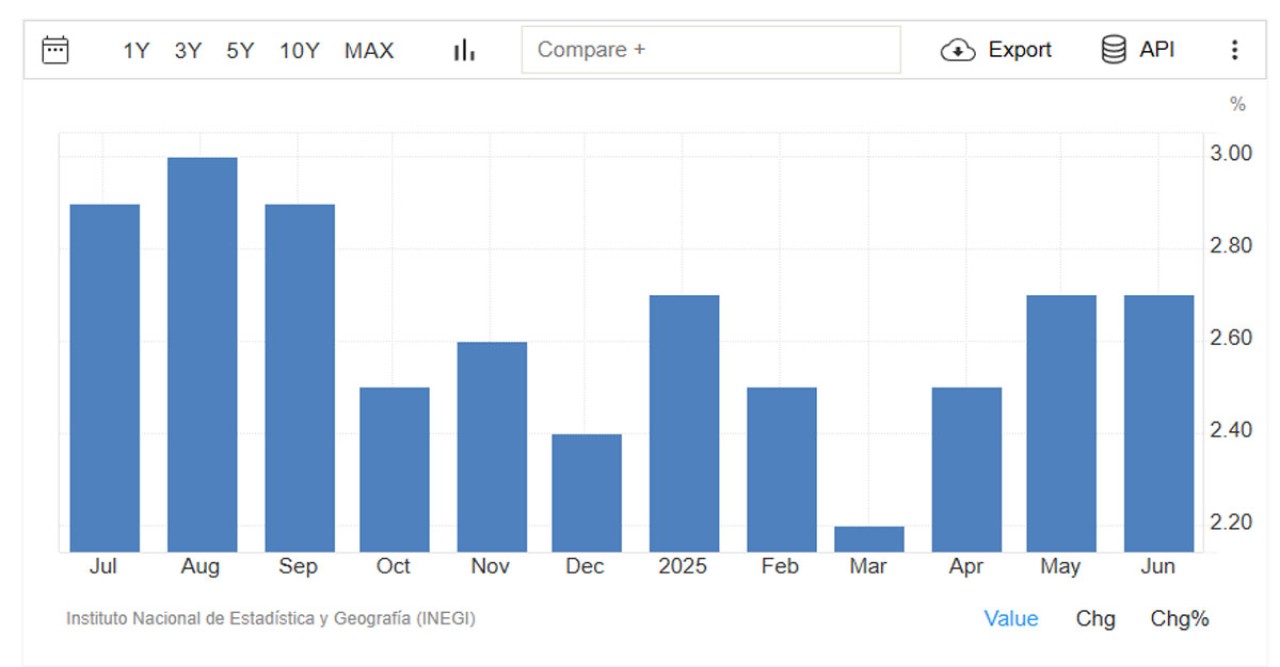
Mexico’s unemployment rate dipped to 2.7% in June 2025, down from 2.8% in May, marking one of the lowest rates since 2002. This slight decline reflects a strong labor market, despite population growth. Data comes from the Instituto Nacional de Estadística y Geografía (INEGI).
The number of unemployed people fell by 21,091 compared to June 2024, totaling 1,661,477. Meanwhile, employment grew significantly, adding 1,219,579 jobs, reaching 60,169,565. This growth shows resilience in Mexico’s economy, driven by sectors like manufacturing and services.
Despite the job gains, the labor force participation rate stayed steady at 59.8%. The growing population offset the employment increase, keeping the participation rate unchanged. This balance highlights both opportunities and challenges in Mexico’s labor market.
Historically, Mexico’s unemployment rate has averaged 3.68% from 1994 to 2025. It peaked at 6.42% in September 2009 during the global financial crisis and hit a low of 2.20% in March 2025, per INEGI records.
Analysts from Trading Economics predict the unemployment rate may rise slightly to 2.8% by the end of September 2025. Long-term forecasts suggest a gradual increase to around 3.0% by 2026, based on econometric models.
Key sectors like automotive manufacturing and tourism have fueled job growth. Mexico’s export-driven economy benefits from strong U.S. demand, supporting jobs in industrial hubs like Monterrey and Guadalajara, according to Reuters.
However, challenges remain. Underemployment, where workers take jobs below their skill levels, affects about 8% of the workforce, per INEGI. Informal employment also persists, with nearly 55% of workers in unregulated jobs.
Women face higher unemployment rates than men, at 2.9% compared to 2.5% for men in June 2025. Youth unemployment, particularly for those aged 15-24, remains a concern, hovering around 6%, INEGI reports.
Government initiatives, like job training programs and investment in infrastructure, aim to sustain employment growth. Policies promoting foreign investment have also attracted companies, boosting job creation in manufacturing and tech sectors.
Mexico’s labor market outlook remains cautiously optimistic. While job growth is strong, addressing underemployment and informal work is crucial. Economists expect steady progress, supported by domestic reforms and global trade ties, per Bloomberg.
The slight drop in unemployment reflects Mexico’s economic resilience. Continued focus on education, skills training, and formal job creation will be key to maintaining this trend and ensuring inclusive growth for all workers.