


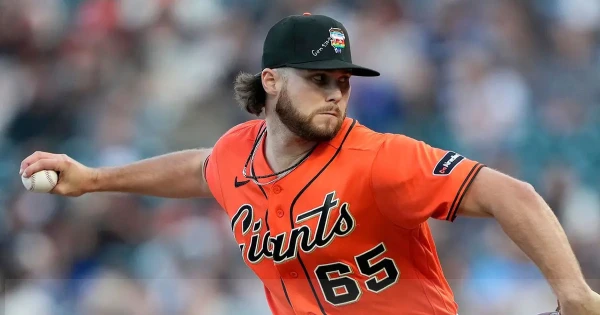
Major League Baseball has become the centre of a heated national debate after it issued a warning to San Francisco Giants pitchers for writing Bible verses on their caps during Pride Night celebrations. The league's decision to enforce uniform regulations has drawn widespread criticism from fans, politicians, and celebrities. The controversy has escalated into a broader discussion about religious freedom, inclusion, and the role of political messaging in professional sports.
The issue began when Giants pitchers inscribed Bible verses on their caps during the team's annual Pride Night, an event intended to show support for the LGBTQ+ community. Major League Baseball's chief communications officer informed the media that the players had been "warned" about their "violations" of uniform regulations. The league clarified that the warning was routine and had nothing to do with the content of the messages.
The league issued a follow-up statement explaining that the prohibition on writing on uniforms applies to any message, regardless of content. The statement noted that the league has given similar warnings in the past for messages like "Dad," "Happy Mother's Day, I Love Mom," and names of family members. The clarification attempted to downplay the initial statement but failed to quell the growing backlash.

The controversy has resonated with a segment of the public that opposes Pride Night celebrations for religious reasons. For many Christians, the rainbow symbolism associated with Pride events conflicts with their religious beliefs, particularly regarding sexuality and marriage. The Giants pitchers, who are Christians, view their expression of faith as a matter of personal conviction rather than defiance.
Actor Rob Schneider publicly supported the players and offered to pay any fines incurred by Christian players who express their faith through uniform messages. Actor Kevin Sorbo also voiced his support and offered to contribute to covering potential fines. Schneider posted on social media that "MLB is anti-Christian," a sentiment that has gained traction among conservative commentators.
Senator Josh Hawley of Missouri has taken a more formal approach, sending a letter to MLB Commissioner Robert Manfred expressing "grave concern" over the matter. The senator accused the league of demonstrating "a pattern of discrimination within MLB against baseball players who profess their Christian faith." He is demanding documents related to how MLB has enforced its uniform regulations over the past five years.
The senator has also requested information about directives issued by the league to display "Black Lives Matter" or "United for Change" messaging on uniforms and equipment. These requests come as part of an investigation within the Senate Judiciary Committee's purview. Hawley told Fox News Digital that "MLB has a sweetheart deal from the federal government" and is "using its power to target Christians and trample free speech."
This controversy follows a similar incident in June 2023, when Los Angeles Dodgers pitcher Clayton Kershaw wrote "Gen 9:12-13" on his cap during Pride Night. The inscription refers to God's covenant with humanity, symbolized by a rainbow as a promise never to flood the Earth again. In Kershaw's case, the league did not issue a public warning, raising questions about the consistency of enforcement.
The current situation has placed Major League Baseball in a difficult position as it attempts to balance its commitment to inclusion with respect for individual religious expression. The league has emphasised that the prohibition on uniform writing applies equally to all messages. However, many critics argue that the enforcement of the rule in this context sends a message that Christian expression is unwelcome.
Conservative pundits and websites have amplified the story, casting the league as intolerant and divisive. The narrative has shifted from a uniform violation to a broader conflict between religious freedom and LGBTQ+ rights. The controversy has put Major League Baseball at odds with a significant portion of its fan base.
The outcome of this dispute could have broader implications for how professional sports leagues manage issues of expression and inclusion. The league's handling of this case will likely be scrutinised as a precedent for future controversies. The involvement of a U.S. senator suggests that this issue may extend beyond sports and into the political sphere.