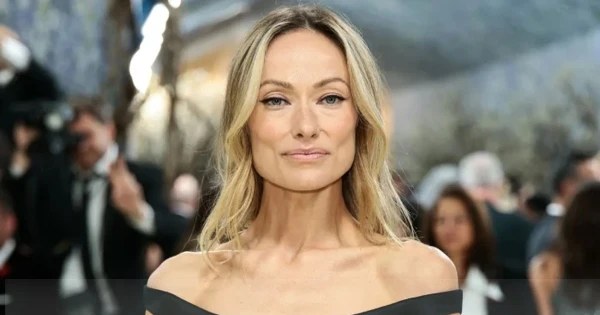
Years after the intense media scrutiny surrounding her film Don't Worry Darling, Olivia Wilde is opening up about the emotional toll of the experience and the unexpected Hollywood icon who helped guide her through it.
The actress and director recently appeared on the popular Call Her Daddy podcast, where she shared candid reflections on the whirlwind press tour that dominated headlines and the personal challenges she faced during that period.
Wilde revealed that one of her most meaningful sources of support came from a surprising place: Pamela Anderson. The Baywatch star offered wisdom that Wilde says has fundamentally shaped her perspective on handling public criticism.
Gordon Ramsay's Daughter Holly Announces Pregnancy, Chef Set to Become First-Time Grandfather

The connection began after Wilde watched Anderson's documentary Pamela, A Love Story. Deeply moved by what she saw, Wilde felt compelled to reach out and express her admiration.
"I actually learned this from — this sounds so crazy. But after I saw the documentary, I reached out to her, and I was like, 'Yo, respect. Just want to say big fan,'" Wilde recounted during the podcast interview.
What followed was advice that has stayed with the Booksmart director ever since. Anderson acknowledged the intense public scrutiny Wilde was facing at the time and offered a perspective that cut through the noise.
"The most rebellious thing you can do is stay soft. Don't let it harden you," Anderson told Wilde, according to the director's account.
The message arrived at a critical moment. As rumors and speculation swirled around the production and press tour for Don't Worry Darling, Wilde found herself constantly tempted to correct the narrative publicly.
The film, which starred Florence Pugh and Harry Styles, generated significant buzz for reasons both related to and separate from its cinematic merits. Reports of behind-the-scenes tensions, coupled with intense public interest in the cast's personal dynamics, created a media storm that proved difficult to navigate.
Wilde admitted on the podcast that she often wanted to directly address the misinformation spreading online and in tabloids. The urge to defend herself and set the record straight was powerful, she explained, but she ultimately recognized that such responses would likely prove counterproductive.
"It was so hard, because I wanted to be like, 'Can I just talk to people? Can I just go and say, That's not true! That's not true!'" she said. "And it was like, 'No, that won't help.' And that was really hard."
Instead of engaging with the controversy, Wilde made a conscious decision to redirect attention toward the film itself and the collaborative effort that brought it to life.
"I was like, 'It's not about me. It's about this movie that everyone works so hard to make,'" she explained, emphasizing that hundreds of cast and crew members had worked through unprecedented pandemic-era challenges to complete the project.
Looking back on that turbulent period, Wilde believes the criticism she faced was often disproportionate to the circumstances. The intense focus on personal narratives, she suggested, frequently overshadowed the artistic work and the collective achievement of everyone involved in the production.
"I felt frustrated that I couldn't defend myself," she admitted, adding that "the pummeling that I took was so insanely disproportionate."
The experience has clearly left a lasting impression on Wilde, who has since continued her work as both an actress and director. Her upcoming projects include roles in several high-profile productions, demonstrating her resilience and commitment to her craft despite the challenges she faced.
Anderson's advice about maintaining softness in the face of adversity has become a guiding principle for Wilde. Rather than allowing the criticism to embitter her or change her approach to her work, she has chosen to embrace a philosophy of quiet strength and emotional preservation.
The entertainment industry has long been notorious for its intense scrutiny of public figures, particularly women in positions of creative authority. Wilde's experience reflects a broader pattern in which female directors and producers often face heightened criticism compared to their male counterparts.
Media experts have noted that the intensity of coverage surrounding Don't Worry Darling was unusual even by Hollywood standards. The combination of a high-profile cast, pandemic-era production challenges, and social media's amplification of rumors created a perfect storm of public attention.
Wilde's decision to share Anderson's advice publicly offers insight into how celebrities navigate the pressures of fame while maintaining their emotional well-being. The support system that develops among women in the entertainment industry, as exemplified by Anderson's outreach, provides a counterbalance to the often harsh realities of public life.
The Call Her Daddy appearance represents one of the few times Wilde has addressed the Don't Worry Darling controversy in detail since the film's release. Her willingness to speak about the experience suggests a sense of closure and a desire to share the lessons she learned with others facing similar challenges.
For Wilde, the takeaway from that difficult period is clear: sometimes the most powerful response to criticism is not fighting back, but refusing to let external noise change who you are at your core. Anderson's message about staying soft in a hard world has proven to be both practical advice and a philosophical stance worth embracing.
As Wilde continues to build her career behind and in front of the camera, the experience has undoubtedly shaped her approach to her work and public life. The support she received from an unexpected source serves as a reminder that solidarity and wisdom can come from the most surprising places in Hollywood.