Microsoft co-founder Bill Gates told a U.S. congressional panel that disgraced financier Jeffrey Epstein may have tried to use details about his personal life as leverage, according to a newly released transcript of his closed-door testimony.
Gates appeared before the House Oversight Committee on June 10 as part of an ongoing investigation into Epstein’s network and the government’s handling of related cases. The transcript, released on June 23, offers a rare and detailed window into the billionaire’s dealings with the convicted sex offender .
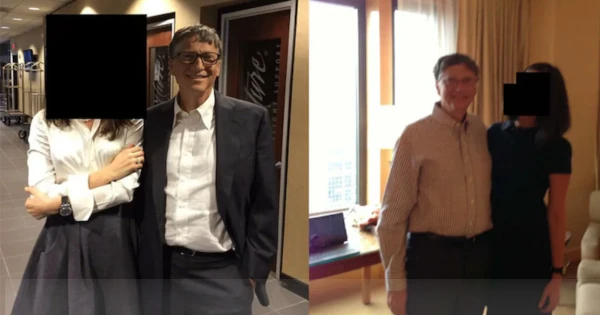
During the nearly six-hour interview, Gates admitted to having extramarital affairs with three women. He told lawmakers that Epstein knew about two of these relationships and appeared to be considering using that information to pressure him .

Gates identified the women as Russian bridge player Mila Antonova and nuclear physicist Karima Nigmatulina. He also acknowledged a third affair with medical entrepreneur Alice Jacobs Nesselrodt after being questioned about an email in which Epstein had mentioned her . The names of some individuals had previously been redacted in public filings.
Gates was adamant that the relationships were entirely separate from his interactions with Epstein. He also emphasized that he was never successfully blackmailed by the financier, who died in a New York jail in 2019 while awaiting trial on federal sex trafficking charges .
However, Gates told lawmakers that a review of emails raised what he described as a "serious probability" that Epstein had contemplated blackmail. He pointed to a draft email from 2013, written by Epstein, that appeared to reference allegations about Gates' personal life .
"He never blackmailed me, but looking at these emails, it raises a serious probability that he contemplated blackmailing me," Gates said, according to the transcript . He described the messages as Epstein "musing on using a mixture of facts and falsities as an effort, almost like a blackmail, to advance some goal" .
Gates said Epstein became aware of the affairs through Boris Nikolic, a former science adviser to Gates who had knowledge of the relationships. Epstein had been involved in negotiating Nikolic’s exit package from Gates’ organization, and Gates believes Nikolic shared the compromising information with Epstein during that period .
When Gates attempted to end their association around 2014, he said Epstein began making veiled threats. These included suggestions that they should remain friends and attempts to secure reimbursement for money Epstein claimed to have paid to a woman with whom Gates had an affair . Gates described these as tactics by Epstein to re-engage and maintain influence.
Lawmakers also questioned Gates about allegations contained in Epstein's emails suggesting that Gates had contracted a sexually transmitted infection and secretly provided medication to others. Gates firmly rejected these claims .
"I never had an STD," Gates told the committee, adding that he never gave medicines to anyone covertly . He suggested that Epstein had combined some truthful details with falsehoods to fabricate a more damaging narrative .
Gates said he met Epstein approximately 12 to 14 times between 2011 and 2014. He said these interactions included dinners at Epstein's residences in New York and Paris, as well as a flight on Epstein's private plane . The meetings, he said, were primarily focused on discussions about philanthropy, as Epstein had promised to connect him with wealthy donors for global health initiatives.
"These promises never resulted in anything," Gates told lawmakers, explaining why he eventually cut ties . He expressed regret for maintaining the relationship, acknowledging that he was aware Epstein had a criminal conviction of a "sexual nature" when they met .
"I was willing to take a chance on meeting with him in a limited role," Gates said. He later admitted this was a "grave error in judgment" .
The renewed scrutiny has also affected the Gates Foundation, which announced an external review of its past interactions with Epstein. Emails previously released showed communication between Epstein and some foundation staff members .
Gates has consistently denied having any knowledge of Epstein's crimes against underage victims. He told the panel that he never attended parties at Epstein's residences and never visited the financier's private island . He also stated that Epstein never introduced him to any underage women .
Melinda French Gates, Gates' ex-wife, had a negative reaction to Epstein when she met him in 2013. Gates testified that she showed better judgment than he did, noting that she urged him to end the association or secure the promised donations quickly .
The investigation is part of a broader effort by the House Oversight Committee to understand the extent of Epstein's connections with powerful figures in politics, business, and philanthropy. Epstein's death was ruled a suicide while he awaited trial on charges of sex trafficking involving minors .