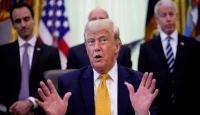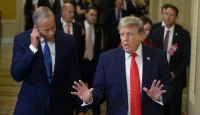
President Donald Trump and Vice President JD Vance are championing a tentative agreement to end the war with Iran, framing it as a significant financial victory for American farmers. However, the administration's claims regarding the use of unfrozen Iranian assets are being met with swift denial from Tehran, leaving sanctions experts and policymakers questioning the deal's precise mechanics and long-term viability.
The interim memorandum of understanding, reached last week, is designed to halt hostilities and reopen the strategic Strait of Hormuz. This waterway, through which approximately one-fifth of the world's oil and natural gas once flowed, would be reopened, and Iran would be permitted to resume selling oil freely during a 60-day negotiation period. The agreement also promises to unfreeze billions of dollars in Iranian assets held in escrow accounts abroad, which have been locked for years under U.S. sanctions.
Critics of the deal argue it fails to address the core justifications President Trump cited for initiating military action against Iran on February 28. These include curbing Tehran's nuclear ambitions, halting its missile program, and ending its support for designated militant groups such as Hezbollah in Lebanon and Hamas in Gaza. The agreement has come under fire for sidestepping these fundamental national security concerns in favor of a temporary pause in conflict.

In response to his detractors, President Trump took to his Truth Social platform to assert that the administration has secured a major concession. He stated that the U.S. Treasury Department would release the Iranian assets into an escrow account controlled by the United States. He specified that these funds would be exclusively used for the purchase of food and medical supplies from the United States, including corn, wheat, and soybeans produced by American farmers. "These are things that are desperately needed by Iran," Trump wrote, portraying the arrangement as a humanitarian necessity that would simultaneously bolster the American agricultural sector.
Vice President Vance, who participated in high-level talks in Switzerland, echoed this sentiment, emphasizing that the goal is to ensure the money benefits the Iranian people rather than funding terrorism. He suggested that the funds would effectively be recycled back into the U.S. economy through agricultural exports. The proposal comes as American farmers, a key political constituency, face economic pressures, and the administration appears keen to demonstrate a tangible domestic payoff from the diplomatic overture.
However, Iranian officials have categorically denied that they are obligated to spend their unfrozen assets solely on American products. Foreign Ministry spokesperson Esmail Baghaei insisted that any agricultural purchases by Iran would be based on "prices and quality," not dictated by Washington. He dismissed the notion that the U.S. could impose such terms, noting the irony that a war supposedly waged to cripple Iran has now seemingly pivoted to enriching American farmers.
Iran's ambassador in Geneva, Ali Bahreini, also rejected Vance's assertion that the U.S. and Qatar would dictate how Iran spends its unfrozen funds. "Iran is the only country who decides what to do with those assets," he told reporters, underscoring Tehran's firm stance on its financial sovereignty. A U.S. official, speaking on condition of anonymity, attempted to dismiss the contradiction, suggesting that Iranian leaders were merely speaking to a domestic audience. Yet, the discrepancy highlights a significant rift in public messaging between the two nations.
Sanctions experts and trade analysts remain puzzled over how the administration's plan would actually be enforced. Joseph Glauber, a research fellow emeritus at the International Food Policy Research Institute, pointed out that Iran currently relies on a diverse range of agricultural suppliers, including Brazil, India, Turkey, the European Union, Canada, Australia, and Argentina. He suggested that forcing Iran to abandon these established trade partners would likely create friction with those competitors.
Under previous sanctions regimes, the U.S. has required that funds from countries importing Iranian goods, such as South Korea's oil purchases, be held in escrow. These funds are typically released only with Treasury approval and are meant for "non-sanctionable" items like food and medicine. However, the mechanism for compelling Iran to specifically buy U.S. crops remains unclear. On Monday, the U.S. Treasury approved the sale of Iranian oil through August 21 without mentioning these escrow accounts.
Richard Nephew, a senior research scholar at Columbia University and a former sanctions adviser, explained that while the U.S. could theoretically instruct a foreign bank to move the money only to a U.S. bank for specific purchases, banks are not legally obligated to comply. If they refuse, the U.S. could sanction them, but Nephew noted that such an aggressive approach is rare, as it would give the impression of treating national security issues as a "cash grab".
The internal dynamics in Iran add another layer of complexity. Hard-liners have reacted angrily to the mere possibility of Iranian funds being used to purchase American goods, viewing it as a betrayal and a gift to the United States. Some have argued that the proposed mechanism violates the signed MOU, which stipulates that frozen funds must be made fully available to beneficiaries designated by Iran's Central Bank. This domestic opposition mirrors the fierce battles over the 2015 nuclear deal, with hard-liners accusing negotiators of capitulation and moderates arguing that diplomacy is the only viable path to relief.
As the 60-day window for negotiations opens, the conflicting narratives and unresolved enforcement mechanisms create significant uncertainty. The administration's ability to deliver a "payday" for U.S. farmers while simultaneously achieving a durable peace depends on bridging these gaps and navigating a complex web of international law, financial logistics, and domestic politics in both countries.