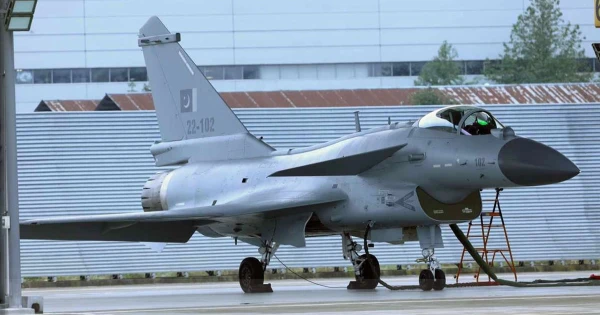
Bangladesh is moving quickly toward acquiring Chinese Chengdu J‑10CE multirole fighters, while Hungary has completed deliveries of additional JAS 39 Gripen aircraft — developments that together reflect a wider international trend: more emerging and mid‑sized air forces are investing in advanced 4.5‑generation combat aircraft to modernize fleets and strengthen regional deterrence.
Reported negotiations indicate Dhaka is preparing to buy up to 24 J‑10CE fighters from China, with media reports and local sources saying officials hope to finalize an agreement in the coming months as part of broader defense and bilateral talks during high‑level visits. The proposed procurement would mark a significant leap in capability for the Bangladesh Air Force, bringing an aircraft class that blends modern avionics, multirole flexibility, and potent air‑to‑air and air‑to‑ground weapons to a force that has operated primarily older platforms.
While China has not issued an official confirmation on the transaction, several independent reports place the unit value for the J‑10CE at roughly $35–40 million, with the total program cost — including training, logistics and sustainment — likely to rise substantially when support and lifecycle packages are added. The structure of the potential deal was described as flexible in reporting, with options ranging from direct purchases to government‑to‑government arrangements and payment schedules that could stretch across multiple fiscal years.

The J‑10CE is described by analysts as a 4.5‑generation fighter, incorporating modern radar and sensor suites, improved avionics, and expanded weapons compatibility compared with earlier variants. For countries upgrading from legacy fighters, aircraft at this generation level provide a balance of capability, cost and faster delivery timelines compared with fifth‑generation platforms.
In Central Europe, Hungary recently received additional Gripen C fighters from Saab, bringing the country’s fleet to 18 aircraft and reinforcing Budapest’s contribution to NATO air policing and regional air defense missions. Saab and Hungarian defence authorities marked deliveries as the fulfillment of a contract amendment signed in 2024, with the manufacturer committed to sustainment and upgrades under an agreement extending into the 2030s.
Hungary’s Gripen reinforcements are intended for the Kecskemét Air Base and the 101st Aviation Wing, serving as a rapid reaction and airspace protection capability for NATO partners in the region. Saab has also undertaken to provide maintenance, upgrades and logistical support through 2036, signaling a longer‑term industrial and operational partnership rather than a single‑transaction sale.
Taken together, the Bangladesh and Hungary developments illustrate two broader patterns in the global fighter market in 2026. First, mid‑sized and emerging air forces are increasingly choosing advanced 4.5‑generation aircraft as the most pragmatic route to significantly improved capability without the expense, supply complexity or long lead times of fifth‑generation fighters. Second, procurement decisions frequently carry wider geopolitical implications, with defense sales often reinforcing security alignments and deepening industrial ties between suppliers and buyers.
Procurement drivers differ by country, but common themes include the need to replace aging fleets, deter regional threats, meet alliance commitments, and secure aircraft that can operate a broad weapons mix while being affordable to acquire and maintain. For Bangladesh, modernization aims to expand national air defense, maritime surveillance and strike capability in a region where air power balances are shifting. For Hungary, incremental fleet expansion bolsters NATO readiness and allows the Magyar Légierö to sustain commitments across alliance air policing duties.
Comparing the platforms themselves highlights why many nations favor 4.5‑generation fighters. The J‑10CE, as described in reporting, offers a modern monoplane layout with contemporary radar, integrated avionics, and compatibility with a range of Chinese sensors and weapons, making it attractive to customers seeking capability improvements at relatively contained costs. Gripen C, a proven lightweight multirole fighter built by Saab, has a long export track record and is widely praised for low lifecycle costs, high sortie rates, and ease of integration with NATO systems where needed.
Costs are a core consideration. Public reporting estimates the J‑10CE unit price around $35–40 million, though add‑ons such as weapons packages, ground support equipment, training and long‑term sustainment typically multiply program totals. Gripen acquisitions and sustainment packages also include long‑term support agreements; Saab’s contracts frequently extend manufacturer maintenance and upgrade commitments over a decade or more to ensure availability and capability growth.
Beyond price and capability, interoperability and political alignment influence purchases. Nations seeking closer security cooperation with Western alliances tend to prefer Western systems that integrate seamlessly with NATO architecture, while others prioritize access, financing, or strategic relationships that follow purchases from China, Russia, or other suppliers. In some cases, geopolitical sensitivities can complicate procurements; neighboring countries and external powers often scrutinize such deals for potential impacts on regional balances and alliance cohesion.
Operational implications for Bangladesh and Hungary will depend on how quickly training, maintenance and logistics are established. Introducing a new fighter type requires pilot conversion programs, ground crew training, supply chain setup for spare parts, and upgrades to base infrastructure — all of which can extend the timeline from contract signature to full operational capability by years. If structured with manufacturer support and multi‑year payment plans, these steps can be smoothed by vendor‑led training and sustainment contracts.
Regional reactions to high‑profile acquisitions vary. In South Asia, any significant capability enhancement for one state prompts strategic recalibrations by neighbors and partners, potentially spurring further procurement, doctrinal changes, or adjustments to force posture. Similarly, Hungary’s Gripen deliveries reaffirm Budapest’s role within NATO’s collective air defense, reducing pressure on partners to provide air policing cover and enabling Hungarian forces to maintain readiness for alliance missions.
The global fighter market in 2026 remains competitive and segmented. Major suppliers — including the United States, Europe, Russia, China and Sweden — offer products across capability bands, from cost‑effective multirole fighters to stealth‑enabled fifth‑generation aircraft. For many buyers, the calculus weighs unit cost, sustainment burden, delivery schedule, and political alignment as heavily as raw performance metrics.
Industry observers note that the tide toward 4.5‑generation fighters is likely to continue for several reasons. These aircraft bridge a capability gap between legacy Cold War designs and modern stealth fighters, provide rapid capability uplift, and can be fielded and sustained more affordably. Nations facing immediate regional security challenges or fiscal constraints often find this balance appealing.
At the same time, demand for fifth‑generation capabilities endures among wealthier states and regional powers seeking the edge in stealth, sensor fusion and advanced networked warfare — though high costs, export restrictions, and limited production rates constrain broader adoption. The market’s near term is therefore expected to remain pluralistic: a mix of advanced 4.5‑generation sales, targeted fifth‑generation acquisitions, and upgrades to existing fleets to extend service life and add modern sensors and weapons.
Procurement transparency and the details of any contracts will shape how these deals are perceived internationally. Public reporting indicated Bangladesh aims to complete negotiations by August and may structure payments across multiple fiscal years, but official confirmations and contract texts will determine actual timelines and obligations. Similarly, Saab’s public statements on Gripen deliveries to Hungary emphasize not only aircraft delivery but long‑term support and modernization commitments through 2036.
For defense planners and analysts, these transactions are timely reminders that modern airpower procurement is not purely about hardware; it also involves training pipelines, sustainment networks, political partnerships and industrial cooperation. Well‑crafted procurement packages that include transfer of technical know‑how, maintenance contracts and training are as crucial as the aircraft themselves in delivering usable military capability.
As Bangladesh advances toward a potential J‑10CE buy and Hungary fields additional Gripens, air forces worldwide will continue weighing near‑term needs against long‑term strategy, balancing affordability, interoperability and political alignment. The evolving picture of global fighter procurement in 2026 underscores how nations of varying size and alliance commitments are reshaping air fleets to meet contemporary security challenges without overreaching budgets or timelines.