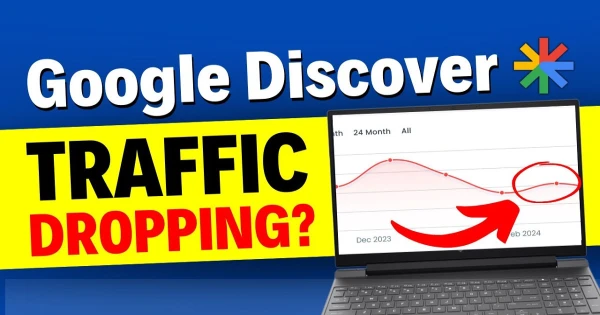
Google’s February 2026 Discover core update caused noticeable shifts in traffic for many publishers, with bloggers and smaller sites among the most affected. The company said the update was designed specifically to improve the Discover feed by surfacing more locally relevant, original, and in-depth content while reducing sensational and clickbait-style posts, and it initially targeted English-language users in the United States.
Google described the update as a broad systems change focused on three core goals: promote content from sites with clear topical expertise, prioritize locally relevant material from publishers based in the user’s country, and demote sensational or low-quality items that rely on attention-grabbing tactics. Because Discover is a passive, interest-driven feed rather than a direct search results page, the shift placed new emphasis on publisher signals that demonstrate depth and locality rather than purely viral headline mechanics.
The rollout stretched over several weeks and completed later in February, giving publishers time to compare pre- and post-update performance; Google warned that traffic fluctuations are normal after such an update and encouraged site owners to wait before drawing conclusions. Third-party monitoring and industry observers reported early patterns that help explain why some domains saw steep declines while others gained visibility.
Meta Unveils $299 AI Smart Glasses Line, Debuting Kylie Jenner Collaboration and Next-Generation AI

Data from industry trackers showed two notable patterns: an increase in state- and region-level personalization within Discover, and a narrowing of top placements among fewer domains. In practice, that meant the Discover feed started showing more local publishers for users in a specific area, while many national or international sites lost the sort of broad Discover placements they previously enjoyed. At the same time, the feed broadened topic variety overall but concentrated visibility among a smaller group of publishers that met Google’s definition of topical expertise.
For independent bloggers and small publishers that previously relied on Discover for large traffic bursts, the consequences were immediate and sometimes severe. Some content creators reported sharp drops in Discover referrals, with anecdotal accounts of declines ranging from moderate to dramatic in the weeks after the update. Those losses were not evenly distributed: publishers with clear, local signals or topic-specific authority fared better than sites with more generalized coverage or sensationalized headlines.
What Google prioritized helps explain these outcomes. The company said Discover would reward “in-depth, original, and timely content” from sites that demonstrate expertise on specific topics, even if the publisher is not an all-topic authority. That means a local news outlet with a robust gardening section could surface for gardening-related Discover cards in a specific region, while a multi-topic site with a single gardening article likely would not. The update therefore shifted the balance away from one-off viral pieces and toward consistent topical depth and local relevance.
Another visible change was Google’s effort to reduce clickbait and sensational headlines in the feed. Publishers that relied on curiosity-gap headlines or promotional phrasing saw less reach, as Discover systems began to prioritize clarity and substance. This aligns with Google’s longstanding push to improve user experience by showing results that match user intent and offer clear value instead of just driving clicks.
Regional differences emerged quickly. Industry reports documented stronger local-layer effects in state-level feeds: New York users saw more New York-based domains, California feeds showed more California outlets, and so on. The localized layer did not eliminate the national core of items all users share, but it added meaningful regional variation that benefited publishers with a physical presence or clear local signals. That regional tilt particularly disadvantaged sites operating outside the United States but targeting U.S. audiences without strong local signals.
Early post-rollout analysis also suggested a reduction in the number of unique domains appearing in top Discover slots, indicating that while Discover covered more topics, those top positions concentrated among fewer publishers. For many smaller sites, this translated into fewer opportunities to appear in high-visibility placements, and therefore fewer chances to drive large referral spikes. Publishers that retained or gained traction tended to have repeat coverage on specific subjects, consistent quality standards, and clear signals of expertise and geographic relevance.
Google’s public guidance with the update emphasized content quality and subject matter expertise rather than specific technical tweaks. That guidance mirrors best practices publishers have relied on for search quality broadly: produce original reporting or insight, demonstrate clear expertise on a topic, avoid exaggerated or misleading headlines, and ensure content is timely and relevant to the audience being targeted. For Discover specifically, Google made clear that localized relevance matters more now, so domain geography, language, and evident local coverage can be decisive factors.
Industry reaction has included practical recovery and adaptation strategies that publishers and bloggers should consider. First, strengthening topic authority helps: create consistent, multi-article content hubs around your key subjects so Google can recognize topical depth on a per-topic basis. Second, add and emphasize local signals where appropriate: publisher location, local datelines, city- or state-level reporting, and structured data that signals regional focus can all improve chances of appearing in localized Discover cards. Third, prioritize headline clarity and substance—avoid curiosity-gap tactics that may now be penalized by Discover systems.
Technical best practices remain important. High-quality images that meet Google’s size and aspect recommendations continue to matter for Discover cards, as do accurate metadata, clear authorship, and fast-loading pages. While the update focused on content relevance and expertise, technical readiness remains a baseline requirement to compete for visual Discover placements and to deliver a good user experience.
The Discover update also prompted a broader strategic reassessment among publishers about traffic diversification. Relying heavily on any single referral channel leaves sites vulnerable to algorithmic changes; the February update underlined the value of building multiple sustainable sources of audience, including direct traffic, email newsletters, social platforms, and search visibility. Many publishers have increased investments in brand-building and first-party channels to reduce reliance on third-party feeds that can change unpredictably.
For publishers outside the U.S. targeting American audiences, the update highlighted the risk of geographic mismatch. Discover’s “local first” emphasis means that a site based abroad but targeting U.S. readers needs robust signals of U.S. relevance—such as U.S.-centric reporting, hosting, and clear author credentials tied to American locales—to maintain visibility. Without those signals, such publishers may see disproportionate declines in U.S. Discover referrals.
Google has not committed to a predictable schedule of Discover-specific core updates, and this was the company’s first update explicitly labeled as a “Discover core update.” That uncertainty makes it important for publishers to continuously monitor performance in Google Search Console, interpret Discover-specific metrics carefully, and compare meaningful pre- and post-update windows before making long-term conclusions. Google recommends waiting at least a week after a rollout completes before assessing impact, and longer windows are often necessary to identify durable trends.
Looking forward, publishers should treat Discover as a distinct product with its own ranking priorities rather than assuming Discover will mirror traditional search ranking behavior. The February 2026 update underlined that Discover rewards topical depth, local relevance, and content quality, and it penalizes manipulative headline craft and low-value content. For bloggers and small publishers, adapting to these priorities means investing in focused subject expertise, strengthening local reporting where relevant, and diversifying audience channels to reduce exposure to any single feed’s volatility.
The Discover ecosystem will likely continue evolving as Google balances user experience, publisher monetization, and new product features. Publishers that respond by improving content quality, clarifying topical authority, and reinforcing local relevance stand the best chance of regaining or growing Discover reach over time. Meanwhile, those who double down on clear, original reporting and first-party audience relationships will be better positioned to weather future changes to Discover and other distribution platforms.