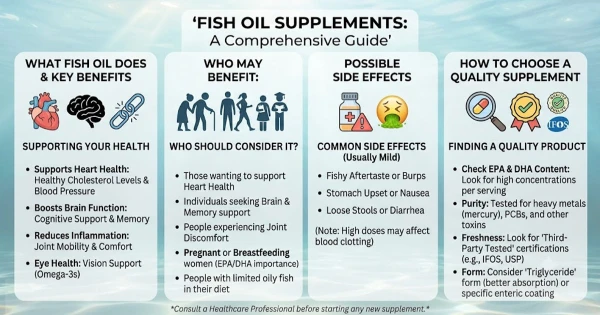
Fish oil remains one of the most searched supplements in the U.S. because many people want better heart, brain, and joint health without taking unnecessary risks. But the best fish oil is not simply the one with the biggest claims on the label; it is the one that fits your health needs, provides meaningful amounts of EPA and DHA, and comes from a brand you can trust. Fish oil may help certain people, but the evidence is not as simple as many ads suggest, especially for general prevention in healthy adults.
What fish oil is
Fish oil is a dietary supplement made from the tissues of oily fish, and it is valued because it contains omega-3 fatty acids, especially EPA and DHA. These fats are important for normal body functions, including cell structure and inflammation regulation. Some fish oil products are concentrated, while others are lower-dose or blended with other ingredients.
EPA and DHA
EPA and DHA are the two omega-3s that matter most in fish oil supplements. EPA is often discussed in relation to triglycerides and heart health, while DHA is especially important for brain and eye structure. Many products list only “fish oil” on the front, so the supplement facts panel is where the real dose is shown.
Best Probiotic for Women (2026 Guide)

Why label reading matters
A product can contain a large amount of fish oil but only a modest amount of EPA and DHA. That means two bottles with the same serving size may deliver very different amounts of active omega-3s. For buyers, the label is more important than the marketing claim.
Why it matters
Interest in fish oil grew because omega-3s are linked to several health functions, and early studies suggested heart benefits. More recent research has been mixed, which is why experts now emphasize using fish oil for the right reason rather than assuming it helps everyone. The strongest support appears to be in specific people, such as those with high triglycerides or existing cardiovascular disease, rather than in all adults looking for broad prevention.
Fish oil also matters because supplement quality varies widely. A poor product may contain less omega-3 than promised, may be poorly absorbed, or may not be as fresh as it should be. That is why third-party testing and transparent labeling are so important.
What the latest research suggests
The research on fish oil is more nuanced than many shoppers expect. Some studies and reviews suggest possible cardiovascular benefits, but large trials have not consistently shown that fish oil prevents a first heart attack or stroke in otherwise healthy people. Harvard Health notes that the largest studies have produced mixed results, and Cleveland Clinic has also cautioned that many fish oil pills do not deliver the dramatic benefits consumers hope for.
At the same time, fish oil may still have a role in certain higher-risk patients. Evidence summarized in medical reviews suggests omega-3s can help lower triglycerides, and some high-dose prescription-style omega-3 treatments have shown cardiovascular benefit in selected groups. That does not mean every supplement will do the same thing, or that over-the-counter fish oil should be treated like a medication.
Who may benefit most
Fish oil is not a universal must-have, but some people may be more likely to benefit from it. These include adults who do not eat fish regularly, people with elevated triglycerides, and some patients with established heart disease who are advised by their clinician to use omega-3 therapy. People with specific dietary patterns or low omega-3 intake may also consider it after discussing it with a healthcare professional.
Fish oil may also be considered when diet alone is not enough to meet omega-3 needs. Still, many experts prefer food first, because eating fish provides protein and other nutrients beyond omega-3s. For many adults, two servings of fish per week is a more evidence-based starting point than jumping straight to supplements.
Health benefits and limits
Fish oil is often promoted for many uses, but the evidence strength differs by outcome. Some benefits are better supported than others, and consumers should know the difference before spending money on a supplement.
Potential benefits
-
May help lower triglycerides, especially at higher doses under medical supervision.
-
May support heart health in selected people, particularly those already at elevated risk.
-
Provides EPA and DHA, which are important omega-3 fats the body uses in many tissues.
-
May be useful for people who rarely eat fatty fish.
Important limits
-
Fish oil has not consistently been shown to prevent heart disease in healthy adults.
-
It is not a replacement for blood pressure control, statins, diabetes management, or a healthy diet.
-
More is not always better, and high doses should be discussed with a clinician.
Possible risks and side effects
Most fish oil supplements are well tolerated, but side effects are common enough that buyers should know what to expect. The most frequent complaints include fishy burps, bad breath, nausea, loose stools, and reflux. Taking capsules with food or choosing an enteric-coated product may help some people.
People who take blood thinners, have bleeding disorders, or are scheduled for surgery should ask a clinician before using fish oil. High doses may increase the chance of side effects or interact with other treatments. Allergies also matter, because fish-based products may not be appropriate for everyone.
How to choose the best fish oil
The best fish oil is usually the one that combines adequate EPA and DHA, good quality control, and a form you will actually take consistently. A pricey bottle is not automatically better, and a popular brand is not automatically the right one for your goals.
What to look for
-
EPA and DHA amount per serving, not just total fish oil.
-
Third-party testing or quality verification.
-
Clear freshness or expiration information.
-
A reputable manufacturer with transparent labeling.
-
A form you can tolerate, such as soft gels or liquid.
-
Instructions that fit your routine, so you can take it consistently.
Common forms
-
Soft gels: convenient and widely used.
-
Liquid fish oil: useful for people who dislike pills.
-
Enteric-coated capsules: may reduce fishy burps for some people.
-
Concentrated omega-3 products: useful when higher EPA and DHA levels are needed.
What to avoid
A fish oil supplement should raise your confidence, not your uncertainty. Be cautious with products that hide the EPA and DHA amounts, make exaggerated claims, or rely on vague “proprietary blends.” Also be careful with fish oil that smells strongly rancid, which can be a sign of poor freshness.
You should also avoid assuming that all omega-3 products are interchangeable. Some are better suited for general supplementation, while others are designed for specific triglyceride goals and may be used differently under medical guidance.
Food first approach
For many adults, food is the smartest first step. Fatty fish such as salmon, sardines, trout, herring, and mackerel naturally provide EPA and DHA along with protein and other nutrients. This approach is often more balanced than relying on a pill alone.
If you do not eat fish, you may still be able to improve omega-3 intake through carefully chosen supplements, but that should be based on your diet and health goals. In other words, the best fish oil is not always the strongest bottle on the shelf; it is the one that matches your needs.
Lifestyle habits that matter more
Fish oil should sit inside a broader heart-healthy routine, not replace it. Diet quality, regular physical activity, sleep, blood pressure control, and smoking avoidance all matter more than any supplement for long-term wellness.
Helpful habits
-
Eat fish regularly if you enjoy it and it fits your health plan.
-
Choose more unsaturated fats from foods like nuts, seeds, avocado, and olive oil.
-
Stay active with regular walking, cycling, swimming, or strength training.
-
Keep up with blood pressure, cholesterol, and diabetes care.
-
Talk to a clinician before starting a supplement if you take medications.
Products that may help
Some general products can make a healthy routine easier to maintain alongside fish oil use. These are not treatments, but they can support better daily habits.
-
Blood pressure monitors.
-
Fitness trackers.
-
Healthy cookbooks.
-
Vitamin organizers.
-
Pill reminders or medication apps.
-
Smart kitchen scales.
-
Water bottles with time markers.
Myths and facts
Myth: Fish oil is always good for everyone
Fact: The benefits are not universal, and the evidence is strongest for specific situations such as high triglycerides or selected heart-risk groups.
Myth: More omega-3 means better results
Fact: Higher doses can increase side effects, and the right amount depends on the person and the goal.
Myth: All fish oil supplements are the same
Fact: Products differ in EPA and DHA content, quality testing, freshness, and formulation.
Myth: Fish oil replaces a healthy diet
Fact: It does not. A nutritious diet and regular exercise remain the foundation of heart health.
FAQ
Is fish oil worth taking every day?
It can be worth taking for some people, especially if diet is low in omega-3s or a clinician recommends it for a specific health reason. For many healthy adults, the benefit is less certain than marketing suggests.health.
What is the best fish oil for heart health?
The best option usually has meaningful EPA and DHA, good quality testing, and a reason for use that matches your health profile. People with heart disease or high triglycerides should discuss the right product and dose with a clinician.
Should I choose fish oil or omega-3?
Fish oil is one source of omega-3 fatty acids, but not all omega-3 products are fish oil. The best choice depends on whether you need EPA, DHA, both, or a non-fish source.
Does fish oil help lower triglycerides?
Yes, omega-3s can help lower triglycerides, especially in higher-dose settings guided by a clinician. It is not the same as saying fish oil is a cure-all for cholesterol or heart disease.health.harvard+2
What are the side effects of fish oil?
Common side effects include fishy burps, reflux, nausea, and loose stools. Higher doses and certain medical conditions may require extra caution.
Can fish oil cause bleeding?
It may increase bleeding risk concerns in some people, especially those on blood thinners or those preparing for surgery. Anyone with a bleeding disorder should ask a clinician before starting it.
Is liquid fish oil better than capsules?
Not necessarily. Liquid can be easier for people who dislike pills, but capsules may be more convenient and easier to tolerate for others. The best form is the one you will take consistently.
How much fish oil should I take?
There is no single dose for everyone. The right amount depends on the reason you are taking it, your diet, your medications, and your health history, so medical advice is important before starting a high-dose regimen.health.
Key takeaways
Fish oil can be useful, but it is not magic. The best fish oil is the one with enough EPA and DHA, verified quality, and a clear purpose that fits your health needs. For many adults, food-first habits still matter more than any supplement, and people with medical conditions should talk with a healthcare professional before starting fish oil.health.
Medical Disclaimer: This article is for informational and educational purposes only and should not be considered medical advice. It is not intended to diagnose, treat, cure, or prevent any disease. Always consult a qualified healthcare provider before making decisions about your health, medications, diet, or treatment.
Affiliate Disclosure: Some links in this article may be affiliate links. If you make a purchase through these links, we may earn a commission at no additional cost to you. This helps support our website and allows us to continue creating free content.
FAQs
-
Is fish oil worth taking every day?
-
What is the best fish oil for heart health?
-
Should I choose fish oil or omega-3?
-
Does fish oil help lower triglycerides?
-
What are the side effects of fish oil?
-
Can fish oil cause bleeding?
-
Is liquid fish oil better than capsules?
-
How much fish oil should I take?