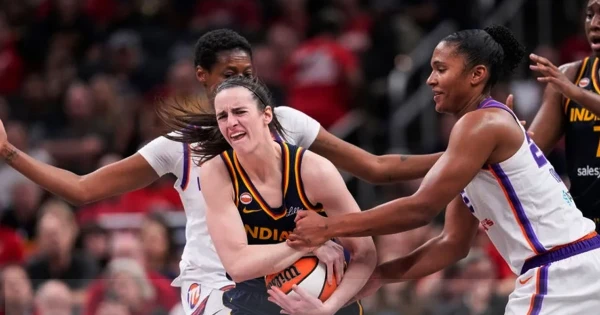
The WNBA has officially denied the Indiana Fever's appeal to rescind Caitlin Clark's fifth technical foul of the season, leaving the rookie sensation just three technicals away from an automatic one-game suspension with more than two months remaining in the regular season.
The league confirmed its decision Thursday following a formal review requested by the Fever organization. The technical was assessed during Indiana's 86-77 victory over the Phoenix Mercury on Monday, when Clark was penalized for clapping during a heated fourth-quarter altercation that involved multiple players from both teams.
Clark, who has emerged as one of the league's most dynamic and talked-about players since being selected first overall in the 2024 WNBA Draft, has now accumulated five technical fouls through the first part of the season. Under current WNBA rules, any player or coach who receives eight technical fouls during the regular season faces an automatic one-game suspension, with additional suspensions coming for every two technicals beyond that threshold.
World Cup 'Has Been Sold Out,' Claims German Legend Philipp Lahm in Scathing Attack on FIFA

The incident that drew the controversial technical occurred during a physical exchange that also resulted in offsetting technical fouls for Phoenix's Sophie Cunningham and DeWanna Bonner, as well as Indiana's Myisha Hines-Allen and Connecticut's Alyssa Thomas, who was playing against the Fever in Monday's matchup. Clark was not involved in the physical confrontation but was penalized for her reaction on the sideline.
Referee Gerda Gatling explained that the technical was issued for both clapping and instigating behavior, which falls under the league's unsportsmanlike conduct guidelines. The ruling has drawn significant attention given Clark's high profile and the fact that she has become one of the most heavily scrutinized players in women's basketball.
Following Monday's game, Clark expressed frustration with the call, suggesting that the penalty was excessive for what she considered a routine emotional response to the intensity of the moment. The Iowa product has built her reputation on competitive fire and emotional engagement with the game, qualities that have made her a fan favorite but have also put her in the league's officiating crosshairs.
Fever head coach Stephanie White confirmed Wednesday that the organization had initiated the appeals process, which involves submitting video clips and a formal written argument to league officials. The coach acknowledged that the team has filed similar appeals throughout the season, though with limited success.
The timing of the league's decision is particularly significant for the Fever, who are navigating a demanding schedule and have relied heavily on Clark's playmaking and scoring abilities. With 26 regular-season games remaining, Clark must now carefully manage her on-court demeanor to avoid reaching the eight-technical threshold that would trigger an automatic suspension.
Sue Blauch, the WNBA's head of referee performance and development, provided context for the league's officiating philosophy in recent comments. Blauch emphasized that officials strive not to eliminate passion from the game but must draw lines when players direct overt reactions toward officials or engage in behavior that crosses into unsportsmanlike territory. Clapping directed at officials, waving them off, or using certain language all fall into categories that referees are trained to penalize.
Clark is currently tied with Atlanta Dream forward Angel Reese for the league lead in technical fouls this season, with both players sitting at five apiece. The shared distinction highlights the physical and emotional nature of the current WNBA season, where competitive intensity has been at an all-time high.
The technical foul appeal was not the only disciplinary action stemming from Monday's game. The league also upgraded contact from Thomas on Clark to a Flagrant Foul 2 and issued a one-game suspension to the Connecticut forward. The play in question involved Thomas making contact with Clark's throat area, which initially went uncalled during the game before being reviewed and penalized by the league office.
Clark's immediate focus, however, is on her health after she exited Wednesday's 111-109 loss to the Mercury early following a hard fall. The rookie landed awkwardly on Phoenix's Valeriane Ayayi while attempting a three-point shot and appeared to tweak her back. The extent of the injury remains unclear, and the Fever have not provided a definitive timeline for her return to the lineup.
White acknowledged the delicate balance her star player must strike between playing with intensity and avoiding further technical fouls. The coach noted that while some technicals are natural byproducts of competitive basketball, there are situations where Clark can exercise better judgment and restraint. White emphasized that the team would continue to remind Clark about the importance of awareness as she approaches the suspension threshold.
Clark has maintained that she will not alter her fundamental approach to the game, stating that playing with passion is central to her identity as a player. She has suggested that if officials choose to penalize her for emotional displays like clapping, that is their prerogative, but she remains unwilling to suppress the competitive fire that has defined her career.
The situation presents a fascinating dilemma for the Fever as they continue their season. Clark's emotional leadership and ability to energize her teammates have been invaluable assets, yet the accumulating technical fouls threaten to cost the team her services for a critical game later in the season. The Fever must now weigh the benefits of Clark's passionate style against the potential consequences of her reaching the suspension threshold.
For the WNBA, the Clark technical foul situation reflects broader conversations about how the league balances competitive intensity with maintaining control over player conduct. As the league continues to grow in popularity and visibility, officiating standards and their consistent application have become increasingly important topics of discussion among players, coaches, and fans alike.
The Fever's remaining schedule includes numerous crucial matchups against conference rivals and playoff contenders, making Clark's availability paramount to the team's postseason aspirations. Each additional technical foul she receives will bring the Fever closer to the difficult decision of whether to rest their star player during moments of heightened emotion or risk losing her to an automatic suspension.
As the season progresses, all eyes will remain on Clark's interactions with officials and her ability to navigate the fine line between competitive passion and conduct that draws penalties. The rookie's response to this latest setback will likely shape not only her season but also the Fever's championship hopes.