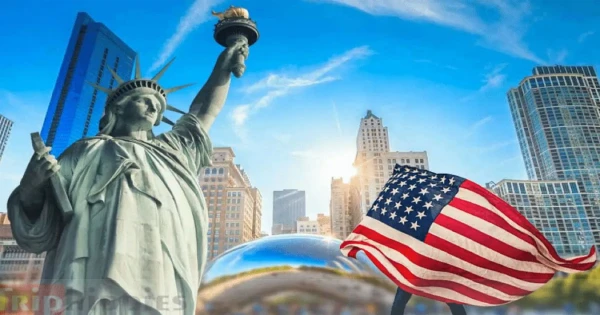
The United States emerged from the Cold War as the world's sole superpower. Following the Soviet Union's collapse in 1991, America stood unmatched in military, economic, and cultural influence. For a brief period, it shaped global institutions, promoted democratic values, and drove economic integration on an unprecedented scale. Yet this era of unchallenged primacy lasted scarcely more than three decades. Today, as the nation approaches its 250th anniversary, that dominance has eroded amid shifting power dynamics and internal challenges.
America's ascent to global leadership traces back to the late 19th century. By the early 20th century, the country had become the world's largest economy, fueled by rapid industrialization, innovation in electricity, chemicals, telecommunications, and aviation. The Second Industrial Revolution propelled the United States forward while European powers grappled with imperial rivalries. World War I further elevated America's role, as it emerged as a creditor nation and key player in European affairs.
After retreating into isolationism in the interwar period, the United States confronted the Great Depression and the rise of totalitarian regimes. World War II transformed the nation into a global military and economic powerhouse. The postwar order saw America establish institutions like the United Nations, Bretton Woods system, and NATO. These frameworks supported reconstruction in Europe and Japan while containing Soviet expansion during the Cold War.

The fall of the Berlin Wall in 1989 and the dissolution of the Soviet Union in 1991 marked the pinnacle of U.S. influence. Analysts described it as the "unipolar moment," a time when no rival could seriously contest American leadership. The United States promoted free-market reforms, globalization, and liberal democratic norms across much of the world. Many nations integrated into the global economy under Washington's guidance, leading to a surge in international trade and investment.
This period brought tangible benefits. Global poverty declined sharply as emerging markets opened up. Technological advances accelerated, and the spread of information connected distant societies. However, the unipolar era also sowed seeds of its own challenges. Military interventions in the Middle East, financial crises, and uneven gains from globalization created domestic discontent in the United States and abroad.
Three major forces accelerated the shift away from unipolarity. The first is the extraordinary rise of China. Beginning with Deng Xiaoping's reforms in the late 1970s, China pursued market-oriented changes while maintaining political control. Its economy grew at remarkable rates for decades, lifting hundreds of millions out of poverty. By some measures in purchasing power parity, China now rivals or surpasses the U.S. economy in size. Initiatives like the Belt and Road have extended Beijing's influence across continents.
The United States still maintains advantages in innovation, alliances, and military projection. American companies lead in many high-tech sectors, and the dollar remains the world's primary reserve currency. Yet the relative shift in economic weight has altered geopolitical calculations. Competition with China now defines much of global strategy, from trade and technology to security in the Indo-Pacific.
The second transformative factor is the digital revolution. Advances in information and communication technologies have accelerated globalization beyond what was imaginable in the 1990s. The internet, smartphones, and social media have democratized information flows while also enabling rapid spread of misinformation and polarization. Artificial intelligence and related breakthroughs promise further disruption in economies and societies. These tools have empowered both state and non-state actors, complicating traditional power dynamics.
Economic interdependence has deepened, but so have vulnerabilities. Financial crises, supply chain disruptions, and cyber threats highlight the fragility of the system. The 2008 global financial meltdown, originating in the U.S., undermined confidence in American-led economic models and fueled skepticism toward globalization in many countries.
The third key element is the surge of right-wing populism and identity-based politics. In the United States and parts of Europe, economic anxieties, cultural shifts, and large-scale migration have bolstered nationalist movements. These trends challenge the postwar consensus on trade, alliances, and multilateral institutions. Political polarization has intensified, affecting governance and foreign policy consistency.
Globally, democracy faces headwinds. According to recent assessments, the share of the world's population living in liberal democracies has declined significantly. Many countries have experienced democratic backsliding, with autocratic governance gaining ground in various regions. This reversal contrasts with the optimism of the early post-Cold War years.
Despite these changes, the United States retains substantial strengths. Its economy continues to generate innovation and attract talent from around the world. Demographic trends, energy independence, and a network of alliances provide enduring advantages. American universities, cultural exports, and entrepreneurial ecosystem remain globally competitive.
Yet structural challenges persist. Rising national debt, political dysfunction, and questions about institutional resilience have raised concerns domestically and internationally. Public trust in government and traditional elites has eroded in many Western societies. These internal issues coincide with external pressures, creating a more contested international environment.
Nuclear weapons continue to deter large-scale conflict between major powers, providing a stabilizing influence absent before World War I. Most governments prioritize economic growth and citizen welfare, sustaining global demand for stability. International cooperation on issues like climate change and public health remains possible, even amid rivalry.
The transition from unipolarity has produced a more multipolar or fragmented order. Regional powers and groupings like BRICS play larger roles. Emerging economies assert greater influence in global forums. This evolution brings both risks and opportunities. Competition can spur innovation, but it also risks escalation if not managed carefully.
As the United States navigates this new landscape, its choices will shape outcomes. Strengthening alliances, investing in technological leadership, and addressing domestic divisions could help sustain influence. History shows that great powers adapt or decline based on their responses to changing conditions. The post-1991 era demonstrated the limits of dominance, just as earlier periods revealed the costs of overreach or withdrawal.
Looking ahead, the global system faces multiple simultaneous challenges. Climate change demands coordinated action. Rapid technological change requires new governance frameworks. Managing great-power competition without conflict tests diplomatic skill. The rules-based order that America helped build is under strain but has not vanished entirely.
The story of American hegemony is one of remarkable achievement followed by swift relative decline. From industrial giant to Cold War victor to brief unipolar leader, the United States reshaped the modern world. Its legacy includes unprecedented prosperity for many and the spread of ideas about individual liberty and self-government. Yet sustaining leadership requires continual renewal amid new realities.
As the nation marks its semiquincentennial, reflection on this trajectory offers lessons. Power is never permanent, and influence depends on adaptability, internal cohesion, and wise engagement with the world. The coming decades will determine whether the United States can redefine its role effectively in a transformed global landscape. The unipolar moment has passed, but America's capacity to shape the future remains significant if harnessed thoughtfully.