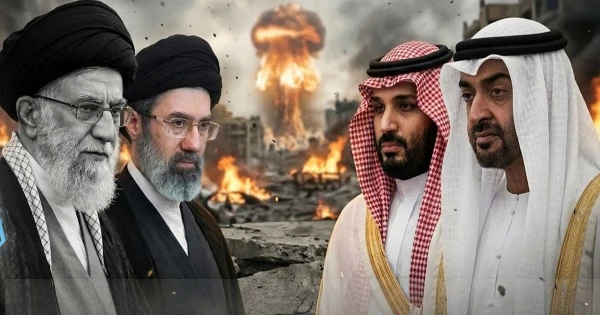
The longstanding rivalry between Iran and Arab Gulf countries has shaped the security landscape of the Middle East for decades. Recent conflicts, including U.S. and Israeli military actions against Iran, have tested the region's traditional security frameworks. As disruptions ripple through energy markets and global trade routes, Gulf nations are increasingly exploring alternatives that go beyond military alliances. Among these, economic cooperation stands out as a potential foundation for more enduring regional stability.
The Persian Gulf region holds immense strategic importance. It contains some of the world's largest oil and gas reserves and serves as a critical transit point for global energy supplies. For years, security in this area relied heavily on external guarantees, particularly from the United States. Gulf Cooperation Council (GCC) members invested significantly in advanced defense systems while maintaining competitive postures toward Iran. This approach provided short-term deterrence but left underlying economic interdependencies underdeveloped.
Recent events have highlighted the vulnerabilities of this model. Disruptions in the Strait of Hormuz demonstrated how quickly conflict can affect energy exports, shipping, and broader economic activity across the Gulf. Countries like the UAE faced direct impacts on oil revenues and infrastructure, while others navigated varying effects on their export capabilities. These challenges have prompted a reassessment of priorities, with several Arab states showing renewed interest in pragmatic economic engagement.

Oman has played a notable role in fostering dialogue and trade links. The sultanate maintains balanced relationships across the region and has advanced preferential trade arrangements with Iran. Bilateral trade volumes have grown, with re-exports and specific sectors benefiting from closer coordination. Such steps illustrate how targeted economic initiatives can proceed even amid broader geopolitical tensions.
Infrastructure projects also signal shifting dynamics. Efforts to revive and expand historical rail connections, including aspects of the Hejaz Railway corridor involving Saudi Arabia, Turkey, Jordan, and Syria, aim to create overland trade routes. These developments could reduce reliance on vulnerable maritime passages and open new avenues for commerce across the broader region.
Economists have long argued that deep economic integration raises the costs of conflict. When nations share intertwined supply chains, investments, and markets, the incentives for restraint grow stronger. Disruptions become more expensive for all parties, encouraging diplomatic solutions over confrontation. This perspective draws from experiences in other regions where trade and joint infrastructure helped overcome historical animosities.
Post-World War II Europe provides a clear example. Former adversaries built institutions that promoted economic interdependence, making large-scale conflict increasingly unthinkable. Shared markets and production networks fostered mutual interests that transcended political differences. While the Middle East context differs significantly, the underlying principle remains relevant: economic ties can gradually build trust where political reconciliation alone falls short.
Iran and its Arab neighbors possess complementary strengths. The Islamic Republic offers energy resources, a large domestic market, and capabilities in certain industries. Gulf states bring substantial capital, advanced logistics hubs, and diversified investment portfolios. Geographic proximity further supports natural trade flows in areas such as petrochemicals, agriculture, logistics, and tourism. Historical records show that ports along the Gulf coasts maintained active commerce, migration, and family links for centuries before modern rivalries intensified.
The UAE, for instance, has sustained practical economic exchanges with Iran despite periods of diplomatic strain. These connections have included non-energy sectors and re-export activities. Similarly, Iraq maintains significant trade volumes with Iran in goods ranging from food to machinery. Such patterns suggest that commercial realities often persist beneath surface-level tensions.
Experts point out that the Gulf economies, though resource-rich, remain relatively small in global terms and depend on open trade routes and foreign investment. Prolonged isolation or rigid bloc alignments could hinder diversification efforts central to long-term visions like Saudi Vision 2030 or the UAE's economic strategies. Diversifying security and economic partnerships helps mitigate risks, much like investors spread portfolios to manage uncertainty.
Practical starting points for cooperation exist in low-politics areas. Joint initiatives on maritime security, environmental protection, disaster response, and infrastructure resilience could yield immediate benefits without requiring major political breakthroughs. These efforts build habits of collaboration and demonstrate tangible gains. Subsequent phases might expand into logistics networks, pharmaceutical industries, agricultural technology, and shared energy projects.
Such incremental progress could eventually support broader regional platforms. A framework integrating economic cooperation with security discussions might help address crises proactively. External actors, including the United States, could encourage these developments by supporting stability-enhancing initiatives rather than solely focusing on military dimensions.
The concept of a "violence trap" underscores these dynamics. When economic stakes are low, conflict carries fewer immediate penalties. As integration deepens, however, the potential losses from instability grow, shifting calculations toward restraint. This does not eliminate political disagreements but makes escalation more costly and less rational.
Challenges remain substantial. Deep-seated mistrust, proxy conflicts, and differing regional ambitions complicate progress. Small Gulf states face demographic and capacity constraints in building independent military power, while larger ones weigh internal political considerations. Over-reliance on arms purchases has not eliminated risks, as recent asymmetric threats have shown.
Nevertheless, recent history offers encouragement. The 2023 China-brokered agreement between Saudi Arabia and Iran reopened diplomatic channels and signaled willingness to manage differences. Oman and Qatar have continued mediation roles. Even amid later conflicts, economic pragmatism has resurfaced, as seen in trade rerouting and infrastructure planning.
Global investors and businesses seek predictability. Regional stability directly influences capital flows into tourism, technology, finance, and renewable energy sectors that Gulf states are actively developing. Disruptions from conflict deter expatriates, delay projects, and raise insurance and operational costs across industries.
Broader Middle East integration efforts, though modest compared to other regions, continue to evolve. Initiatives focusing on trade facilitation, digital connectivity, and joint investments could amplify gains from bilateral steps. The GCC itself has demonstrated resilience through past internal crises and maintains platforms for coordination that might extend outward.
Looking ahead, sustainable security in the Gulf will likely combine military preparedness with robust economic interdependence. Purely militarized approaches have proven insufficient against evolving threats like drones and hybrid tactics. Economic relationships create natural stabilizers by aligning interests and generating constituencies for peace within each society.
The path forward requires patience and pragmatism. Initial small-scale projects can build momentum and demonstrate value. Over time, these may evolve into more comprehensive arrangements that address both prosperity and security concerns. For a region endowed with extraordinary resources and strategic location, harnessing economic potential offers the most promising route to reduced tensions and shared growth.
As Gulf nations navigate a complex international environment, the emphasis on economic foundations reflects a maturing strategic outlook. By investing in mutual prosperity, Iran and Arab states can create conditions where cooperation becomes the default choice, fostering stability that benefits the entire region and global energy markets. This approach does not ignore differences but seeks to manage them within a framework of shared incentives for peace.