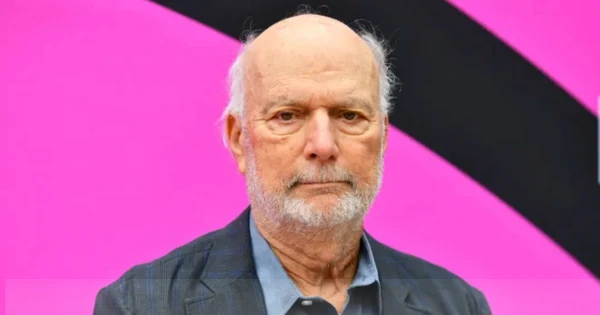
James Burrows, the prolific television director and co-creator of the sitcom Cheers, died June 19 at age 85, his family announced. A defining creative force in American television comedy, Burrows directed more than 1,000 episodes across multiple decades and earned 11 Emmy Awards for his work. He passed away peacefully, surrounded by family, who praised his influence, mentorship and personal warmth.
Born in Los Angeles in 1940, Burrows was the son of Broadway writer-composer Abe Burrows. He trained at the Yale School of Drama and began his career in theater during the 1960s. A theatrical approach to staging and performance became his signature, and he often described himself as a “theatre rat” who treated each television episode as a short play. That stage sensibility informed his timing, rhythm and skill at directing ensemble casts.
Burrows launched his television career after connecting with Mary Tyler Moore while working in theater. Moore’s production company brought him into television, where he directed episodes of The Mary Tyler Moore Show and The Bob Newhart Show. Those early assignments led to steady work and to recognition for his mastery of the multi-camera sitcom format, which depends on live pacing, precise blocking and performer chemistry.

His breakthrough in television drama-comedy came on Taxi, where he directed more than 70 episodes and earned his first Emmy awards. Seeking greater creative control, Burrows partnered with writers Glen and Les Charles to create Cheers in 1982. Set in a Boston bar, Cheers ran until 1993 and became a cultural touchstone. Burrows directed 240 of the series’ 275 episodes and won six Emmys for his direction on the show. He credited the program’s success to a focus on character, ensemble dynamics and consistently sharp execution.
Burrows extended his influence far beyond Cheers. He directed the pilot of the Cheers spinoff Frasier—work that won him another Emmy—and later directed dozens of episodes of that series. In 1994 he directed the pilot of Friends and played a key role in shaping the show’s early tone and ensemble balance; he famously gathered the cast in Las Vegas before the series launch to emphasize the group’s rare chemistry. His later work included directing every episode of Will & Grace during its original eight-season run, where he served as producer and added further Emmy recognition to his résumé.
Known for his ability to launch series, Burrows directed pilots for Two and a Half Men and The Big Bang Theory, both of which became long-running mainstream comedies. He reached his 1,000th television episode in 2015 while working on the sitcom Crowded, a milestone few television directors attain. Over his career he accumulated dozens of Emmy nominations—46 in total—and in 2014 he received the Directors Guild of America’s inaugural Lifetime Achievement Award for television direction.
Colleagues and protégés have cited Burrows’ collaborative leadership and attention to actors as central to his success. He combined theatrical discipline with a relaxed, encouraging atmosphere on set, a mix that often drew naturalistic performances and heightened ensemble chemistry. His family emphasized that beyond professional accomplishments, he will be remembered for kindness, generosity and a remarkable ability to remember people’s names and lift those around him.
Burrows remained professionally active into his later years. His more recent credits included work on the Frasier revival and the 2025 sitcom Mid-Century Modern. He is survived by his wife, Debbie Easton, whom he married in 1997, four daughters and seven grandchildren. His family described his legacy as one defined both by landmark television work and by the many directors, writers and performers he mentored across generations.
As networks and streaming platforms continued to rely on ensemble comedies, Burrows’ techniques—emphasis on rehearsal, live-audience pacing, and actor-driven storytelling—remained staples of writers’ rooms and soundstages. His career traced the evolution of American sitcoms from multi-camera network productions to the varied formats of modern television, and his influence appears in the rhythms and casting choices of numerous contemporary shows.
James Burrows’ death closes a chapter in television history defined by a director who made comedic storytelling feel intimate and immediate. His leadership behind the camera and his devotion to actors shaped multiple generations of popular television, leaving a lasting imprint on American entertainment.