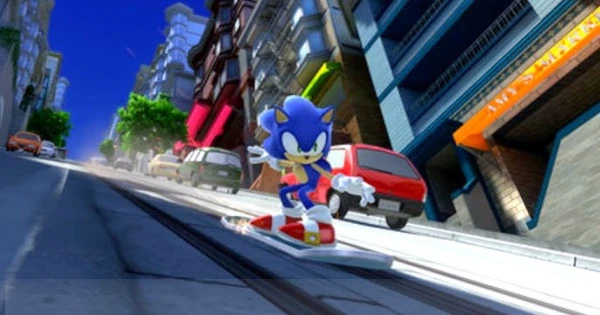
As Sega Sammy Holdings celebrates the 35th anniversary of its iconic blue mascot, the company is leveraging one of the most successful video game film franchises in history to build a lucrative intellectual property empire that could rival the dominance of Nintendo's Mario.
The Sonic the Hedgehog franchise has evolved far beyond its 1991 gaming origins into a global transmedia phenomenon. The release of Sonic the Hedgehog 3 in late 2024 propelled the film series past a major milestone, with the franchise crossing $1 billion in worldwide box office earnings . The third installment alone grossed $490 million globally, surpassing its predecessors and cementing Sonic's status as a Hollywood powerhouse .
A Financial Powerhouse in Motion
This cinematic success has translated directly into Sega Sammy's financial performance. The company reported a dramatic acceleration of its transmedia strategy in the fiscal year ending March 2025, with licensing revenue nearly tripling from ¥5.7 billion in fiscal 2022 to ¥13.3 billion . The Entertainment Contents Business saw a significant increase in profit, driven largely by Sonic-related movie revenues and continued growth in licensing income .

The strategy represents a carefully layered approach to revenue generation. Sega Sammy's business model resembles a "mille-feuille" of diverse income streams, combining licensing, repeat game sales, free-to-play titles, and subscription services . This approach reduces volatility risk while maximizing the value of the company's extensive IP portfolio .
The Blue Blur's Anniversary Celebration
The 35th anniversary of Sonic's debut marks a pivotal moment for the franchise. Sega has launched a comprehensive year-long celebration campaign, beginning with an anniversary trailer in January 2026 and extending throughout the year with merchandise, community activations, and digital content .
The company confirmed a global marketing campaign for 2026, including official anniversary merchandise available through Amazon Merch on Demand, allowing for flexible, data-driven product rollouts . A Sonic Live in Concert tour featuring music from across the franchise's history has also been announced, alongside street art celebrations in major cities .
Beyond Movies: Gaming and Licensing Expansion
The success of the films has created a powerful promotional effect, significantly boosting sales of both new and classic Sonic games. Sonic X Shadow Generations, released alongside the third film, achieved strong sales, while repeat titles from the franchise's extensive back catalog continued to perform well . The company plans to launch Sonic Racing: CrossWorlds as part of its ongoing gaming pipeline .
Licensing partnerships have expanded dramatically, with WildBrain CPLG securing new collaborations across footwear, apparel, food and beverage, and stationery . PUMA has launched a capsule collection inspired by Sonic Racing: CrossWorlds, while JAKKS Pacific renewed its global toy agreement with Sega through 2029 . LEGO has introduced a buildable Sega Genesis console set, and Arcade1Up released a home arcade cabinet featuring classic Sonic games .
Challenging the Industry Standard
Sonic's growth comes as Sega appears to position the franchise more competitively against industry leader Mario. Recent marketing for Sonic Racing: CrossWorlds recalls the famous "Sega does what Nintendon't" advertising of the 1990s, suggesting a renewed competitive spirit .
Industry observers note that while the rivalry makes for compelling marketing, the strategic benefits of association with Mario are significant for Sega's brand visibility . The history of collaboration between the two franchises remains complicated, however. Former Sega developers revealed that Nintendo once demanded Mario always appear ahead of Sonic in promotional artwork for the Mario & Sonic Olympic Games series, even requiring revisions when Sonic's foot was positioned in front of Mario's .
Future Ambitions and Growth Strategy
Sega Sammy's medium-term plan aims for adjusted EBITDA exceeding ¥180 billion cumulatively through fiscal 2027 by focusing on transmedia expansion and global game-as-a-service growth . The company is investing in major IPs and legacy franchises, with plans to release at least four new mainstay titles annually in fiscal 2027 and 2028 .
The company is also expanding its licensing business to other major properties, including Like a Dragon and Persona, replicating the successful Sonic model across its portfolio . The opening of Sega's first official stores in Shanghai and Tokyo reflects the company's commitment to deepening IP penetration and expanding consumer touchpoints .
Sonic's evolution from a 1990s console rival to a global entertainment brand demonstrates the enduring power of intellectual property in the modern media landscape. As Sega Sammy continues to build on this momentum, the competition between gaming's most iconic mascots shows no signs of slowing down.