
Nickel Prices Drop Below $15,200 Amid High Supply and Weaker Demand
Web Desk | প্রকাশিত: ২৮ জুলাই, ২০২৫, ০৬:০৭ পিএম
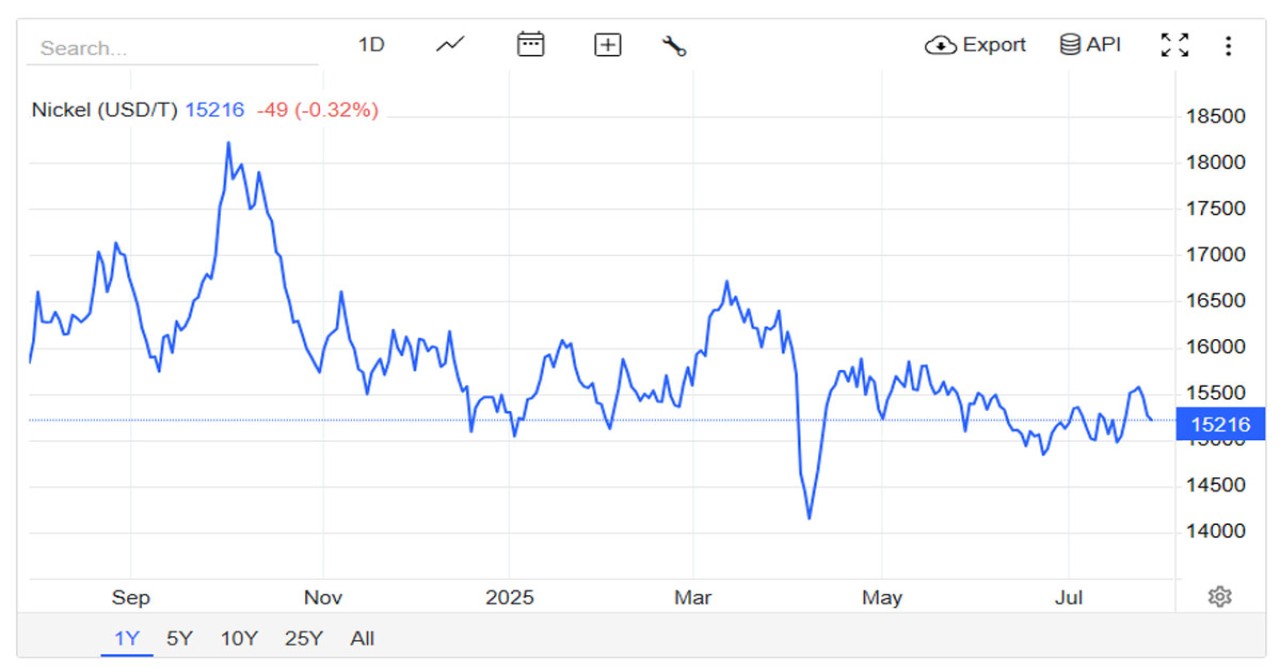
Nickel futures have fallen below $15,200 per tonne, reversing the rally that peaked at a two-month high of $15,640 on July 24. The drop is mainly due to oversupply and weakened demand from China’s industrial sector.
China’s government has increased its push to cut industrial capacity, especially in steel production. This has reduced the demand for nickel, which is a key component in stainless steel manufacturing.
Efforts to reduce output from steel mills are part of China’s broader plan to curb emissions and restructure heavy industries. As a result, nickel demand from stainless steel producers has declined significantly.
Meanwhile, nickel stockpiles at London Metal Exchange (LME) warehouses have increased by 40,000 tonnes this year, reaching a total of 190,000 tonnes. This rise in supply is pressuring prices further.
The increase in global supply is also linked to strong refining activity by Chinese companies operating in Indonesia. These refiners have helped boost global nickel output despite regulatory changes.
Indonesia, one of the world’s top nickel producers, has cut its mining quota by 120 million tons, bringing the total down to 150 million tons for the year. This move reduces global supply by about 35%.
However, even with the supply cuts, nickel prices have remained soft throughout the year. This suggests that the market does not expect these cuts to significantly tighten overall supply conditions.
Investors appear to believe that high stockpiles and weaker demand will continue to dominate the market. As a result, nickel prices remain under pressure, and there’s limited optimism for a quick rebound.
Nickel is a critical metal used primarily to make stainless steel and various industrial alloys. It is widely used in food preparation equipment, transportation, medical tools, electronics, and power systems.
The largest producers of nickel include Indonesia, the Philippines, Russia, New Caledonia, Australia, Canada, Brazil, China, and Cuba. These countries supply the bulk of the world’s nickel to global markets.
Nickel is traded as futures contracts on the London Metal Exchange (LME), with a standard contract size of 6 tonnes. These futures serve as a global benchmark for nickel pricing and trade activity.
The recent price changes have raised concerns among producers and investors. While Indonesia's reduced quotas aim to balance the market, the growing inventory in warehouses suggests oversupply is still a major issue.
The weak demand outlook is tied to the slowdown in global manufacturing, especially in Asia. China’s efforts to restructure its industrial base have further weighed down demand for raw materials like nickel.
At the same time, many traders are watching how the nickel market will react in the second half of the year. Much depends on whether global economic conditions stabilize and industrial activity recovers.
If Chinese demand picks up again or if further supply cuts are made, prices could find support. But until then, the oversupply issue will likely continue to limit any major price gains.
Trading platforms like Trading Economics provide data on nickel futures for reference purposes. These prices are based on over-the-counter (OTC) and contract-for-difference (CFD) instruments and are not meant for investment decisions.
In summary, the nickel market is currently facing downward pressure from high inventory levels and falling demand. Even with reduced mining activity in Indonesia, the outlook remains cautious due to global supply dynamics.