
Spain’s Strike Surge: 4-0 Rout of Saudi Arabia Signals Title Intent at World Cup
Abdullah Sahel | প্রকাশিত: ২২ জুন, ২০২৬, ০৬:১৭ এএম
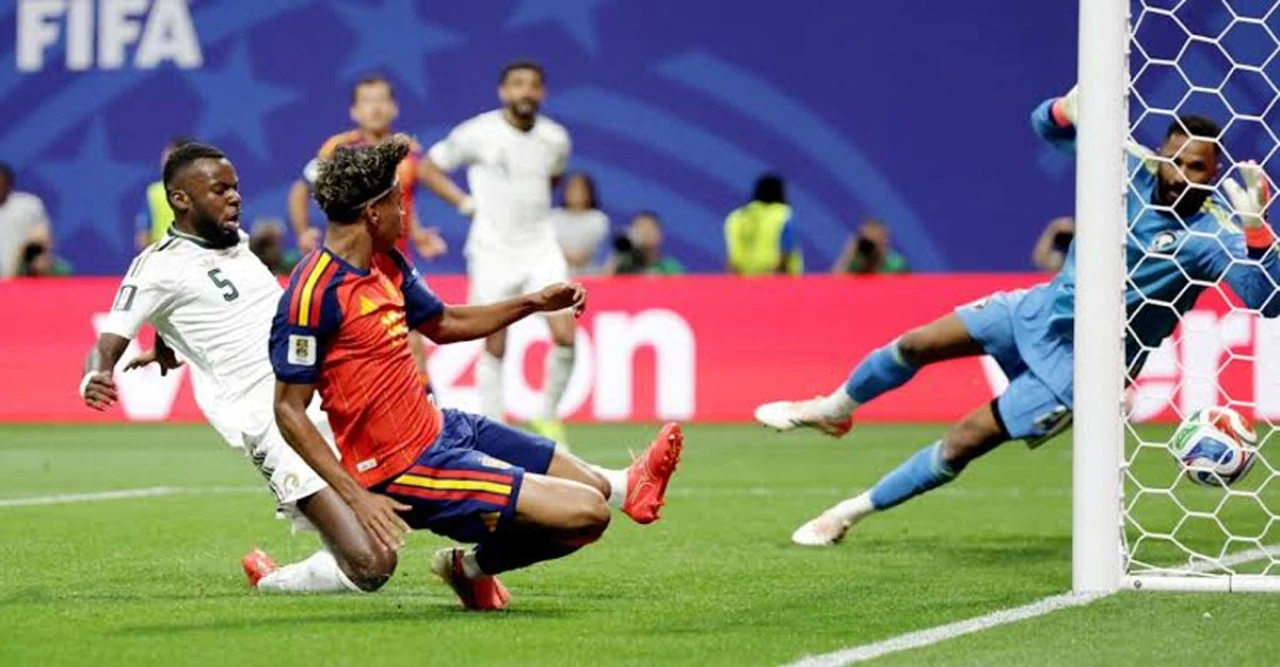
Spain delivered a dominant, clinical performance to beat Saudi Arabia 4-0 at the Mercedes-Benz Stadium in Atlanta, sending a clear message about their ambitions in the World Cup. After an opening 0-0 draw with Cape Verde that raised questions about their form, La Roja responded with a commanding display of possession, movement and finishing that left their opponents overwhelmed and propelled Spain to the top of Group H.
Spain controlled the tempo from kickoff, using precise passing and off-the-ball movement to unlock a defensive low block set by Saudi Arabia. The visitors had planned a compact 5-4-1 formation intended to frustrate Spain’s attackers, but the strategy collapsed under sustained pressure. Spain produced three goals inside the first 24 minutes, effectively deciding the match long before halftime.
Mikel Oyarzabal opened the scoring in the 10th minute after a swift left-side attack. He delivered a low, inviting cross into the box where 18-year-old Lamine Yamal finished with a composed touch. The goal marked Yamal’s first at a World Cup and highlighted the risk Spain’s creative attackers pose to any organized defense.
Spain doubled the lead in the 21st minute. From a corner, a flicked header by Dani Olmo created a chance near the six-yard box. Amid Saudi Arabia’s scramble, Aymeric Laporte redirected the ball with his head and Oyarzabal finished coolly, showing clinical instincts inside the penalty area. Three minutes later the score became 3-0 after another well-worked sequence: Marc Cucurella’s chesting down of a cross allowed Olmo to head the ball on, and Oyarzabal again found the net to complete a brace before the break.
Spain’s midfield presence was decisive in the opening period. Rodri re-established control in central areas, dictating pace, recycling possession and threading incisive passes that repeatedly opened space in Saudi Arabia’s defensive block. His positional discipline and range of passing helped maintain Spain’s rhythm and prevented the visitors from building any meaningful counterattacks.
Coach Luis de la Fuente began the second half by conserving energy from his opening-game starters, replacing Oyarzabal and Yamal with Ferran Torres and Yeremy Pino. The substitutions did not diminish Spain’s offensive threat. In the 49th minute the fourth goal arrived from a set-piece sequence: Alex Baisen’s corner led to a volley from Cucurella that Saudi goalkeeper Mohammed Al-Owais initially saved, but the rebound struck defender Hassan Al-Tambakti and deflected into the net, awarding Spain a 4-0 lead.
The match remained overwhelmingly one-sided. Spain’s passing accuracy and high pressing limited Saudi Arabia’s time on the ball and opportunities in the final third. Saudi Arabia managed their first on-target shot only after the 80th minute, underlining how thoroughly Spain neutralized their opponents’ attacking outlets.
Spain nearly extended the margin midway through the second half when Ferran Torres broke into the box following a defense-splitting pass from Mikel Merino. Al-Owais produced a strong save to deny Torres, and the shot ricocheted just wide of the post. Late in stoppage time, a Pedro Porro cross appeared to result in a Torres finish that hit the net, but a lengthy VAR review ruled the play offside and disallowed the goal.
The emphatic win corrects the narrative that grew after Spain’s cautious opening draw with Cape Verde, which had prompted concerns about squandered creativity and lack of cutting edge. Against Saudi Arabia, Spain combined possession dominance with direct, incisive transitions and reliable finishing. Their attacking unit mixed veteran composure with youthful audacity, and the midfield balance limited opportunities for the opposition to threaten.
Statistically and tactically, the match underscored Spain’s strengths: superior control of possession, quick rotations to exploit central and wide pockets of space, and effective set-piece delivery. The performance also highlighted bench depth that can sustain attacking pressure when starters are rested. Coach de la Fuente’s decisions to rotate while maintaining intensity showed foresight in managing player workload across tournament play.
For Saudi Arabia, the result exposed vulnerabilities in defending set pieces and dealing with sustained, multi-front pressure. Their initial approach to sit deep and invite Spain in did not prevent gaps from opening in the middle; once Spain’s midfielders found rhythm, the visitors could not prevent clear chances. The team will need to reassess defensive structure and transitional spacing to compete more effectively in subsequent group matches.
With this result, Spain takes an early lead in Group H and reasserts itself among the tournament favorites. The victory showcased tactical discipline, attacking variety and the ability to convert pressure into goals—qualities often associated with title contenders. As group play continues, Spain will look to maintain momentum, manage squad rotation, and protect their place at the top while preparing for progressively tougher opposition.
Spain’s comprehensive 4-0 win provided more than three points; it offered reassurance that the team, blending established internationals and rising stars, can produce high-level performances under pressure. Their display in Atlanta served as a reminder that expectations remain high and that La Roja intend to be measured seriously as the World Cup progresses.