
'House of the Dragon' Season 3 Review: Finally Finding Fire After Two Years Away
Omor Farooq | প্রকাশিত: ২৩ জুন, ২০২৬, ০৮:৩০ এএম
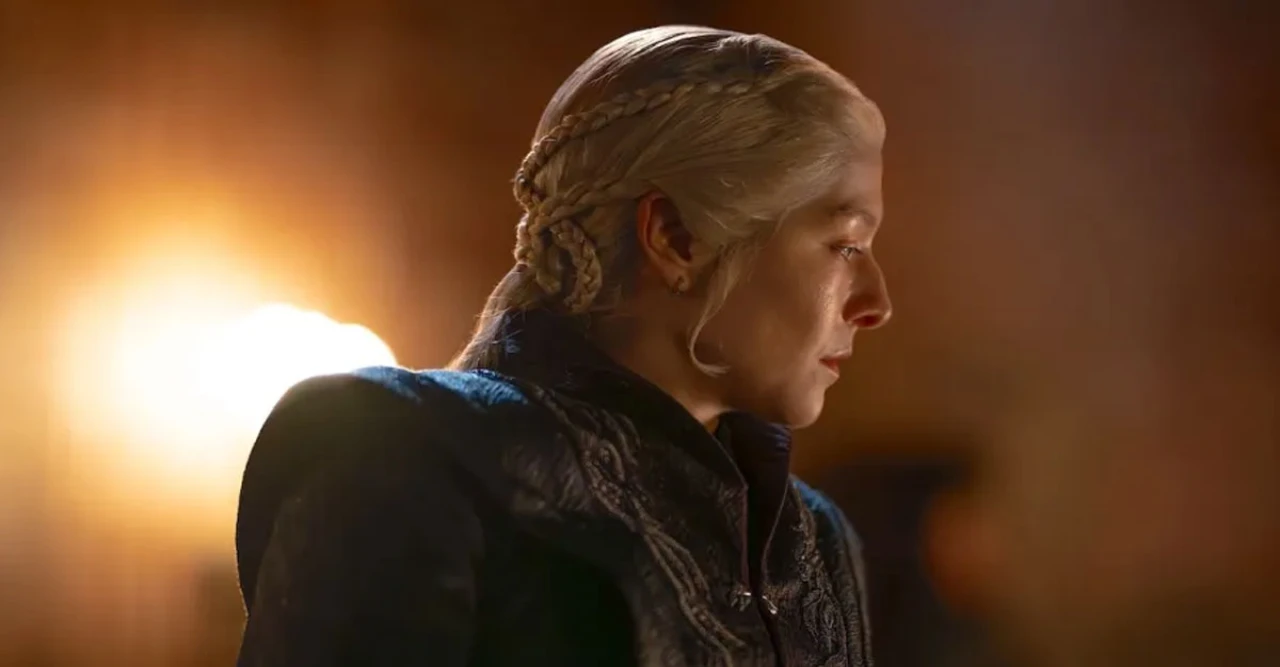
The Targaryen civil war reaches a pivotal turning point in the third season of HBO's fantasy epic, premiering June 21, as the series attempts to balance massive spectacle with the intimate character work that made its predecessor legendary.
After a two-year hiatus, the dragon-filled drama returns with an ambitious eight-episode run that struggles with an overcrowded cast of similarly named characters while occasionally delivering some of the franchise's most compelling storytelling to date.
The series has long suffered from what might be called the "Andor problem" in television criticism. When a franchise delivers an exceptional installment that redefines expectations, subsequent entries often face unfair comparisons. House of the Dragon has carried the weight of Game of Thrones' legacy since its premiere, and that burden has only grown heavier as audiences have witnessed the success of more focused spinoffs like A Knight of the Seven Kingdoms.
That shorter series demonstrated the power of contained storytelling with its six-episode arc, complete narrative resolution, and refreshing absence of dragons. Its simplicity highlighted precisely what the main prequel has frequently lacked: clarity of purpose and manageable scope.
The first two seasons of House of the Dragon presented viewers with an overwhelming abundance of characters, political machinations, and flying reptiles. With only ten episodes in the debut season and eight in the second, separated by extended production gaps, the show has struggled to maintain narrative momentum. Each promising development seemed undercut by time jumps or lengthy hiatuses that dissipated whatever tension the writers had carefully constructed.
Season three continues this pattern through its opening episodes, delivering moments of brutal entertainment alongside scenes that drain away audience investment. The Battle of the Gullet serves as the season's opening spectacle, featuring impressive but ultimately hollow special effects work that never quite convinces viewers they are watching events unfold at sea. The massive naval campaign feels artificial despite its ambitious scale, and the dragon battles that once thrilled audiences now risk becoming routine.
The show's willingness to dispatch major characters remains intact from its predecessor, yet these deaths carry considerably less emotional weight. Game of Thrones mastered the art of meaningful character deaths that resonated with audiences precisely because viewers had grown deeply invested in those individuals. House of the Dragon kills off characters with similar frequency but without the emotional foundation that made those moments devastating in the original series.
However, the third and fourth episodes represent a significant shift in quality and focus. These installments showcase a welcome return to character-driven storytelling that explores the political and social dimensions of Westeros with surprising nuance. The series suddenly remembers that it can entertain without filling every frame with dragons.
Emma D'Arcy delivers their finest performance yet as Rhaenyra Targaryen, finally able to demonstrate previously unseen dimensions of the character. The portrayal becomes unexpectedly humorous and unpredictable, revealing the psychological journey of a ruler who spent years convincing herself of her entitlement to the throne without ever developing a coherent agenda for what she would actually do with that power.
Matt Smith continues to shine as the morally ambiguous Daemon, while Olivia Cooke remains one of the series' most compelling performers as the conflicted Alicent. Their scenes together crackle with the tension of former allies navigating an increasingly dangerous political landscape.
The season cleverly draws parallels between the power struggles of Westeros and contemporary political realities. The show examines how elite factions battle for control while ordinary citizens suffer regardless of who ultimately claims victory. This thematic depth elevates the material beyond standard fantasy fare, though the execution occasionally feels heavy-handed.
Budgetary crises and institutional failures across the Seven Kingdoms mirror modern concerns about government accountability and bureaucratic dysfunction. The show explores how nations governed by feuding oligarchs inevitably neglect the needs of their populations, creating a political commentary that feels remarkably timely without explicitly stating its real-world connections.
New additions to the cast bring fresh energy to the proceedings, with James Norton standing out as Ormund Hightower, an ally to the royal faction whose motivations reveal themselves slowly over the course of the season. His performance adds another layer of complexity to an already crowded ensemble.
Despite these strengths, the season remains burdened by its own ambitions. The third episode represents the series at its best, combining wit, intelligence, and more intimate storytelling that recalls the qualities that made A Knight of the Seven Kingdoms so successful. The fourth episode maintains much of that momentum but with slightly diminished returns.
The question remains whether this improvement represents a genuine evolution or merely a temporary blip in an otherwise inconsistent series. House of the Dragon has demonstrated that it can deliver exceptional episodes when it focuses on character development rather than spectacle. Whether the show can maintain that quality across an entire season remains uncertain given its tendency to bite off more than it can chew.
For fans who have stuck with the series through its fits and starts, the third and fourth episodes offer genuine rewards. The show finally seems to understand that its greatest asset lies not in computer-generated dragons but in the complex, flawed human beings who ride them. If the remainder of the season builds on this foundation, House of the Dragon may yet fulfill the promise that has always seemed just beyond its reach.
The series returns with enough quality material to justify its continued existence, even if it never quite achieves the heights of its predecessor or the focused excellence of its more streamlined spinoffs. For those willing to navigate its crowded cast and occasionally overwhelming spectacle, there is genuine dramatic satisfaction to be found in this latest installment.