
$17.5 Billion Federal Loan Package Aims to Spark Largest U.S. Nuclear Build-Out in Decades
Mousumi Akter | প্রকাশিত: ২৪ জুন, ২০২৬, ০৪:৪৮ এএম
The Trump administration has announced a $17.5 billion financing initiative to accelerate the development of up to ten new large-scale nuclear reactors across the United States. The ambitious plan, unveiled by the Department of Energy, targets the surging electricity demand driven by the rapid expansion of data centers and artificial intelligence infrastructure .
Energy Secretary Chris Wright confirmed the conditional loan commitments on Tuesday, describing the effort as the starting point for a major expansion of America's nuclear capacity. The administration aims to have all ten reactors under construction by 2030, with commercial operations expected to begin in the mid-2030s .
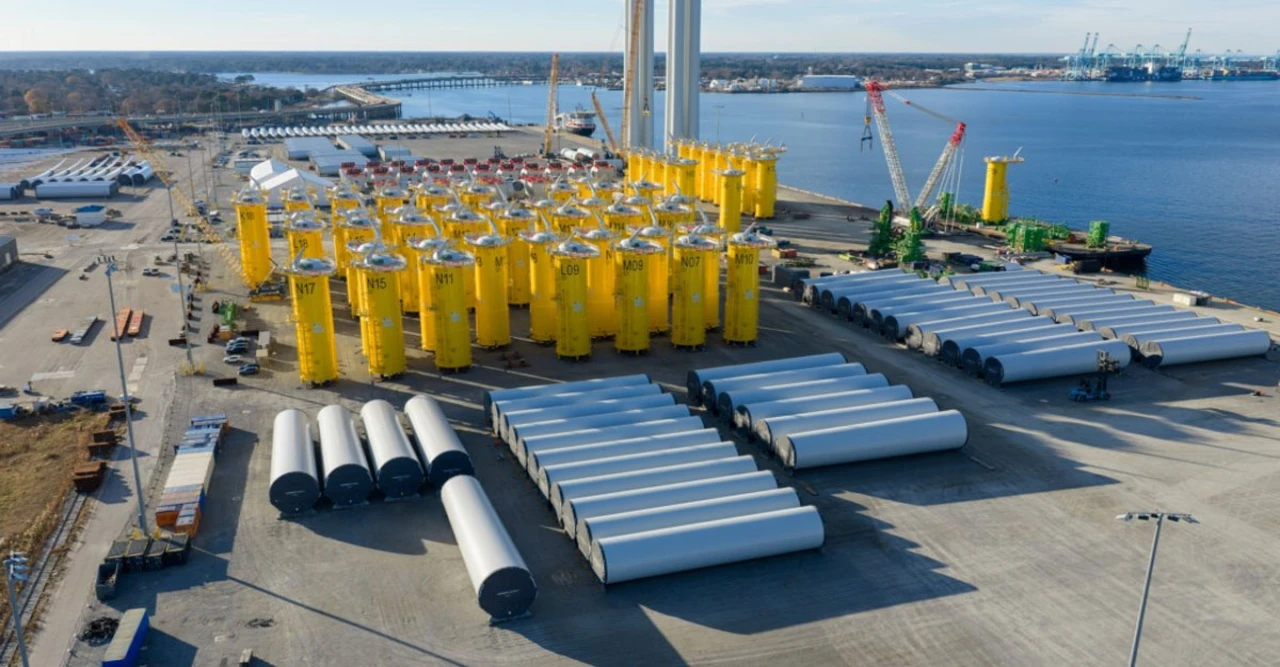
The federal financing is structured to support up to five projects, with each site hosting two reactors. The loans are specifically designated for the procurement of long-lead components—such as reactor pressure vessels, steam generators, and structural modules—rather than for general construction costs. This strategy is intended to rebuild the domestic nuclear supply chain and reduce overall project timelines .
Energy Department officials estimate that this advance purchasing approach could accelerate deployment by up to three years. Greg Beard, director of the Office of Energy Dominance Financing, emphasized that standardization is key to cost reduction, stating that repeated construction of the same design is essential to driving down expenses .
The reactors will utilize Westinghouse's AP1000 design, the same technology deployed at Georgia Power's Plant Vogtle. Those units, completed in 2023 and 2024, faced significant delays and substantial cost overruns. Energy Secretary Wright acknowledged the challenges of the Vogtle project, citing supply chain disruptions and the COVID-19 pandemic, but maintained that the underlying reactor design is "robust and sound" .
Wright expressed confidence that building multiple reactors simultaneously across several sites will create construction expertise and a more efficient supply chain. He projected that the timing and cost of the new plants will "well outperform" the recent Vogtle experience .
The initiative represents a key component of President Donald Trump's executive order to quadruple domestic nuclear power capacity by 2050. The White House has signed multiple executive orders aimed at streamlining regulatory processes and accelerating energy project approvals .
Westinghouse President and CEO Dan Sumner stressed the importance of building nuclear power at "fleet scale" to ensure American leadership in artificial intelligence and advanced manufacturing. He noted that industrialized nuclear deployment is essential for the industries that will define the next century .
Under the terms of the loan program, each project will be jointly owned by Westinghouse and a utility or energy company partner. The Department of Energy confirmed that Westinghouse and its partners have signed letters of intent with seven potential collaborators, though the specific utilities and project locations remain undisclosed pending final selection .
The financial structure requires substantial private investment. Westinghouse and each partner utility must commit approximately $500 million in equity per project, creating roughly $1 billion in private capital per two-reactor site. The combined private equity contribution across all five projects is expected to reach $5 billion .
Critics of the nuclear expansion plan have raised concerns about cost and safety. Opponents argue that nuclear power remains more expensive and carries greater risks than other low-carbon energy sources. However, the administration contends that the standardized approach and public-private partnership model will mitigate financial risks for taxpayers .
The push for nuclear power comes as data center electricity consumption continues to surge. Government estimates indicate that data centers accounted for approximately 4% to 5% of national electricity use in 2024, a share projected to nearly triple by 2028. Some analysts forecast an overall 20% increase in nationwide power demand over the next decade .
Department officials have described the financing as "very, very low risk to American taxpayers," citing strong demand from technology companies willing to enter long-term power purchase agreements. Energy Secretary Wright stated that the administration expects significant interest from utilities and developers ready to move quickly on construction .