
Senate Delivers Rare Bipartisan Rebuke to Trump, Passes Resolution to End Iran War
Omor Farooq | প্রকাশিত: ২৪ জুন, ২০২৬, ০৫:৩৭ এএম
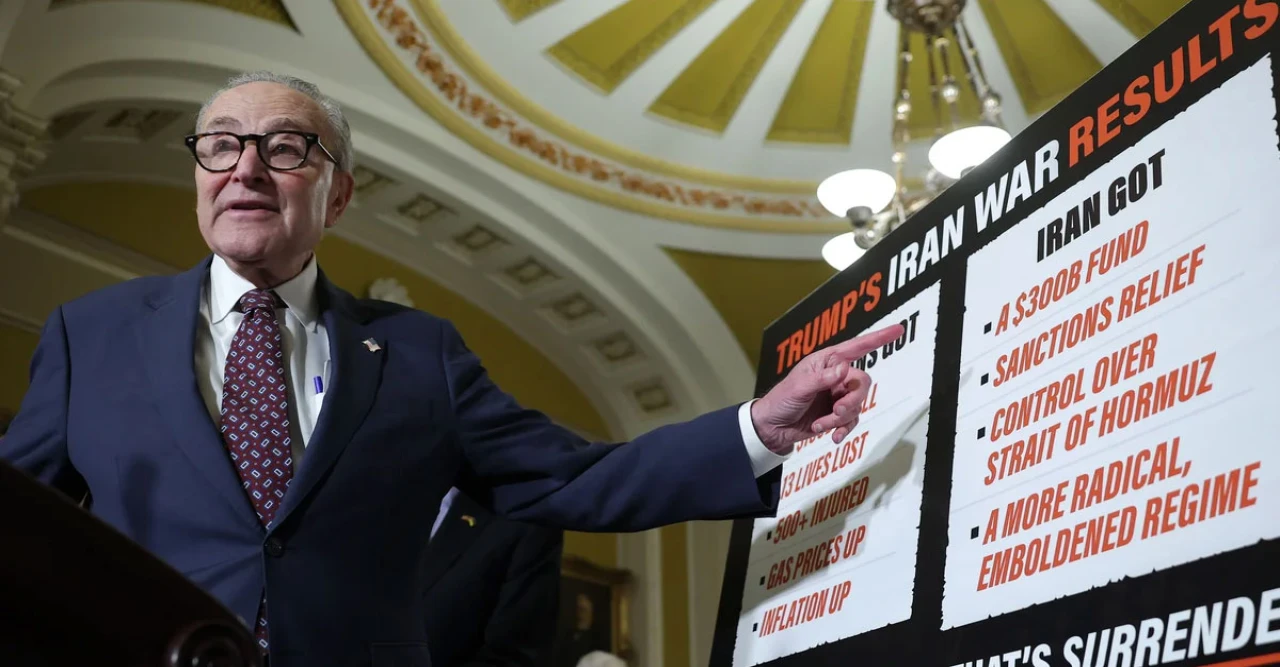
In a significant and rare bipartisan challenge to the president’s authority, the U.S. Senate has passed a war powers resolution directing President Donald Trump to remove American military forces from hostilities against Iran. The 50-48 vote on Tuesday marks the first time both chambers of Congress have approved such a measure since the War Powers Resolution of 1973 was enacted, and it signals growing unease within the Republican Party over the administration’s handling of the conflict .
The resolution, which previously passed the House of Representatives in early June, directs the president to withdraw U.S. armed forces from engagements with Iran unless Congress officially declares war or authorizes the use of military force . The vote reflects a dramatic turnaround from earlier failed attempts, representing the tenth time the Senate has forced a vote on the issue since the conflict began in late February .
Four Republican senators broke ranks with their party and joined Senate Democrats in supporting the measure. Sens. Susan Collins of Maine, Lisa Murkowski of Alaska, Rand Paul of Kentucky, and Bill Cassidy of Louisiana voted in favor of the resolution . Their support proved decisive, particularly given the absence of two key Republican figures: Senate Minority Leader Mitch McConnell, who was recently hospitalized for an undisclosed medical issue, and Sen. Dave McCormick . Democratic Sen. John Fetterman of Pennsylvania was the sole member of his party to vote against the measure .
Despite passing both chambers of Congress, the concurrent resolution does not carry the full force of law and does not require the president’s signature . Administration officials were quick to dismiss the vote's significance. A White House official stated that the resolution "has no significance," arguing that it seeks to remove forces from "hostilities" that do not currently exist, as a ceasefire took effect on April 7th . The White House also maintains that the War Powers Resolution itself is unconstitutional .
However, proponents of the measure insist it carries binding weight under the War Powers Resolution, which states that the president must withdraw forces "if the Congress so directs by concurrent resolution" . Rep. Gregory Meeks, a New York Democrat who introduced the House version, pledged to "explore all legal avenues to ensure the Executive complies with the will of Congress" . Senate Democratic Leader Chuck Schumer framed the vote as a crucial stand against what he called "Trump's historic blunder in Iran," a conflict he said has cost American lives and driven up costs at home .
The vote comes at a delicate moment in U.S.-Iran relations. The U.S. and Iran are currently operating under an interim ceasefire and a memorandum of understanding signed last week, which initiates a 60-day period for negotiators to reach a broader final agreement addressing Tehran's nuclear program and sanctions relief . However, tensions remain high, and Republicans have voiced significant objections to the terms of the deal, particularly a reported $300 billion fund to help Iran rebuild its economy .
The bipartisan rebuke also underscores deep divisions within the Republican Party ahead of the November midterm elections. A recent Reuters/Ipsos poll found that only one in four Americans believe the war was worth its costs, a sentiment that has made the conflict a political liability for many lawmakers . The congressional action adds pressure on the administration as the Pentagon simultaneously seeks $80 billion from Congress to backfill munitions and stockpiles depleted by the war .
While the resolution may not force an immediate halt to military policy, its passage represents a powerful symbolic statement from Congress. It serves as a clear warning to the White House that lawmakers on both sides of the aisle are growing impatient with the president’s unilateral approach to military action and his efforts to negotiate an end to a conflict that was launched without congressional approval .