
Best Multivitamin for Adults: What to Look For in 2026
Abdullah Sahel | প্রকাশিত: ২৮ জুন, ২০২৬, ০১:০৯ এএম
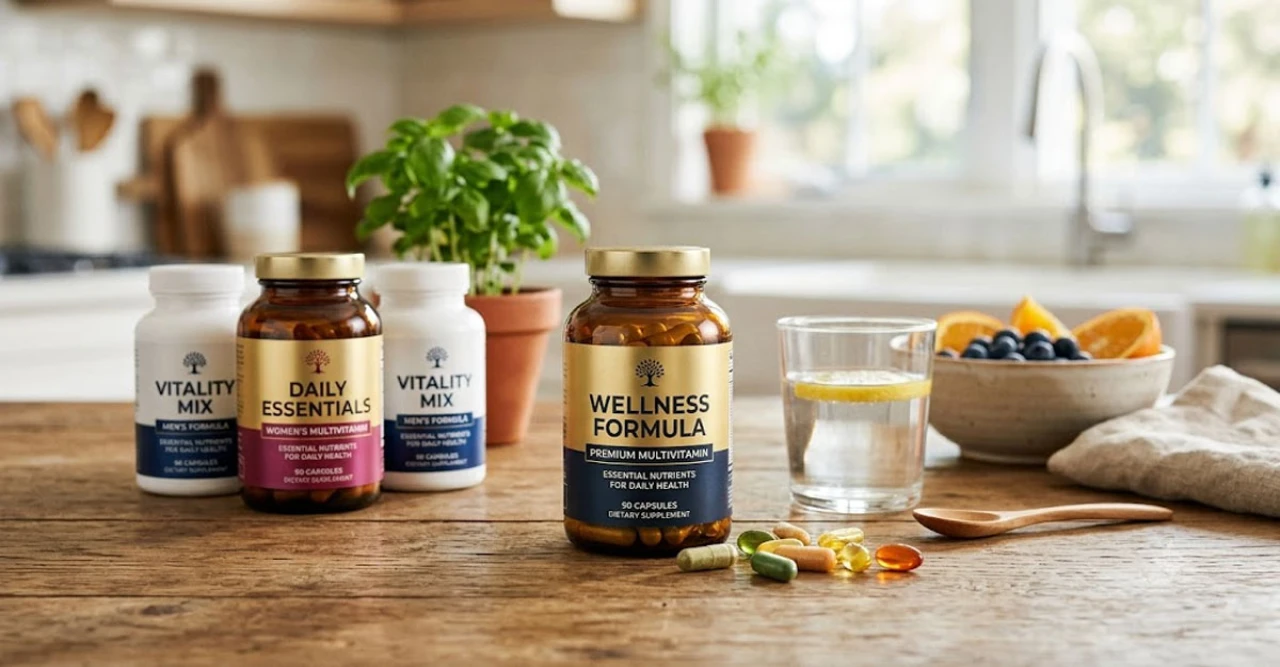
Walk into any pharmacy or open any health app, and you're immediately confronted with an overwhelming wall of options: gummies, capsules, powders, whole-food blends, gender-specific formulas, age-targeted packs. It's enough to make anyone's head spin — and that's before you even try to decode the label.
The truth is, the multivitamin market in the United States is enormous. According to the National Institutes of Health (NIH), more than one-third of American adults take a daily multivitamin, making it the most commonly used dietary supplement in the country. People reach for multivitamins to fill nutritional gaps, support energy levels, boost immunity, or simply feel like they're doing something good for their health.
But here's what most marketing won't tell you: not all multivitamins are created equal. Some formulas are packed with nutrients your body can barely absorb. Others skip essential vitamins or fall short on dosage. And a small number may even interact with medications you're already taking.
This guide cuts through the noise. Whether you're a first-time supplement buyer, a health-conscious adult reevaluating your routine, or someone navigating specific life stages like pregnancy or menopause, you'll find practical, evidence-based guidance here — no hype, no scare tactics, just what the science actually says.
What Is a Multivitamin, Really?
A multivitamin is a dietary supplement that contains a combination of vitamins and minerals — and sometimes additional ingredients like herbal extracts or amino acids. The goal is to provide nutrients that may be missing or under-represented in a person's regular diet.
They come in many forms:
- Tablets and capsules — the most common, often the most cost-effective
- Gummies — popular and easy to take, but often lower in certain nutrients and higher in added sugar
- Softgels — good for fat-soluble vitamins like A, D, E, and K
- Liquid and powder — useful for people who have trouble swallowing pills
- Whole food-based — derived from concentrated fruits and vegetables; often easier on digestion
It's important to understand that multivitamins are not regulated as strictly as prescription drugs. The U.S. Food and Drug Administration (FDA) does not approve dietary supplements before they reach store shelves. Instead, manufacturers are responsible for ensuring their products are safe and accurately labeled. This makes third-party testing a critical factor when choosing a brand.
Why Nutritional Gaps Are More Common Than You Think
You might assume that if you eat a fairly balanced diet, you don't need a multivitamin. That may be true for some people — but nutritional deficiencies are surprisingly widespread, even in a country with abundant food.
The Dietary Guidelines for Americans consistently identifies several nutrients as "underconsumed" across the U.S. population:
- Vitamin D — essential for bone health, immune function, and mood regulation; most Americans don't get enough from sunlight or diet alone
- Calcium — critical for bones and muscle function; especially low among women and older adults
- Potassium — important for heart health and blood pressure; found mainly in fruits and vegetables many Americans don't eat enough of
- Magnesium — involved in hundreds of biochemical reactions; deficiencies are common but often undiagnosed
- Vitamin B12 — found primarily in animal products; low in older adults and vegetarians/vegans
- Iron — particularly important for women of childbearing age; deficiency is one of the most common nutrient deficiencies worldwide
- Folate (Vitamin B9) — critical during pregnancy; also underconsumed by many adults
Stress, alcohol consumption, certain medications, gut health issues, and restrictive diets can all reduce how well your body absorbs nutrients from food. A multivitamin isn't a magic fix, but it can serve as a meaningful safety net.
How to Choose the Best Multivitamin: Key Factors to Consider
1. Look for Third-Party Testing
Since the FDA doesn't pre-approve supplements, the most reliable way to verify quality is to look for third-party certification. These independent organizations test products for accuracy and purity:
- USP (U.S. Pharmacopeia)
- NSF International
- ConsumerLab
- Informed Sport (especially relevant for athletes)
A product with one of these seals has been verified to contain what's on the label — no more, no less — and has been tested for common contaminants like heavy metals.
2. Match the Formula to Your Life Stage and Gender
A 25-year-old woman, a 60-year-old man, and a pregnant person all have different nutritional needs. Using a formula designed for your specific demographics matters more than most people realize.
For women of childbearing age:
- Look for iron, folate (or methylfolate), and B12
- Prenatal multivitamins are specifically designed with higher folate (400–800 mcg) to support fetal development
For women over 50:
- Iron needs decrease after menopause
- Calcium and vitamin D become even more important
- Look for formulas without added iron
For men:
- Men generally need less iron than premenopausal women
- Some men's formulas include lycopene or saw palmetto for prostate health, though evidence is limited
For adults over 60:
- B12 absorption decreases with age; look for higher doses or methylcobalamin form
- Vitamin D and calcium become increasingly important for bone density
For vegetarians and vegans:
- Prioritize B12, iron, zinc, iodine, and omega-3s (or look for algae-based DHA)
- Plant-based iron (non-heme) is less bioavailable, so slightly higher doses help
3. Understand Bioavailability — The Form of Each Nutrient Matters
Not all forms of a vitamin are absorbed equally by your body. This is one of the biggest quality differences between budget and premium multivitamins.
Examples of better-absorbed forms:
- Magnesium glycinate or citrate — better than magnesium oxide, which is poorly absorbed
- Methylfolate (5-MTHF) — preferred over folic acid, especially for people with MTHFR gene variants
- Methylcobalamin (B12) — the active form, more readily used than cyanocobalamin
- Vitamin D3 (cholecalciferol) — better absorbed than D2
- Chelated minerals — minerals bound to amino acids (like zinc bisglycinate) are generally better absorbed
4. Check the Doses — More Isn't Always Better
A common misconception is that a multivitamin with 200% of the Daily Value (DV) for every nutrient is superior. That's not how nutrition works.
Some nutrients are safe in very high doses; others can be harmful. Fat-soluble vitamins — A, D, E, and K — are stored in the body and can accumulate to toxic levels if over-supplemented. The NIH's Office of Dietary Supplements maintains detailed upper tolerable limits for each nutrient.
Look for a multivitamin that:
- Meets 100% DV for most vitamins and minerals
- Doesn't excessively exceed the upper tolerable intake for fat-soluble vitamins
- Uses appropriate doses for your specific life stage
5. Watch for Unnecessary Additives
Some multivitamins contain artificial colors, titanium dioxide, excess sugar (in gummies), or allergens like gluten, dairy, or soy. If you have food sensitivities or prefer a cleaner formula, read the "Other Ingredients" section of the label carefully.
The Benefits of Taking a Daily Multivitamin
When chosen wisely and taken consistently, a daily multivitamin can offer several evidence-supported benefits:
- Filling nutritional gaps — especially for people with dietary restrictions, limited food access, or higher nutrient needs
- Supporting immune function — vitamins C, D, zinc, and selenium all play roles in immune defense
- Maintaining energy levels — B vitamins (B1, B2, B3, B5, B6, B12) support the conversion of food into usable energy
- Protecting eye health — lutein, zeaxanthin, zinc, and vitamins C and E are linked to reduced risk of age-related macular degeneration (according to the AREDS2 study from the NIH)
- Supporting bone health — calcium, vitamin D, magnesium, and vitamin K2 work together to maintain bone density
- Cognitive support with aging — B vitamins, particularly B12 and folate, are associated with brain health; long-term studies, including the Physicians' Health Study II, have suggested multivitamins may support memory in older adults
It's worth noting that multivitamins are not a substitute for a healthy diet, and they won't undo poor lifestyle habits. But for millions of Americans with real nutritional gaps, they represent a practical and accessible tool for supporting overall health.
Potential Risks and Side Effects
Multivitamins are generally safe when taken as directed, but there are a few important cautions:
- Iron toxicity — taking high-dose iron supplements unnecessarily (especially in men and postmenopausal women) can cause constipation and, in extreme cases, organ damage. Only supplement with iron if you have a confirmed deficiency.
- Vitamin A excess — too much preformed vitamin A (retinol) can be harmful to the liver and may increase fracture risk in older adults. Look for formulas that use beta-carotene instead, which the body converts as needed.
- Vitamin D over-supplementation — rare but possible; excessively high doses over time can cause hypercalcemia (too much calcium in the blood)
- Interactions with medications — vitamin K can interfere with blood thinners like warfarin; high-dose zinc can reduce copper absorption; calcium can affect the absorption of certain antibiotics. Always inform your doctor and pharmacist about supplements you take.
- Nausea — some people experience stomach upset, especially when taking multivitamins on an empty stomach. Taking them with food usually helps.
What the Latest Research Says
The science on multivitamins has evolved considerably over the past decade. The picture is nuanced — and worth understanding.
A major 2022 study published in JAMA Network Open, drawing on data from the NIH-AARP Diet and Health Study, found that multivitamin use was associated with a modest reduction in cancer mortality. However, researchers cautioned that observational studies like this can't prove causation.
The COSMOS (COcoa Supplement and Multivitamin Outcomes Study) trial — a large, randomized controlled trial conducted by Harvard Medical School and Brigham and Women's Hospital — found that daily multivitamin use over three years was associated with improved cognitive function in older adults compared to placebo.
On the other hand, several large studies have not found significant benefits of multivitamins for reducing cardiovascular disease risk in generally healthy adults.
The consensus among major health organizations, including the NIH and Mayo Clinic, is that multivitamins are most beneficial for people with specific nutritional needs — pregnant women, older adults, people with malabsorption conditions, vegetarians/vegans, and those with limited diets — rather than as a general wellness strategy for everyone.
Who Benefits Most From a Daily Multivitamin
Based on current evidence, these groups are most likely to benefit from consistent multivitamin use:
- Pregnant women or those trying to conceive — folate is critical for preventing neural tube defects
- Adults over 50 — especially for B12 and vitamin D
- People following vegetarian or vegan diets — B12, iron, zinc, iodine, and omega-3s are commonly low
- People with malabsorption conditions — celiac disease, Crohn's disease, bariatric surgery patients
- People with limited sun exposure — vitamin D synthesis requires sunlight
- Those with poor or restricted diets — including food insecurity or highly processed food-dominant diets
- People on certain long-term medications — for example, metformin (diabetes drug) depletes B12; proton pump inhibitors reduce magnesium and B12
Lifestyle Tips to Get the Most From Your Multivitamin
Taking a multivitamin is just one piece of the wellness puzzle. To maximize absorption and overall benefit:
- Take it with a meal that contains some fat, especially if your formula contains fat-soluble vitamins (A, D, E, K)
- Be consistent — take it at the same time daily to build the habit
- Don't double up — avoid taking a multivitamin alongside other individual supplements that overlap without checking for duplication first
- Store properly — keep supplements in a cool, dry place, away from heat and humidity
- Pair with a balanced diet — multivitamins work best as a complement to, not a replacement for, whole foods
- Hydrate — water helps your body absorb water-soluble vitamins (C and B vitamins)
Products That May Help
If you're building out a well-rounded supplement or wellness routine alongside your multivitamin, these general product categories may be useful:
- Pill organizers — helps you stay consistent if you take multiple supplements
- Supplement tracking apps — tools like Cronometer can help you log nutrient intake and identify gaps
- Smart water bottles — staying hydrated supports absorption of water-soluble vitamins
- Food journals or nutrition apps — a great way to see where your diet may be falling short before reaching for supplements
- Fitness trackers — tracking activity, sleep, and heart rate helps give your health picture context
Always review any new supplement product with a healthcare provider, particularly if you take prescription medications or have an existing health condition.
Common Myths vs. Facts About Multivitamins
Myth: Expensive multivitamins are always better. Fact: Price doesn't guarantee quality. What matters most is third-party certification, bioavailable nutrient forms, and a formula appropriate for your needs.
Myth: You can get all your nutrients from food alone without worrying. Fact: While a whole-food diet is the ideal foundation, nutritional gaps are common due to soil depletion, food processing, individual absorption issues, and lifestyle factors.
Myth: More vitamins mean better health. Fact: Excessive doses of certain vitamins — particularly fat-soluble ones — can cause harm. Balance and appropriateness matter more than quantity.
Myth: Gummy vitamins are just as good as capsules. Fact: Gummies are often lower in certain nutrients (like iron) and may contain added sugar. They're a fine option for those who struggle with pills, but not always equivalent in potency.
Myth: You'll notice a difference in energy within days. Fact: Multivitamins support long-term nutritional health. Dramatic short-term energy changes are not typical and may suggest a placebo effect or a specific pre-existing deficiency being corrected.
Key Takeaways
Choosing the best multivitamin doesn't have to be complicated — but it does require a little intentionality. Here's what matters most:
- Look for third-party tested products (USP, NSF, or ConsumerLab seals)
- Choose a formula matched to your age, gender, and health status
- Prioritize bioavailable forms of key nutrients like magnesium, B12, and folate
- Avoid unnecessary mega-doses, especially of fat-soluble vitamins
- Use multivitamins as a complement to a healthy diet, not a replacement
- Consult a healthcare provider or registered dietitian if you have specific health conditions or take medications
A well-chosen multivitamin won't transform your health overnight, but as part of a consistent, balanced lifestyle, it can help fill genuine nutritional gaps that are harder to address through diet alone.
Frequently Asked Questions
Q: Should I take a multivitamin every day? A: For most adults, taking a high-quality multivitamin daily is safe and may help fill nutritional gaps. However, whether it's necessary depends on your diet, age, health status, and any conditions you may have. A conversation with your doctor or dietitian can help you decide.
Q: What is the best time of day to take a multivitamin? A: There's no single best time, but taking it with a meal that contains some healthy fat typically improves absorption of fat-soluble vitamins and reduces the chance of stomach upset.
Q: Are women's multivitamins different from men's? A: Yes. Women's formulas typically contain more iron and folate, while men's formulas are often lower in iron. After menopause, women generally no longer need supplemental iron and should switch to a senior or general formula.
Q: Can I take a multivitamin while pregnant? A: Prenatal vitamins are specifically formulated for pregnancy and are widely recommended. They contain higher levels of folate, iron, and other nutrients critical for fetal development. If you're pregnant or planning to become pregnant, speak with your OB-GYN about which prenatal vitamin is right for you.
Q: Do multivitamins interact with medications? A: Some can. For example, vitamin K can interfere with warfarin; high doses of calcium can affect some antibiotics; zinc can interfere with certain medications. Always disclose all supplements to your doctor and pharmacist.
Q: Are gummy vitamins as effective as capsules or tablets? A: Gummies are easy to take and well-tolerated, but they often contain less of certain nutrients (like iron) and more sugar. For most adults, a capsule or tablet with third-party certification will be more complete and reliable.
Q: Do I really need a multivitamin if I eat healthy? A: Not necessarily — but nutritional gaps can exist even in people who eat well, due to soil depletion, food processing, digestion issues, or lifestyle factors. A registered dietitian can help you assess your actual intake before you decide.
Q: What's the difference between a whole-food multivitamin and a synthetic one? A: Whole-food multivitamins are derived from concentrated real foods and may be easier to digest for some people. Synthetic vitamins are lab-made but can be just as bioavailable. There's no clear evidence that one is categorically better; third-party testing and proper nutrient forms matter more than the source.
Medical Disclaimer: This article is for informational and educational purposes only and should not be considered medical advice. It is not intended to diagnose, treat, cure, or prevent any disease. Always consult a qualified healthcare provider before making decisions about your health, medications, diet, or treatment.