
Fiery Green Fireball Blazes Across Louisiana Skies in Dazzling Dawn Display
Mousumi Akter | প্রকাশিত: ২৯ জুন, ২০২৬, ০৭:৪৩ এএম
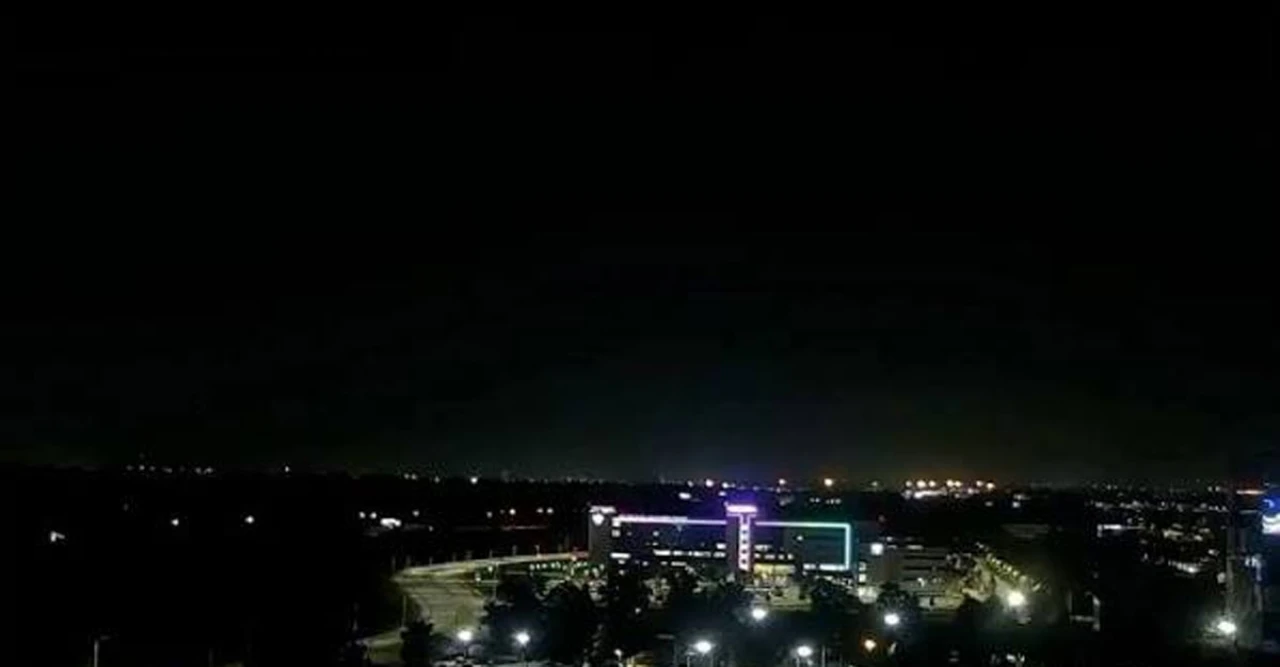
Early risers across southeast Louisiana were treated to a spectacular celestial show Sunday morning as a brilliant fireball streaked through the pre-dawn darkness. The luminous event unfolded around 5:00 a.m., captivating viewers who witnessed a vibrant green orb with a blazing tail illuminate the sky before culminating in a bright, intense flash. The American Meteor Society quickly received numerous reports from across the region, confirming the widespread visibility of the phenomenon.
When small space rocks, known as meteoroids, enter Earth’s atmosphere at tremendous velocities, they compress the air in front of them, generating intense heat that produces a glowing streak of light. These streaks are commonly referred to as "shooting stars." However, when the incoming object exceeds approximately three feet in diameter, the resulting trail becomes exceptionally brilliant, earning the classification of a fireball. The object observed over Louisiana displayed characteristics consistent with this larger category of space debris.
If the fireball concludes with a dramatic, explosive fragmentation, scientists technically classify it as a bolide, although the two terms are frequently used interchangeably in public reporting. The extreme brightness of such events allows them to be seen over massive geographic areas, with occasional sightings even occurring during daylight hours under specific atmospheric conditions. The sheer intensity of Sunday morning’s display suggested a significant object entering the upper atmosphere.
As the space rock plunges toward Earth, it encounters extreme atmospheric friction that rapidly decelerates the object and heats its surface to thousands of degrees. This intense thermal stress melts the rock's outer layers, causing it to shed material and fragment. The unequal pressure exerted on the leading and trailing surfaces of the object ultimately overwhelms its structural integrity, leading to a violent explosion. Most fireballs completely vaporize during this phase, though denser fragments, known as meteorites, can occasionally survive the fiery descent and strike the ground.
Scientists will analyze trajectory data captured by specialized cameras and sensors to determine the exact path of the meteor and compute its potential orbital origin. Experts will also review the data to ascertain if any surviving fragments reached the Earth’s surface. Astronomers will continue to study the collected evidence to provide a final classification of the object, distinguishing between a sporadic meteor and a potential piece of an asteroid. This analysis will help researchers refine their understanding of near-Earth objects and their interactions with our planet's protective atmosphere.