
Why the Top Pin of a 3-Pin Plug Is Longer and Thicker: The Science Behind Electrical Safety
NBS News Desk | প্রকাশিত: ০৮ জুলাই, ২০২৬, ১১:০১ এএম
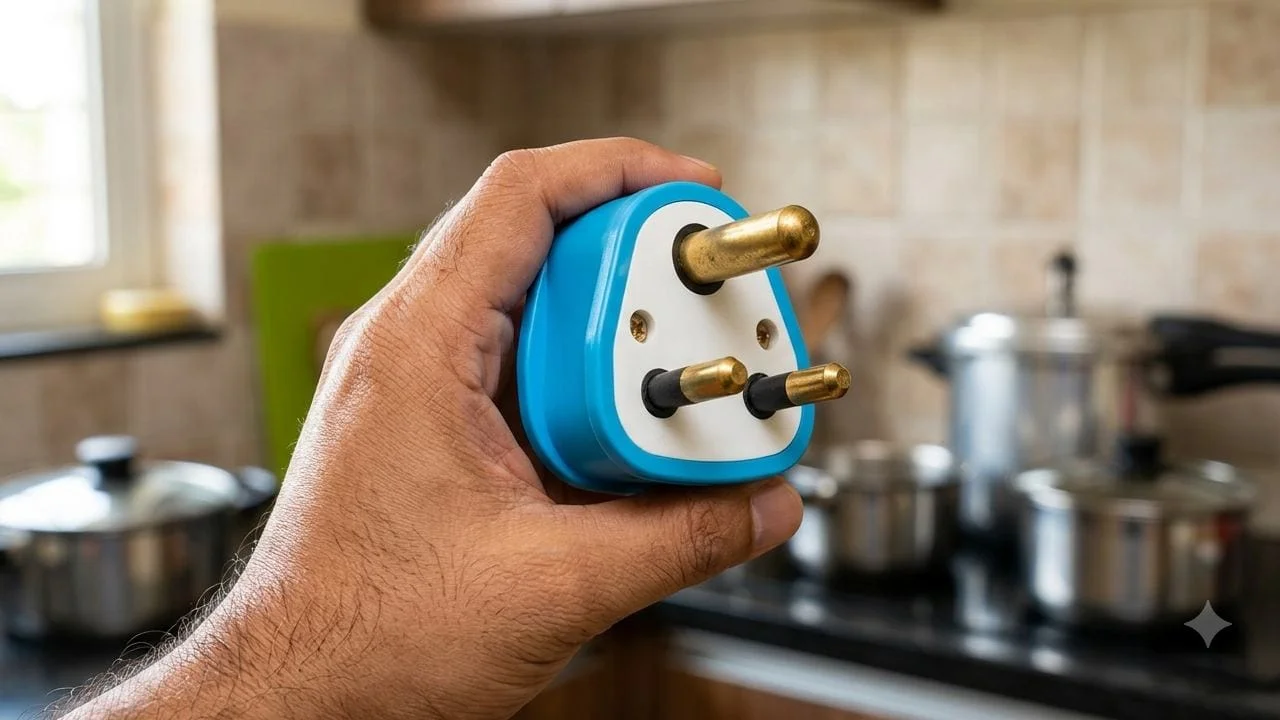
Every day, we use heavy electrical appliances like air conditioners, refrigerators, and microwaves that rely on 3-pin plugs. A common observation is that the top pin of these plugs is noticeably longer and thicker than the other two. This design is not arbitrary but based on scientific and technical principles aimed at ensuring user safety.
The longer, thicker pin is known as the earthing pin, which is directly connected to the ground. Appliances such as refrigerators and air conditioners typically have metal exteriors, increasing the risk of electric leakage. The earthing pin plays a crucial role in protecting users from fatal electric shocks by providing a safe path for any leakage current to flow into the earth.
According to electrical safety experts, "The earthing pin is designed to be the first to connect when the plug is inserted into a socket. This ensures that any leakage current is safely grounded before the appliance receives power," preventing electric shocks before the main current begins to flow. If the earthing pin were the same length as the other pins, the phase or neutral pins could connect first, potentially exposing users to dangerous shocks if the appliance is faulty.
Moreover, the earthing pin's thickness serves two purposes: it physically prevents incorrect insertion of the plug and decreases electrical resistance. A thicker conductor offers less resistance, allowing leakage current to flow smoothly without overheating or melting the plug. For appliances with lower voltage requirements, such as mobile chargers or TV sets, 2-pin plugs suffice because the risk of short circuits is lower.
However, for heavy-duty and metal-bodied equipment, the 3-pin plug with a specialized earthing pin is mandatory to ensure safety. Electrical engineer Ramesh Kumar explains, "The extra length and thickness of the earthing pin are a simple yet effective engineering solution that protects users from electric hazards. It’s a critical safety feature that often goes unnoticed but is vital in everyday electrical use." Understanding the function of this specially designed pin highlights the importance of proper electrical safety standards in homes and workplaces.
As more households adopt high-powered appliances, adherence to such safety measures will continue to reduce the risk of electrical accidents, ensuring safer living environments for all.