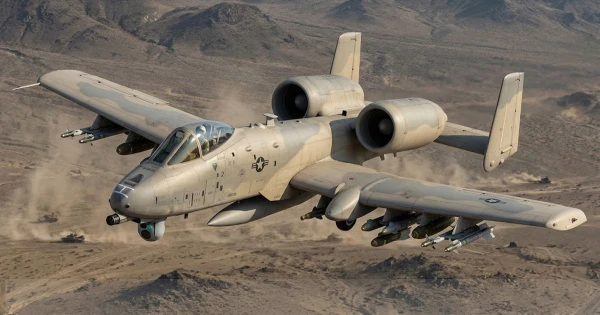
For over three decades, the United States Air Force has been trying to send the legendary A-10 Thunderbolt II—affectionately known as the "Warthog"—into retirement. On paper, the decision makes sense. The defense landscape of 2026 is dominated by stealth fighters like the F-35 Lightning II, advanced drones, and hypersonic missiles. To military planners, a slow, low-flying aircraft from the Cold War era seems obsolete.
Yet, despite repeated decommissioning attempts, the A-10 Warthog remains active and fiercely protected by ground troops and lawmakers alike. Why is this rugged aircraft still completely irreplaceable in modern combat? The answers lie in its unique design, unparalleled close air support capabilities, and the changing realities of global warfare.
The GAU-8 Avenger: A Flying Cannon Built Around Brute Force
Unlike modern fighter jets that are engineered for speed and radar evasion, the A-10 Warthog was essentially built around a single weapon: the massive GAU-8 Avenger 30mm Gatling cannon.

-
Massive Firepower: Taking up a significant portion of the aircraft's fuselage, this weapon fires depleted uranium shells at a blistering rate of nearly 4,000 rounds per minute.
-
Psychological Impact: For infantry pinned down on the ground, the terrifying sound of the Warthog's "BRRRRRT" is the ultimate sign of salvation.
-
Cost-Effective Destruction: No missile or precision-guided bomb in the modern Western arsenal can match the sustained, terrifying, and cost-effective suppressive fire of the GAU-8 against heavily armored tanks and bunkers.
Built to Survive: The Legendary Durability Features
The A-10 was specifically designed to take heavy enemy fire from the ground and keep flying, making it one of the most resilient aircraft in military history.
-
The Titanium Bathtub: The pilot sits inside a 1,200-pound titanium armor enclosure that can withstand direct hits from 23mm armor-piercing shells.
-
Redundant Flight Controls: The aircraft features backup mechanical flight controls. If its computerized hydraulic systems are completely knocked out by enemy fire, the pilot can switch to manual mode and safely fly back to base.
-
Dual-Engine Safety: Powered by two widely separated General Electric TF34 engines, the Warthog can continue flying even if one engine is completely destroyed or ripped apart by shrapnel.
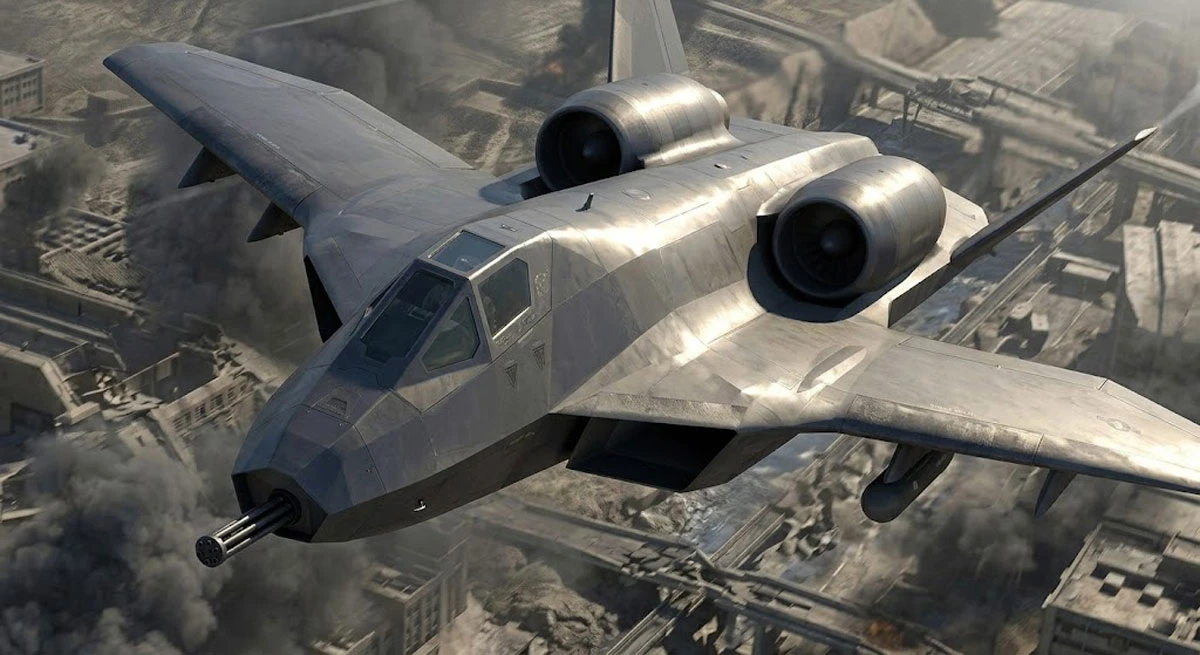
The Fatal Flaw of Modern Stealth: The F-35 Close Air Support Problem
The primary argument for retiring the Warthog has been the integration of the multirole F-35. While the F-35 is a technological marvel at high altitudes, it fails to replicate the A-10's performance at lower levels.
-
Limited Loiter Time: The A-10’s straight-wing design allows it to fly incredibly slow and hover over a battlefield for hours. The fast-flying F-35 passes over target zones too quickly to provide continuous cover.
-
Visual Identification Issues: In chaotic combat where friendly troops are meters away from enemy forces, A-10 pilots can visually map the terrain. High-flying stealth jets rely strictly on digital sensors, which can be fooled by bad weather or smoke.
-
High Operational Costs: Firing a precision missile from an F-35 costs hundreds of thousands of dollars per shot. The A-10's cannon rounds cost a fraction of that, making it economically sustainable for prolonged warfare.
Real-World Contested Airspaces: Lessons for 2026
Recent geopolitical conflicts in Eastern Europe and the Middle East have shown that modern warfare is moving toward highly contested electronic environments. Advanced air defense systems make the skies deadly for high-altitude aircraft, while GPS-jamming regularly blinds precision-guided drones.
In a scenario where satellite communications are down and electronic warfare is rampant, a low-flying, armored platform that operates independently of complex data-networks becomes invaluable. Ground commanders consistently state that when a conflict gets brutal and chaotic on the frontlines, nothing replaces the sheer psychological and physical impact of an A-10 sweeping in low.
Conclusion
The U.S. military cannot retire the A-10 Warthog in 2026 because the aircraft represents a pinnacle of functional, specialized design that modern multirole jets cannot replicate. It was built for one specific, brutal job: protecting troops on the ground at all costs. Until a modern platform can combine the Warthog’s legendary durability, extreme loiter time, and cost-effective firepower, this armored icon will continue to fly, defying both time and retirement.
What do you think? Should the U.S. invest in a true successor to the Warthog, or is the era of manned close air support coming to an end? Share your thoughts in the comments below!