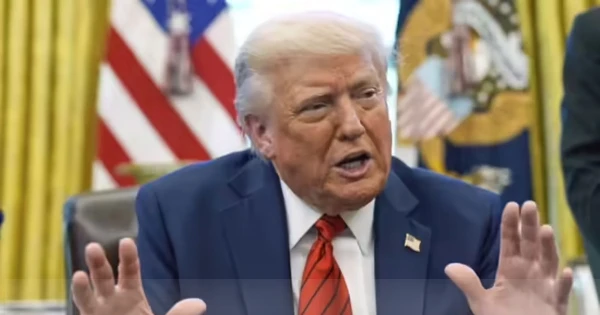
President Donald Trump has issued a stark warning to Iran just days before the signing of a peace memorandum in Geneva, declaring that the United States will not hesitate to resume military strikes if Tehran fails to comply with American demands.
The president made the remarks during a press briefing where he emphasized that the upcoming agreement is not a final settlement but rather a preliminary memorandum of understanding. Trump made clear that his administration retains the option to restart bombings if Iran's behavior does not meet U.S. expectations.
"This is an MoU, not a final deal," Trump stated. "If I don't like it, or if they don't behave properly, we will start shooting and bombing again. We'll drop bombs right between their eyes."

The agreement, scheduled for signing on June 19 in Geneva, comes after weeks of intensive negotiations brokered by Pakistan. The memorandum represents the first significant diplomatic breakthrough between the two nations since hostilities escalated earlier this year.
Trump was unequivocal in his assessment of the situation, telling reporters that the United States has no financial stake in Iran and therefore nothing to lose from returning to a military posture. "We haven't invested a single penny in Iran," he said. "We have no reason to be afraid of anything."
When pressed on whether the agreement constitutes a final resolution to the conflict, the president was categorical in his response. "No, it's not final," he said. "This is a memorandum of understanding. And if I'm not satisfied, we'll resume firing and bombing immediately."
The tense exchange comes ahead of Friday's scheduled signing ceremony in Switzerland, where Iranian Foreign Minister Seyyed Abbas Araghchi is expected to represent Tehran. Araghchi announced earlier this week that a new round of final negotiations would commence on Friday, signaling that both sides view the MoU as a stepping stone toward broader diplomatic engagement.
The path to this moment has been marked by significant military confrontation. On February 28, the United States and Israel conducted joint strikes on Tehran and several other Iranian cities. The attacks targeted what American officials described as military infrastructure and nuclear-related facilities.
Iran responded swiftly with missile and drone attacks directed at Israeli territory and American military positions throughout the region. The exchange of fire raised fears of a wider regional conflict that could draw in other nations and destabilize the already volatile Middle East.
The Geneva talks represent the most serious diplomatic effort to de-escalate tensions since the February strikes. Pakistan has played a crucial mediating role, hosting preliminary discussions and facilitating communication between the two adversaries over several weeks of negotiations.
Monday's announcement that the MoU had been finalized came after multiple rounds of discussions involving American, Iranian, and Pakistani officials. The agreement is viewed as a potential framework for addressing core disagreements between Washington and Tehran, though significant hurdles remain.
Trump's blunt warnings underscore the fragility of the current diplomatic window. The president has consistently taken a hardline stance on Iran throughout his administration, withdrawing from the previous nuclear deal and reimposing stringent economic sanctions.
His latest comments suggest that while the administration is willing to explore diplomatic channels, military options remain very much on the table. The president's language echoed previous warnings he has issued regarding Iran's nuclear program and regional activities.
Iranian officials have not publicly responded to Trump's latest remarks. However, Araghchi's announcement that final negotiations will proceed as planned indicates that Tehran remains committed to the diplomatic process, at least for now.
The upcoming signing ceremony in Switzerland will be closely watched by international observers. The event represents a potential turning point in U.S.-Iran relations, though Trump's comments serve as a reminder that any agreement reached must withstand scrutiny from both sides.
Analysts note that the MoU structure allows both nations to test diplomatic waters without committing to binding obligations. This approach provides flexibility but also leaves room for either party to withdraw if terms prove unsatisfactory.
The international community has expressed cautious optimism about the Geneva talks while acknowledging the significant challenges that remain. European allies have urged both sides to maintain momentum toward a comprehensive agreement.
For the United States, the primary concerns include Iran's nuclear enrichment activities, ballistic missile program, and support for militant groups across the Middle East. Iran, in turn, seeks relief from crippling economic sanctions and recognition of its regional interests.
The Geneva memorandum is expected to address these issues in broad terms, with more detailed negotiations to follow. Trump's warning suggests that the timeline for such discussions may be limited if Iran fails to demonstrate what Washington considers acceptable cooperation.
As Friday's signing approaches, the world watches to see whether this diplomatic initiative can transform into lasting peace or whether Trump's threats foreshadow a return to conflict. The president's message to Iran is clear: comply with American expectations, or face renewed military action.
The coming days will determine whether Tehran is prepared to meet those demands or whether the region faces another cycle of violence. For now, both sides appear committed to the Geneva process, though Trump's remarks have injected fresh tension into an already delicate situation.