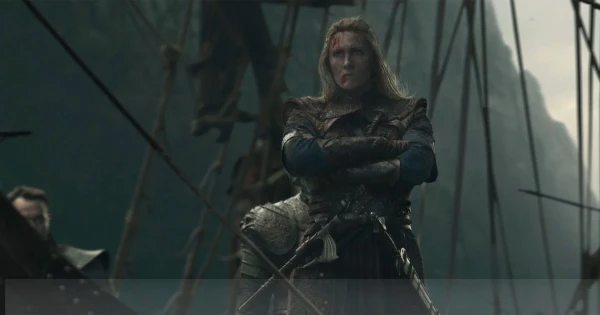
The Battle of the Gullet delivered many unforgettable moments in the Season 3 premiere of "House of the Dragon," but none stood out quite like the commanding presence of Sharako Lohar. The Triarchy admiral, brought to life with fierce intensity by Abigail Thorn, emerged as the undisputed highlight of the episode's opening chapter.
Lohar's dialogue crackles with raw authority and dark humor throughout the massive naval confrontation. Each line lands with the force of a cannonball, cementing her status as one of the most quotable characters in the series' run. From her flagship, the aptly named Bitchfist, she directs her forces with a single-minded determination that borders on obsession.
The character's relentless pursuit of a particular target across the seas draws direct inspiration from one of literature's most famous captains. Thorn immersed herself in Herman Melville's classic novel "Moby Dick" to prepare for the role, studying the tragic determination of Captain Ahab. Her research extended to multiple screen adaptations, including the Gregory Peck film and Ricardo Montalbán's iconic performance in "Star Trek II: The Wrath of Khan."

Thorn and director Loni Peristere even developed a specific moment they called "the Captain Ahab moment" during Lohar's brutal confrontation with Corlys Velaryon. The scene captures the admiral's willingness to risk everything in a single, desperate strike. It embodies the essence of a commander who has sacrificed countless resources and years of her life in pursuit of one goal.
The character's dialogue reflects this all-consuming drive while maintaining a sharp, almost playful edge. Her exchanges with Tyland Lannister showcase a commander who operates on her own terms entirely. When Tyland assumes she crossed the Narrow Sea to support the king's war, Lohar's response reveals a far more personal agenda that has nothing to do with Westerosi politics.
Throughout the episode, Lohar delivers line after line that feels tailor-made for action trailers and viral moments. Her warnings to soldiers about their expensive equipment carry a darkly comedic undertone that only adds to the tension. The physical humor of watching Tyland Lannister tossed overboard provides a moment of levity amid the chaos of battle.
Thorn's performance brings layers of complexity to what could have been a straightforward military commander. Lohar's weathered appearance and commanding presence suggest a lifetime of hardship and sacrifice. The actor's research into Ahab's character traits paid off in every scene, creating a leader who inspires both loyalty and fear in equal measure.
The Battle of the Gullet sequence showcases the series' impressive production values while providing a perfect showcase for Lohar's unique brand of leadership. Her shouted commands cut through the noise of clashing ships and dying men, demanding attention from everyone within earshot. The ship's name, Bitchfist, perfectly captures the admiral's aggressive approach to naval warfare.
Lohar's interactions with her crew reveal a commander who has earned respect through demonstrated competence rather than empty threats. When she praises a sailor for spotting the enemy fleet in the distance, the moment feels earned rather than performative. This subtle character work elevates what could have been a one-note antagonist into something far more memorable.
The character's dialogue stands out not just for its content but for its delivery. Thorn's vocal performance carries the weight of someone who has spent years screaming orders across storm-tossed decks. Each line sounds like it has been shouted a thousand times before, worn smooth by repetition and necessity.
Series creators clearly recognized the value of Lohar as a scene-stealing presence. The character appears throughout the episode's most critical moments, providing both tactical commentary and darkly humorous observations. Her perspective offers a refreshing contrast to the political machinations of King's Landing and Dragonstone.
The physicality of Thorn's performance deserves special mention. Lohar moves through battle sequences with the confidence of someone who has survived countless engagements. Her fight against Corlys Velaryon stands as one of the episode's most thrilling moments, showcasing the character's willingness to risk everything for victory.
Lohar's dialogue choices reveal a commander who has grown weary of explaining herself to others. When she dismisses Tyland's assumptions about her motivations, the audience understands that this is someone who has long since stopped caring about others' expectations. Her quest has consumed her entirely, leaving room for little else.
The episode's writing gives Lohar some of the most memorable lines in the entire series. Each piece of dialogue serves multiple purposes: advancing the plot, revealing character, and providing entertainment value. The balance between these elements demonstrates the careful craftsmanship behind the series' writing.
Thorn's preparation for the role included deep immersion into the psychology of obsession. The actor understood that Lohar's dedication to her mission comes at enormous personal cost. Every victory brings her closer to her goal while pushing her further from any semblance of normal life.
The Bitchfist itself functions almost as an extension of Lohar's personality. The ship's rough edges and aggressive name reflect its commander's approach to problem-solving. When Lohar issues commands from its deck, she speaks with the authority of someone who has built this vessel into a weapon of personal vengeance.
Lohar's treatment of Tyland Lannister provides some of the episode's most entertaining moments. The admiral clearly enjoys watching the Westerosi nobleman struggle with the realities of naval warfare. Her casual cruelty toward him serves as a reminder that this war has no room for chivalry or proper manners.
The character's backstory remains deliberately vague, allowing audiences to fill in the gaps themselves. What happened to drive Lohar to such single-minded pursuit? The mystery only adds to her appeal, making viewers eager to learn more about her history in future episodes.
"House of the Dragon" continues the tradition of its predecessor series by creating compelling supporting characters who often steal the show from the main cast. Lohar joins a distinguished lineage of memorable figures who appear briefly but leave lasting impressions on audiences. Thorn's performance ensures that this admiral will be remembered long after the season concludes.
The episode's climactic battle sequence provides the perfect backdrop for Lohar's particular brand of leadership. In the chaos of naval combat, her direct approach proves remarkably effective. The admiral's commands cut through confusion and fear, giving her forces the direction they need to fight effectively.
Thorn's interpretation of the character draws from multiple influences while remaining distinctly original. The actor's research into Ahab provided a foundation, but the final performance belongs entirely to Thorn. Lohar feels simultaneously familiar and completely new, a testament to the actor's skill and preparation.
The dialogue attributed to Lohar in this episode demonstrates the power of strong writing combined with committed performance. Each line lands with perfect timing, whether delivering tactical orders or darkly humorous observations. The character's voice feels authentic to someone who has spent decades at sea.
Audience reactions to Lohar have been overwhelmingly positive since the episode aired. Social media has embraced the character's memorable quotes, sharing them across platforms. This immediate cultural impact proves the character has struck a chord with viewers hungry for compelling antagonists.
The "Captain Ahab moment" during Lohar's fight with Corlys encapsulates everything compelling about the character. In that instant, audiences see a commander willing to sacrifice everything for one perfect strike. The moment carries the weight of years of obsession and determination.
Lohar's dialogue continues the tradition of memorable quotes that define great television characters. Like the best lines in the series, these moments feel organic to the character while providing entertainment value. The writing never sacrifices character consistency for a cheap laugh or dramatic moment.
The portrayal of naval warfare in this episode benefits immensely from Lohar's presence as a commanding figure. Her shouted orders and tactical decisions give the battle sequence structure and purpose. Without her character, the Battle of the Gullet would have felt chaotic rather than thrilling.
Thorn's commitment to the role shows in every frame of screen time. The actor's physicality, vocal performance, and emotional depth combine to create a fully realized character. Lohar feels like someone who has lived a long and difficult life, which adds weight to every scene.
The admiral's interactions with her own crew reveal a leader who maintains discipline through example rather than fear alone. When Lohar demands excellence, she demonstrates it herself first. This leadership style has clearly earned her the loyalty of her forces.
As the series continues, audiences can expect more memorable moments from Sharako Lohar. The character's story seems far from complete, with more battles and confrontations likely ahead. Thorn's performance has established Lohar as a character worth following wherever the plot leads.
The success of this character proves the value of strong supporting roles in ensemble casts. Lohar may not be a main character in the traditional sense, but her presence elevates every scene she appears in. This is the mark of excellent character writing and performance.