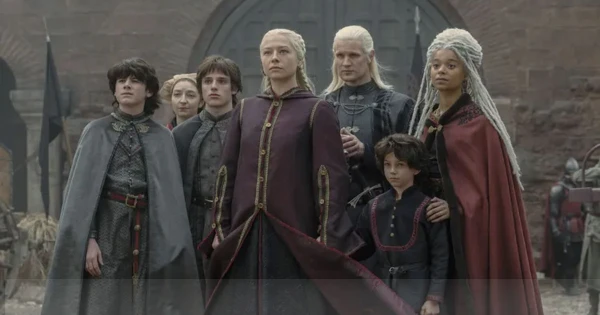
More than a decade after the world first visited Westeros, the saga of the Targaryen dynasty remains one of the most compelling narratives in modern television. Since the premiere of Game of Thrones in 2011, the story of the exiled dragonlords has evolved from a supporting backstory into the central focus of an expanding franchise. The original series established the Targaryens as a fallen royal house, one that had unified the Seven Kingdoms with fire and blood only to see its empire crumble. Now, with multiple series exploring their history, audiences are witnessing the full scope of the family’s complicated lineage.
The fascination with the Targaryens has only intensified since the conclusion of Game of Thrones in 2019. That enduring interest led to the creation of House of the Dragon, a prequel series that examines the family during its most prosperous and volatile period. Both shows rely on the intricate mythology crafted by George R. R. Martin, offering a deep dive into the politics, warfare, and personal conflicts that defined the dragon-riding dynasty. The interconnected narratives highlight how the decisions of past generations continue to ripple through time, affecting the fates of their descendants.
The Targaryen legacy will take center stage again when House of the Dragon returns for its third season on June 21. The upcoming season follows the bloody conclusion of season 2, where the lines of succession were left in chaos. With Aegon still holding the throne, the stability of the dynasty remains uncertain. The public’s trust in the Targaryen name has been severely damaged, and the political landscape of Westeros continues to shift dramatically. As the series progresses, viewers will see how these fractures set the stage for future conflicts.

Understanding the Targaryen family tree is essential for making sense of the events in both House of the Dragon and Game of Thrones. The family’s history is marked by ambition, betrayal, and the unique burden of dragon riding. By tracing the lineage from the Conqueror to the Mad King, audiences can better appreciate the origins of the conflicts that define both series. The release of A Knight of the Seven Kingdoms will add another layer to this history, introducing new characters and expanding the family’s story even further.
The foundation of the Targaryen dynasty begins with Aegon the Conqueror, who united the Seven Kingdoms and established the Iron Throne. His rule marked the beginning of a centuries-long reign that would transform the political structure of Westeros. Aegon’s dream, known as "The Song of Ice and Fire," served as a prophetic warning about the darkness that would eventually rise in the north. This premonition of the White Walkers would remain a secret for generations, passed down through the family until it resurfaced during the events of Game of Thrones.
Aegon’s legacy continued through his son, Aenys Targaryen, who inherited the throne as the second king of the Seven Kingdoms. Aenys was known for his kind demeanor and his marriage to Alyssa Velaryon, which strengthened the alliance between two of the most powerful dragon-riding houses. His reign, however, was short-lived, as he was murdered by his own brother, Maegor the Cruel. Maegor’s ascension to the throne introduced a period of brutality and conflict that would define the dynasty for years to come.
The bond between the Targaryens and the Velaryons became a recurring theme throughout the history of Westeros. These two houses shared a unique connection through their dragons, making them formidable allies in the struggle for power. The marriage of Aenys and Alyssa Velaryon was just one example of how strategic unions helped maintain the Targaryen hold on the Iron Throne. Over time, these alliances would become more complicated, leading to the internal strife that eventually tore the family apart.
The conflict between Aenys and Maegor set a precedent for the civil wars that would follow, particularly the Dance of the Dragons. This brutal succession war, which is the central conflict of House of the Dragon, pitted Targaryen against Targaryen in a struggle for the throne. The violence of this conflict drastically reduced the number of dragons in the world, weakening the family’s grip on power. The repercussions of this war were still being felt centuries later, when Daenerys Targaryen emerged as the last surviving heir.
Daenerys Targaryen became the most prominent Targaryen figure in Game of Thrones, embodying both the family’s ambition and its capacity for destruction. Her journey from an exiled princess to a conqueror mirrored the rise of her ancestors, while her tragic fall reflected the family’s darker tendencies. Daenerys’s arc served as a cautionary tale about the dangers of absolute power and the burden of legacy. The ending of Game of Thrones left the future of the Targaryen dynasty in question, with Jon Snow’s true identity complicating the line of succession.
The release of A Knight of the Seven Kingdoms promises to explore an earlier era in Targaryen history, introducing characters who are only mentioned in the other series. This new chapter will fill in gaps in the family tree, offering fresh perspectives on the events that shaped Westeros. The Targaryen dynasty, with its complex web of marriages, betrayals, and prophecies, continues to captivate audiences across multiple generations. Each new series adds depth to the mythology, ensuring the legacy of the dragonlords remains a central part of the franchise.
As the Targaryen story expands, the connections between the characters become even more significant. The family tree is a testament to the enduring power of storytelling, weaving together decades of history into a cohesive narrative. The conflicts that began with Aegon the Conqueror are still being resolved in the present-day timeline of Game of Thrones. Understanding these connections enhances the viewing experience, allowing audiences to appreciate the full scope of the drama unfolding on screen.
The relationship between the Targaryens and the Velaryons remains one of the most intriguing aspects of the story, as it highlights the importance of alliance-building in a world defined by constant warfare. The shared history of these two houses serves as a reminder of the fragile nature of power in Westeros. As House of the Dragon continues to explore this relationship, viewers will gain a deeper understanding of the political maneuvering that shaped the kingdom.
The prophecy of the "Song of Ice and Fire" continues to be a guiding force in the narrative, connecting the distant past to the events of the present. Aegon’s dream foreshadowed the threat of the White Walkers, a danger that required the fire of dragons to overcome. This prophecy ultimately proved to be a driving force behind Daenerys’s actions, as she sought to unite the realm against the coming darkness. The fulfillment of this prophecy in Game of Thrones gave the Targaryen story a sense of purpose and inevitability.
The Targaryen legacy is one of triumphs and tragedies, a tale of a family that soared to great heights only to fall from grace. The ongoing exploration of their history in House of the Dragon and A Knight of the Seven Kingdoms ensures that their story will continue to be told. With each new season, the connections between the characters become clearer, revealing the intricate tapestry of alliances and betrayals that defined their rule.
The long-awaited return of House of the Dragon in June will provide further insights into the family’s tumultuous history, as the battle for the Iron Throne continues to unfold. The future of the Targaryen dynasty remains uncertain, but their legacy is firmly cemented in the lore of Westeros. As fans eagerly await the next chapter, the family tree serves as a map to understanding the complex relationships that drive the narrative forward.