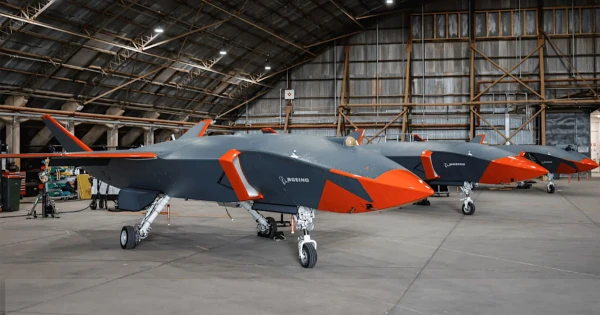
The MQ-28 “Ghost Bat,” a loyal wingman-class unmanned aircraft, made a high-profile debut in a major Pacific exercise this year, marking a significant step in the U.S. military’s push to integrate autonomous systems with manned fighters. The aircraft participated in operations designed to test collaborative combat concepts and demonstrate how unmanned platforms can support, extend, and enhance the capabilities of manned aircraft in contested environments.
Developed as a low-cost, optionally manned platform, the MQ-28 is intended to operate alongside crewed fighters to perform tasks that reduce risk to pilots while multiplying force effects. In the recent Pacific exercise, the drone flew coordinated missions that simulated battlefield roles such as electronic warfare support, sensor fusion, decoy operations, and weapons carriage — all under the umbrella of Collaborative Combat Aircraft (CCA) concepts. These missions demonstrated how a loyal wingman can perform high-risk tasks and enable more survivable, effective air operations.
The deployment highlighted several technical and operational advances. The MQ-28 integrates advanced autonomy software that allows it to execute complex flight profiles and tactical maneuvers while maintaining formation with manned fighters. It also features open-systems architecture for payloads, enabling rapid integration of sensors, jammers, and weapons packages tailored to mission needs. During exercises, operators emphasized the drone’s ability to share targeting data, extend radar coverage, and act as a forward sensor node, feeding consolidated situational awareness to pilots and commanders.

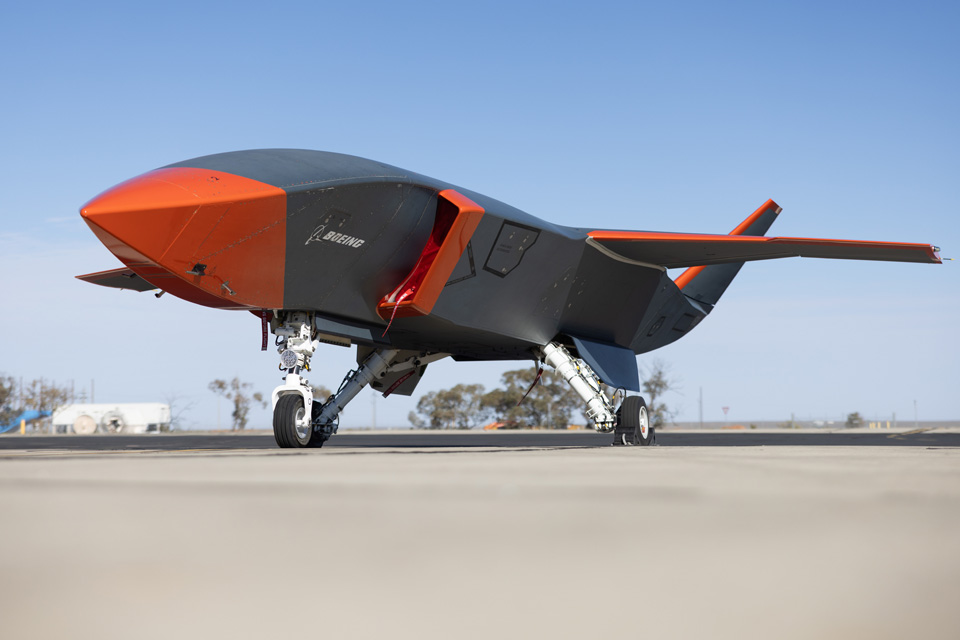
Operational commanders have emphasized that loyal wingman aircraft like the MQ-28 are not intended to replace manned jets but to complement them. By taking on high-threat missions — for example, suppressing enemy air defenses or drawing enemy fire — CCAs can reduce pilot exposure and preserve valuable assets. The MQ-28’s size and cost profile make it suitable for attritable employment, meaning commanders can accept a higher risk of loss compared with multi-hundred-million-dollar crewed platforms.
Interoperability and secure data links were central focuses during the Pacific trials. The exercise tested resilient communications and data fusion between the MQ-28, fighter aircraft, and command-and-control nodes. Planners stressed the importance of robust anti-jam capabilities and low-latency information exchange to maintain effectiveness in contested electromagnetic environments. These demonstrations aimed to prove the concept that distributed, mixed manned-unmanned teams can act as cohesive combat formations across a wide battlespace.
The MQ-28’s participation in the Pacific exercise also underlined the U.S. Department of Defense’s broader investment in artificial intelligence and autonomy for mission-critical roles. The platform’s autonomy stack permits preprogrammed mission execution and dynamic in-flight retasking based on operator intent and changing tactical conditions. This capability allows a single pilot to supervise several unmanned wingmen, increasing operational tempo and providing commanders with more flexible force packages.
Export controls and coalition integration were additional considerations during the deployment. Allies participating in Pacific security architectures have expressed interest in loyal wingman concepts to bolster regional deterrence. While multinational exercises help refine interoperability, integrating autonomous systems across different air forces requires harmonized standards for data exchange, secure communications, and rules of engagement that account for autonomous behaviors.
Safety and rules-of-engagement policies remain key areas of ongoing development. As CCAs take on more complex roles, the U.S. Air Force and defense partners are refining procedures for human oversight, weapons authorization, and system fail-safes to ensure lawful, accountable use of force. Recent trials emphasized clear supervisory chains and the capability for immediate human intervention to abort or modify autonomous actions where necessary.
Industry partners continue to iterate on the MQ-28’s design to expand payload flexibility and mission endurance. Future upgrades under consideration include enhanced sensor suites for long-range targeting, expanded electronic warfare capabilities, and modular weapon stations that allow mission packages to be swapped rapidly between flights. These changes reflect a doctrine that prizes adaptability — enabling commanders to configure CCAs for suppression of enemy air defenses, strike support, intelligence, surveillance, reconnaissance, or decoy missions on short notice.
The service’s CCA roadmap envisions mixed formations of manned fighters and unmanned wingmen operating together to complicate enemy decision-making and increase friendly force survivability. As the MQ-28 transitions from testing to routine deployment within large-scale exercises, it will offer concrete lessons about command-and-control concepts, attritable force application, and multinational employment. Those lessons will shape procurement, training, and tactical doctrine for the next generation of air combat.
The MQ-28’s Pacific exercise debut underscores a broader shift in airpower thinking: toward distributed, networked systems where autonomy and human judgment combine to address increasingly sophisticated threats. As fielding continues and capabilities mature, loyal wingman aircraft are likely to play increasingly prominent roles in planning for high-end conflict, regional deterrence, and coalition operations across the Indo-Pacific and beyond.