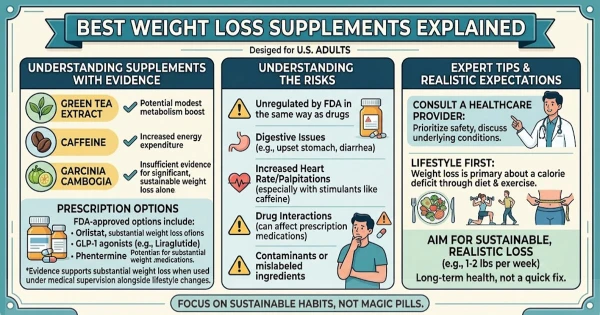
Weight loss supplements are widely marketed, but only a small number have any meaningful evidence behind them, and even those work best as add-ons to diet and exercise rather than quick fixes. For U.S. adults trying to lose weight safely, the most useful supplements are usually the ones that help with fullness, calorie control, or correcting a nutrient gap—not the flashy “fat burners” making big promises.
Why this topic matters now
Weight loss remains one of the most searched health topics in the United States, and supplement ads can make it hard to separate science from marketing. Many products promise faster metabolism, appetite suppression, or “stubborn fat” loss, but the evidence is often limited, and some ingredients can raise safety concerns.
That matters because people often spend money on products that do little, delay proven treatment, or interact with medications. A clear, evidence-based guide helps readers focus on options that are more likely to help and less likely to harm.

What weight loss supplements are
Weight loss supplements are over-the-counter products sold as pills, powders, drinks, gummies, or capsules that claim to support fat loss, reduce appetite, boost metabolism, or block calorie absorption. Unlike prescription weight-loss medicines, supplements do not undergo the same rigorous premarket review for effectiveness, so quality and claims can vary widely.
The most realistic way to think about them is this: some may offer small support, but none replaces a calorie deficit, physical activity, sleep, and behavior change. If a product sounds like it can melt fat quickly without effort, that is a red flag.
Supplements with the best evidence
The strongest evidence usually goes to supplements that help people eat less, feel fuller, or stick to a healthier eating pattern. These are not miracle products, but they can be useful in the right context.
Fiber supplements
Fiber supplements, especially soluble fiber, may help people feel fuller and reduce overall calorie intake. They are often more useful for appetite control than for direct fat burning.
Common examples include:
-
Psyllium.
-
Glucomannan.
-
Other soluble fiber powders.
Fiber is also helpful for digestive health, but it works best when taken with enough water. Too much too quickly can cause bloating or constipation.
Protein supplements
Protein powders and ready-to-drink shakes can support weight loss by improving satiety and helping preserve lean muscle during calorie restriction. This can make it easier to stick to a reduced-calorie plan.
Useful forms include:
-
Whey protein.
-
Casein protein.
-
Plant-based protein blends.
Protein supplements are not fat burners, but they can make meals more filling and help reduce snacking. They are especially useful when a person struggles to reach protein goals through food alone.
Caffeine
Caffeine can slightly increase energy expenditure and improve exercise performance, which may indirectly support weight management. The effect is modest, and tolerance builds quickly.
Sources include:
-
Coffee.
-
Tea.
-
Caffeine-containing pills or gummies.
Too much caffeine can cause jitteriness, heart palpitations, anxiety, or sleep problems. For many adults, the biggest downside is that sleep disruption can work against weight loss.
Probiotics
Some probiotic products may modestly influence body weight, appetite, or gut health, but results are inconsistent and strain-specific. Probiotics should be viewed as supportive rather than transformative.
They may be more helpful for people with digestive issues than for direct weight loss. Because formulas differ widely, not every probiotic has the same potential effect.
Berberine
Berberine has become popular because of early research suggesting possible benefits for blood sugar and metabolic health. That may make it interesting for some people trying to lose weight, especially those with insulin resistance concerns, but evidence is still emerging and it is not a guaranteed solution.
It can also interact with medications and cause gastrointestinal side effects. Anyone taking diabetes drugs, blood pressure drugs, or other prescriptions should be especially cautious.
Supplements people should be careful with
Many products marketed as fat burners are built around stimulants, proprietary blends, or trendy ingredients with weak evidence. Some may create a temporary sense of energy without delivering real weight loss.
Green tea extract
Green tea extract is often included in weight loss formulas because it contains compounds that may slightly affect metabolism. Still, the effect is usually small, and concentrated extracts have been linked to liver safety concerns in some cases.
Drinking brewed tea is generally a more conservative approach than taking high-dose extracts. If a product relies heavily on stimulant-style promises, that does not make it a better choice.
Garcinia cambogia
Garcinia cambogia has been heavily marketed, but the evidence for meaningful weight loss is weak. It is a common example of a supplement that sounds promising but has not lived up to the hype in reliable human research.
Some reports have also raised safety questions. For a U.S. audience, the main takeaway is simple: popularity does not equal proof.
Bitter orange and other stimulant blends
Some weight-loss supplements contain bitter orange, synephrine, or similar stimulant combinations. These can raise heart rate and blood pressure, which may be risky for some adults, especially those with heart disease or anxiety.
This category deserves caution because labels do not always clearly communicate stimulant load. A “natural energy” claim can still mean a product has strong physiological effects.
What the latest evidence suggests
The latest broad reviews continue to show a familiar pattern: supplements may help a little, but not nearly as much as diet, exercise, and behavioral support. Even products that appear helpful in research tend to have modest effects and inconsistent results across studies.
That is why many editors and dietitians rank supplements like protein, fiber, and certain metabolic-support products above aggressive fat burners. These categories are more likely to support habits that drive real weight change.
Potential benefits
When a supplement is a good fit, the possible benefits are usually practical rather than dramatic. The goal is often to make it easier to eat less, snack less, or stay consistent with a plan.
Possible benefits include:
-
Feeling fuller between meals.
-
Getting enough protein while dieting.
-
Supporting regular bowel habits with fiber.
-
Slightly improving workout energy with caffeine.
-
Helping fill a nutritional gap in a calorie-restricted diet.
These are supportive effects, not guarantees. A supplement may help one person and do almost nothing for another.
Risks and side effects
The biggest risks come from overstated claims, hidden stimulants, poor manufacturing quality, and ingredient interactions. Because supplements are not regulated like prescription drugs, the label may not tell the full story.
Common concerns include:
-
Nausea or stomach upset.
-
Constipation or bloating.
-
Jitters, anxiety, or insomnia.
-
Increased heart rate.
-
Blood pressure changes.
-
Liver or kidney concerns with certain ingredients.
Safety matters even more for people who are pregnant, breastfeeding, under 18, or managing chronic conditions. In those cases, a supplement should not be started casually.
Who should avoid them
Some adults should avoid weight loss supplements unless a clinician specifically says otherwise. This includes people with heart disease, uncontrolled high blood pressure, anxiety disorders, liver disease, kidney disease, or a history of eating disorders.
Extra caution is also important if you take:
-
Diabetes medications.
-
Blood pressure medications.
-
Antidepressants.
-
Blood thinners.
-
Thyroid medications.
If a product contains multiple stimulants or proprietary blends, the risk is harder to judge. That is another reason to favor simple, well-known ingredients over aggressive “fat burner” formulas.
How to choose wisely
A smarter supplement choice starts with the question: what problem am I trying to solve? Appetite control, protein intake, fiber intake, or energy for workouts all point to different options.
A practical selection process:
-
Choose a goal first, such as fullness or meal replacement.
-
Prefer single-ingredient or clearly labeled products.
-
Avoid “rapid” or “miracle” weight loss claims.
-
Check for third-party testing when possible.
-
Talk to a clinician if you have medical conditions or take medications.
This approach is much safer than buying whatever is trending online. It also makes it easier to notice whether the supplement is actually helping.
Lifestyle changes that matter more
Supplements can only do so much. The most durable weight loss still comes from daily habits that improve calorie balance and consistency.
The highest-value changes include:
-
Eating more protein and fiber.
-
Reducing liquid calories.
-
Planning meals ahead of time.
-
Walking more during the day.
-
Doing strength training and aerobic exercise.
-
Prioritizing sleep.
For many people, these basics outperform any supplement. A modestly helpful product can still be useful, but only after the core habits are in place.
Diet and exercise support
A weight loss plan works best when food choices and activity reinforce each other. That is why protein shakes, fiber supplements, and caffeine are often discussed as “helpers” rather than primary solutions.
Helpful diet strategies:
-
Build meals around lean protein, vegetables, fruit, and high-fiber carbs.
-
Limit ultra-processed snacks that make overeating easy.
-
Use portion-aware meal structure instead of constant grazing.
Helpful exercise strategies:
-
Walk daily.
-
Add resistance training two to four times per week.
-
Use short bouts of activity consistently rather than waiting for perfect workouts.
These habits matter more than any single product. They also make it easier to keep weight off after it comes down.
Myths vs facts
A lot of supplement marketing depends on myths that sound believable. Sorting fact from fiction helps readers avoid expensive mistakes.
-
Myth: A supplement can burn fat without changing diet.
Fact: Real weight loss still depends on calorie balance. -
Myth: “Natural” always means safe.
Fact: Natural ingredients can still cause side effects or interact with medications. -
Myth: More ingredients mean a better formula.
Fact: Complex blends can make safety and effectiveness harder to judge. -
Myth: If a product is popular, it must work.
Fact: Popularity does not prove effectiveness.
Products that may help
If you want to support weight loss without chasing flashy fat burners, a few general product categories can be practical.
Helpful categories include:
-
Protein shakes or meal-replacement products.
-
Fiber supplements like psyllium.
-
Food scale or portion-control tools.
-
Fitness trackers.
-
Refillable water bottles.
-
Healthy cookbooks focused on simple meal prep.
These products do not cause weight loss by themselves, but they can make healthy routines easier to follow. That is often where the real progress happens.
What to expect realistically
The best weight loss supplements are the ones that offer small, believable help without creating unrealistic expectations. Most adults should think in terms of support, not transformation.
A good supplement may help with:
-
Hunger management.
-
Meal consistency.
-
Protein intake.
-
Energy for exercise.
-
Filling a nutritional gap.
A bad supplement usually promises dramatic results, includes too many mystery ingredients, or leans on hype instead of evidence. For a U.S. consumer, the safest path is to treat supplements as optional tools, not the foundation of a weight loss plan.
Conclusion
The best weight loss supplements are usually the simplest ones: fiber, protein, caffeine in sensible amounts, and sometimes carefully chosen metabolic-support products. Even then, the effect is typically modest, and safety should come before speed.
Start with your goal, check the ingredient list, and avoid products that promise fast fat loss with no effort. For anyone with medical conditions or prescription medications, a healthcare professional should help decide whether a supplement is appropriate.
FAQs
1. What is the best weight loss supplement?
The best option depends on the goal, but fiber and protein supplements are often the most practical and evidence-supported choices for appetite control and satiety.
2. Do fat burners really work?
Most fat burners have limited evidence, and any effect is usually small. Some may also cause side effects from stimulants or poorly studied ingredients.
3. Are natural weight loss supplements safe?
Not always. “Natural” does not guarantee safety, especially if a product contains stimulants, concentrated extracts, or ingredients that interact with medications.
4. Can supplements replace diet and exercise?
No. Supplements may support weight loss, but they do not replace calorie control, physical activity, sleep, and behavior change.
5. Is berberine good for weight loss?
Berberine is promising for metabolic health, but weight-loss evidence is still emerging and it may interact with medications. It should be used cautiously.
6. What supplement helps curb appetite the most?
Fiber supplements and protein supplements are often the most useful for feeling full, though individual response varies.
7. Should I take a weight loss supplement every day?
That depends on the ingredient and your health status. Some products are not appropriate for daily use, especially stimulant-heavy formulas.
8. When should I talk to a doctor?
Talk to a doctor before using a supplement if you take medications, have a chronic condition, are pregnant or breastfeeding, or have a history of eating disorders.
Medical Disclaimer: This article is for informational and educational purposes only and should not be considered medical advice. It is not intended to diagnose, treat, cure, or prevent any disease. Always consult a qualified healthcare provider before making decisions about your health, medications, diet, or treatment.
Affiliate Disclosure: Some links in this article may be affiliate links. If you make a purchase through these links, we may earn a commission at no additional cost to you. This helps support our website and allows us to continue creating free content.