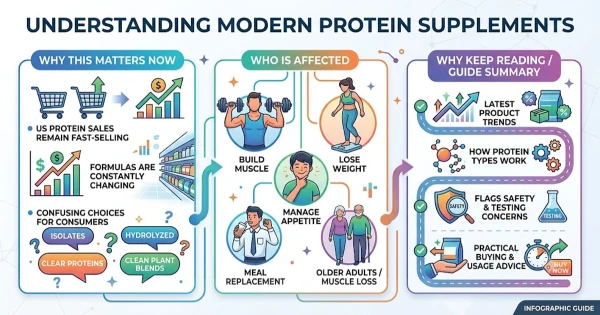
Why this matters now: Protein supplements remain one of the fastest-selling nutrition categories in the U.S., and formulas keep changing — isolates, hydrolyzed proteins, clear proteins, and cleaner plant-based blends — making choices confusing for everyday consumers. Who is affected: anyone trying to build muscle, lose weight, manage appetite, replace meal protein, or who needs convenient, quality protein — from gym beginners to older adults concerned about muscle loss. Why keep reading: this guide summarizes the latest expert-driven product trends, explains how protein types work, flags safety and testing concerns, and gives practical buying and usage advice you can apply today.
What protein powder is
-
Protein powders are concentrated sources of protein derived from foods (milk, eggs, soy, peas, rice, beef) and processed into a powder you mix into liquids.medicalnewstoday
-
They provide a quick way to increase daily protein intake, supplying essential amino acids needed for muscle repair, immune function, and other bodily processes.forbes

Why protein choice matters
-
Different powders vary in protein quality (complete vs incomplete), digestion speed (isolate and hydrolyzed vs casein), and additional ingredients (added sugar, vitamins, probiotics). These differences affect results, digestion, and suitability for allergies or diets.
-
Third-party testing (NSF, Informed-Choice) matters for athletes and anyone concerned about contaminants or hidden ingredients; top-reviewed powders increasingly carry these certifications.linos
Types of protein powders and how they work
-
Whey protein (concentrate, isolate, hydrolyzed): fast-digesting dairy protein with a full amino acid profile, high leucine content (important for muscle protein synthesis), and broad evidence for supporting strength gains when paired with resistance training.
-
Casein: slow-digesting milk protein often used at night to supply amino acids over hours.healthline
-
Egg white protein: dairy-free, high-quality, moderately fast-digesting option.healthline
-
Plant-based proteins (pea, soy, rice, blends): suitable for vegans and those with dairy intolerance; effectiveness depends on formulation and complementary amino acids (blends are usually better).
-
Emerging formats: clear whey and hydrolyzed isolates offer lighter texture or faster absorption for immediate post-workout use. These formats rose in consumer interest in 2026.linos
Latest research and expert insights
-
Evidence supports that when total daily protein and calories are sufficient, adding a quality protein supplement helps increase muscle mass and improve recovery after resistance training. Whey protein, especially isolates and hydrolyzed forms, consistently appear in trials showing modest improvements in muscle protein synthesis post-exercise.
-
For older adults, higher protein intake (spread through the day) is associated with better maintenance of muscle mass; supplements can help meet targets when appetite or meal size is limited.medicalnewstoday
-
Third-party certification and transparency (clear labeling of ingredient doses) are emphasized by dietitians and sports nutritionists as key indicators of a trustworthy product. Brands that list exact ingredient amounts and avoid proprietary blends tend to score higher among experts.
Who should consider protein powder
-
People with increased protein needs: resistance trainers, older adults, those recovering from injury, and people trying to lose fat while preserving lean mass.medicalnewstoday
-
Busy adults who struggle to meet protein targets through whole foods.healthline
-
Vegetarians/vegans can use high-quality plant blends to reach amino acid needs, though they may require slightly higher total protein or complementary food choices.
Benefits and realistic expectations
-
Benefits supported by evidence:
-
Easier to meet daily protein goals, which supports muscle repair and growth when combined with resistance exercise.forbes
-
Convenient, fast post-workout nutrition option for busy people.healthline
-
Can aid weight loss by increasing satiety when used to replace higher-calorie foods.medicalnewstoday
-
-
What protein powder won’t do:
-
Magic muscle growth without progressive resistance training and adequate total calories.forbes
-
Guaranteed weight loss without an energy deficit.medicalnewstoday
-
Potential risks and side effects
-
Digestive issues: some users report bloating, gas, or diarrhea—often with lactose-containing whey concentrates or with certain plant proteins; isolates and hydrolyzed forms may be easier to tolerate for some.
-
Hidden additives: some products add sugars, artificial flavors, or proprietary blends; these can undermine health goals or mask low protein content. Choose transparent labels.
-
Contamination risk: some supplements have been found to contain undeclared substances or contaminants; selecting third-party tested products reduces but does not eliminate risk.linos
-
Special populations: people with kidney disease should consult a clinician before increasing protein intake, and pregnant or breastfeeding people should check with their provider before using concentrated supplements.medicalnewstoday
How to choose the right protein powder
-
Match protein type to goals and tolerance:
-
Muscle gain: whey isolate or hydrolyzed whey for fast absorption and high leucine content.forbes
-
Weight loss: low-calorie, high-protein powders with minimal added sugar and fiber to support fullness.medicalnewstoday
-
Plant-based/vegan: multi-source blends (pea + rice or added complementary proteins) for a complete amino acid profile.linos
-
Sensitive stomachs: isolates, hydrolyzed whey, egg white, or enzyme-added formulas.healthline
-
-
Check the label:
-
Consider taste, mixability, and cost per serving — these determine whether you’ll use it consistently.gq
How to use protein powder effectively
-
Timing and dose:
-
Aim for total daily protein of roughly 0.6–1.0 grams per pound of body weight for active adults (individual needs vary); distribute protein across meals. Protein powder can fill gaps.medicalnewstoday
-
A 20–30 g serving soon after resistance training helps muscle recovery; some research supports a dose around 20–40 g depending on body size and training stimulus.forbes
-
-
Mix and recipes:
-
Mix with water, milk, or smoothies; adding fruit, oats, or nut butters increases calories and nutrients.healthline
-
Use as a meal supplement (Greek yogurt + protein powder + fruit) or in cooking (protein pancakes, baked goods), but note heat can change texture.healthline
-
Products and categories to watch (evidence-based picks and trends)
-
Best overall/value classics: long-standing, widely tested products like Optimum Nutrition Gold Standard remain benchmarks for mixability and value.
-
Best purity/athlete-grade: brands emphasizing minimal ingredients and third-party testing (transparent labeling, grass-fed whey isolates) rank highly for athletes and sensitive users.linos
-
Best plant-based: modern multi-source blends that list amino acid contributions and avoid fillers provide the best performance for vegans.
-
Rising formats: clear whey and hydrolyzed isolates have grown in 2026 for those wanting lighter textures or faster absorption.linos
Products That May Help
-
Fitness trackers: to monitor training load and recovery. (non-prescription product category)
-
Kitchen scale: to measure scoops and servings accurately.
-
High-quality shaker bottle or blender: for consistent mixing.
-
Reusable portion containers: to prep post-workout snacks with protein powder.
(These are general product categories rather than specific brand endorsements.)
Buying and safety checklist (quick)
-
Look for clear protein amount per serving and full ingredient disclosure.linos
-
Prefer third-party tested products (NSF, Informed-Choice) if you compete or want higher assurance.linos
-
Avoid proprietary blends that hide ingredient doses.forbes
-
Watch added sugars and unnecessary fillers if weight or blood sugar control is a goal.medicalnewstoday
Common myths vs facts
-
Myth: All protein powders are the same. Fact: Sources, amino-acid profiles, digestion rates, and additives differ and affect results and tolerability.medicalnewstoday
-
Myth: Protein powder alone builds muscle. Fact: Protein supports muscle repair, but progressive resistance training and overall nutrition are required.forbes
-
Myth: More protein is always better. Fact: Excess protein beyond needs adds calories and stress to kidneys in people with preexisting kidney disease; most people benefit from meeting but not hugely exceeding recommended targets. Consult a clinician for special conditions.medicalnewstoday
Lifestyle, diet, and exercise recommendations
-
Diet: prioritize whole-food protein sources (lean meats, fish, dairy, legumes, eggs) and use protein powder to supplement when needed.medicalnewstoday
-
Exercise: combine resistance training (2–4 sessions/week) with progressive overload to translate protein intake into muscle gains.forbes
-
Sleep and recovery: adequate sleep and calorie balance are essential complements to protein and training.forbes
How to spot misleading claims
-
Beware of absolute claims (“burns fat” or “instant muscle”) and vague ingredient lists. Look for transparent nutrient facts, citations to published research, and trusted certifications.linos
Key takeaways (concise)
-
Protein powders are a practical tool to meet protein needs and support training or recovery but aren’t a shortcut to results.forbes
-
Choose the protein type that matches your goals and tolerances, prioritize transparent labels and third-party testing, and use powder to fill dietary gaps.
Practical next steps
-
Calculate your approximate daily protein need based on activity and goals, check how much you get from food, and use protein powder to cover shortfalls.medicalnewstoday
-
If you compete or have medical conditions, choose third-party tested products and consult your healthcare provider.linos
-
Try single-serving sample packs when available to test taste and digestion before buying a large tub.gq
FAQs
-
What is the best protein powder for muscle gain?
-
For most people seeking muscle gains, a whey protein isolate or hydrolyzed whey with 20–30 g of protein per serving and a high leucine content is a top choice; choose a third-party tested brand for purity.
-
Is plant-based protein as effective as whey?
-
High-quality plant blends (pea + rice or multi-source formulations) can be as effective when total daily protein is matched, though they may require slightly higher amounts or careful combination to match whey’s amino acid profile.
-
How much protein powder should I take per day?
-
Most users benefit from 20–30 g per serving; total daily protein should match your goals (commonly ~0.6–1.0 g per lb for active adults) with powder used to fill gaps.
-
Are protein powders safe long-term?
-
For healthy adults, using protein powder as part of a balanced diet is generally safe; people with kidney disease, certain metabolic conditions, or on medications should consult a provider. Choose reputable, third-party tested brands to minimize contamination risk.
-
When is the best time to take protein powder?
-
The most important factor is total daily protein; a 20–30 g serving soon after resistance training supports recovery, but timing is less critical than overall intake across the day.forbes
-
Do protein powders cause weight gain?
-
Protein powder contributes calories; used without adjusting total calories it can cause weight gain. Used to replace higher-calorie snacks or to increase satiety, it can support weight loss when in a calorie deficit.medicalnewstoday
-
How do I choose a clean protein powder?
-
Look for short ingredient lists, minimal added sugar, clear protein grams per serving, and third-party testing. Avoid products that hide dosages in proprietary blends.
-
Can children use protein powder?
-
Whole food is preferred; supplements are usually unnecessary for most children. Consult a pediatrician before giving concentrated protein supplements to minors.
Medical Disclaimer: This article is for informational and educational purposes only and should not be considered medical advice. It is not intended to diagnose, treat, cure, or prevent any disease. Always consult a qualified healthcare provider before making decisions about your health, medications, diet, or treatment.