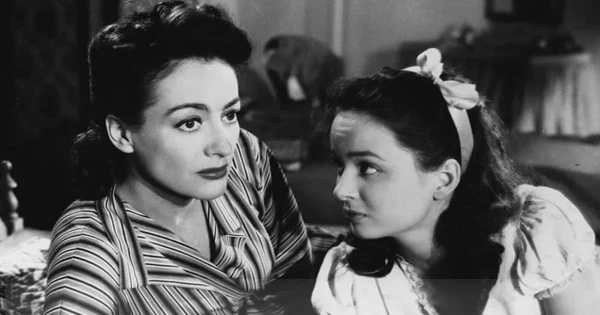
Ann Blyth, the celebrated actress who earned an Academy Award nomination for her unforgettable performance as the manipulative daughter Veda in the classic film noir "Mildred Pierce," has passed away at the age of 98. The actress died on Wednesday, June 24, from natural causes, according to reports confirmed by entertainment journalist George Pennacchio on Thursday, June 25. Her death marks the end of an era, as she was among the last surviving stars from Hollywood's Golden Age.
Born Anne Blythe in Mount Kisco, New York, in 1928, she would later drop the final "e" from both her first and last names, a subtle change that became part of her professional identity. Her early life was marked by hardship when her father abandoned the family, leaving her mother to raise Blyth and her sister. The family relocated to New York City in search of better opportunities, a move that would ultimately set the stage for Blyth's remarkable career in entertainment.
Blyth's journey into show business began at an astonishingly young age. She started working as a child actor on radio at just five years old, demonstrating an early talent for performance that would only grow stronger. By the age of nine, she had joined the New York Children's Opera Company, where she honed her vocal and acting skills. This early training provided the foundation for a career that would span decades and solidify her place in cinema history.
'Michael' Biopic Shatters Box Office Records, Becomes Highest-Grossing Music Biography in History

Her breakthrough role came in 1945 when she was cast as Veda Pierce in "Mildred Pierce," a film that would define her career and earn her critical acclaim. The film, directed by Michael Curtiz, starred Joan Crawford in the titular role of a devoted mother who builds a successful restaurant business while struggling to manage her difficult and ambitious daughter. Blyth's portrayal of Veda was both chilling and compelling, capturing the character's ruthlessness and emotional manipulation with remarkable nuance. Her performance earned her a nomination for Best Supporting Actress at the 18th Academy Awards, cementing her status as one of Hollywood's most promising young talents.
"Mildred Pierce" itself was a critical and commercial success, receiving six Academy Award nominations at the 1946 ceremony. The film ultimately won one Oscar, with Joan Crawford taking home the Best Actress award for her powerful performance as the self-made mother. This was the only Academy Award of Crawford's illustrious career, and the film remains a landmark in film noir history. The movie's exploration of ambition, family dynamics, and the dark side of the American Dream continues to resonate with audiences and scholars today.
Following her success in "Mildred Pierce," Blyth continued to work steadily throughout the late 1940s and 1950s. She appeared in a variety of films, including "The Great Caruso" alongside Mario Lanza, where she showcased her singing abilities, and "The Helen Morgan Story," in which she portrayed the tragic singer. She also starred in "Kismet" and "The Student Prince," further demonstrating her versatility as both an actress and a vocalist. Her ability to transition between dramatic and musical roles set her apart from many of her contemporaries.
As the Golden Age of Hollywood gave way to the changing landscape of American cinema in the 1960s, Blyth gradually shifted her focus to television. She appeared in numerous television series and made-for-TV movies, remaining a familiar face to audiences for decades. Despite the decline in her film appearances, she maintained a dignified presence in the entertainment industry and continued to be celebrated for her contributions to the craft.
Throughout her life, Blyth remained connected to her fans and the film community. She occasionally participated in retrospective screenings and interviews, sharing memories of her time working with legendary figures like Joan Crawford and Michael Curtiz. These appearances offered valuable insights into the making of some of Hollywood's most enduring classics and allowed new generations to appreciate her work.
Her passing represents a significant loss for the film community and for those who cherish classic Hollywood cinema. She was one of the last living links to an era that produced some of the most iconic films and performances in American history. Her legacy, however, is assured through her body of work, which continues to be studied, admired, and enjoyed by film enthusiasts around the world.
Blyth's career spanned over five decades, and her contributions to film and television have been recognized by historians and critics as both significant and enduring. Her performance in "Mildred Pierce" remains a touchstone for character acting, demonstrating how a supporting role can leave an indelible mark on cinematic history. The complexity she brought to Veda Pierce transformed what could have been a one-dimensional villain into a character of profound psychological depth.
As the years passed, Blyth lived a life away from the spotlight, enjoying her family and the respect of her peers. She avoided the turmoil and scandal that afflicted many of her contemporaries, maintaining instead a reputation for professionalism and grace. Her ability to navigate the often-turbulent waters of Hollywood with such poise was itself a remarkable achievement.
In recent years, there had been renewed interest in Blyth's career, thanks in part to retrospectives and film restorations that brought her work to new audiences. The revival of classic film noir and the ongoing scholarly examination of Hollywood's Golden Age have ensured that her legacy remains vibrant. Her passing at 98 serves as a poignant reminder of the passage of time and the enduring power of great storytelling.
The film industry has lost a cherished figure whose work enriched American cinema. Ann Blyth will be remembered not only for her iconic role in "Mildred Pierce" but also for the dignity, talent, and resilience she exhibited throughout her long and remarkable life. Her contributions to the arts will continue to inspire performers and delight audiences for generations to come.