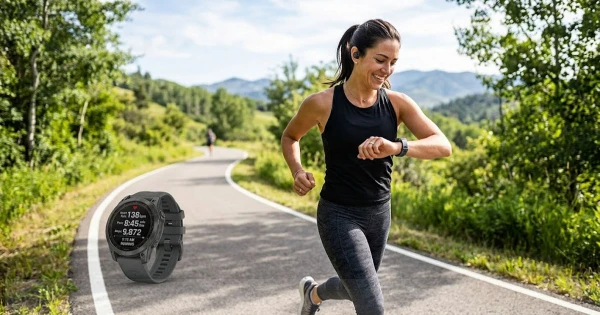
More Americans than ever are paying attention to their daily step counts, resting heart rates, and sleep cycles — and for good reason. Chronic diseases like heart disease, diabetes, and obesity account for a staggering share of U.S. healthcare costs, and small daily habits can make a significant difference in long-term outcomes.
Fitness trackers have evolved from simple pedometers into sophisticated personal health monitors. Whether you're a seasoned athlete, a busy professional trying to move more, or someone newly committed to better health, the right fitness tracker can become one of the most powerful tools in your wellness routine.
But with dozens of options on the market — ranging from $25 wristbands to $400 smartwatches — figuring out which one actually fits your life can feel overwhelming. This guide breaks it all down so you can make a confident, informed decision.

What Is a Fitness Tracker — and How Does It Work?
A fitness tracker is a wearable electronic device designed to monitor and record physical activity and various health metrics. Most devices sit on the wrist like a watch or bracelet, though newer form factors like smart rings and screenless bands are gaining popularity.
At their core, fitness trackers use sensors to gather data about your body and movements. The most common sensor is an accelerometer, which detects motion and translates it into step counts and activity levels. More advanced devices layer in optical heart rate sensors, GPS chips, skin temperature sensors, and even electrocardiogram (ECG) capabilities.
The data is then synced — usually via Bluetooth — to a companion smartphone app, where you can review trends, set goals, and sometimes receive personalized health coaching.
The Technology Behind the Numbers
Modern fitness trackers rely heavily on a technology called photoplethysmography (PPG). This involves shining a small light — typically green LED — against the skin and measuring how blood flow changes with each heartbeat. From this, the device estimates your heart rate and, in some cases, your blood oxygen saturation (SpO2).
Heart rate variability (HRV), which measures the slight variations in time between heartbeats, is another metric many newer devices track. HRV is considered a useful indicator of how well your autonomic nervous system is functioning and how well-recovered your body is from stress and exercise.
Why Fitness Trackers Matter for Your Health
The appeal of fitness trackers goes beyond simple curiosity. Research published by the National Institutes of Health (NIH) has shown that individuals who use activity trackers tend to increase their daily step count and weekly physical activity levels compared to those who don't use them.
This matters because physical inactivity is one of the leading risk factors for cardiovascular disease, type 2 diabetes, and certain cancers. The World Health Organization (WHO) recommends at least 150 to 300 minutes of moderate-intensity aerobic exercise per week — a target that most Americans currently miss.
A fitness tracker creates accountability. When you can see exactly how many steps you've taken, how many hours of deep sleep you got, or how elevated your resting heart rate has been, you have real, actionable information to work with — not just guesses.
A Tool for Chronic Disease Management
Beyond general wellness, fitness trackers are increasingly being recognized for their potential role in managing chronic health conditions. According to the CDC, chronic diseases like obesity, diabetes, and hypertension account for roughly 75% of total healthcare spending in the United States.
Fitness trackers can help individuals with these conditions by:
- Monitoring daily activity levels and prompting more movement
- Alerting users to irregular heart rhythms that may require medical attention
- Tracking sleep quality, which is closely linked to metabolic health and weight management
- Supporting stress awareness through heart rate monitoring throughout the day
That said, fitness trackers are not medical devices and should never replace professional medical advice or diagnosis. They work best as complementary tools alongside regular care from your doctor.
Key Features to Look for in a Fitness Tracker
Not all fitness trackers are created equal. The best one for you depends heavily on your personal health goals and lifestyle. Here are the most important features to consider.
Heart Rate Monitoring
Continuous heart rate tracking is now standard on most mid-range and premium trackers. This feature helps you understand your resting heart rate (a key indicator of cardiovascular fitness), monitor exertion during workouts, and detect unusual patterns that might warrant a doctor's visit.
Research has shown that during mild to moderate physical activity, the heart rate measurements from fitness trackers and smartwatches are highly accurate when compared to gold-standard chest strap monitors.
Sleep Tracking
Quality sleep is foundational to health. Wearable sleep trackers can provide detailed data on your sleep stages — light, deep, and REM — and flag disruptions throughout the night. These devices use a combination of motion detection, heart rate, and sometimes skin temperature to estimate your sleep architecture.
Researchers in clinical sleep settings have noted that consumer wearables now offer an unprecedented volume of real-world sleep data that was previously only available in laboratory settings. While they're not a replacement for a clinical sleep study, they can help identify patterns worth discussing with your doctor.
GPS Tracking
Built-in GPS is essential for runners, cyclists, and hikers who want accurate distance, pace, and route data without needing to carry their phone. Some budget-friendly trackers use "connected GPS," meaning they borrow the GPS signal from your paired smartphone — a decent option if you usually exercise with your phone anyway.
SpO2 (Blood Oxygen) Monitoring
SpO2 sensors measure the percentage of oxygen in your blood. Most healthy adults maintain levels between 95% and 100%. While fitness trackers are not medical-grade pulse oximeters, they can flag consistently low readings that may be worth discussing with a healthcare provider, particularly for those concerned about sleep apnea or respiratory health.
Battery Life
Battery life varies widely. Basic wristbands can last 7 to 14 days on a single charge, while feature-rich smartwatches may need nightly charging. Consider how frequently you're willing to charge your device — especially if you want to track sleep consistently.
App Ecosystem and Subscription Costs
Many trackers sync with robust apps that provide dashboards, coaching, and trend analysis. Some manufacturers — notably Whoop and Fitbit (for premium features) — require ongoing subscription fees to unlock the full value of their platform. Factor this into your total cost calculation.
The Best Fitness Trackers in 2026: Expert-Tested Picks
The fitness tracker market has matured significantly. Here are the standout options across different categories based on expert testing and hands-on reviews.
Best Overall: Amazfit Active 2
For U.S. buyers seeking a balance of features, accuracy, and value, the Amazfit Active 2 consistently earns top marks. It offers accurate heart rate and sleep tracking, built-in GPS, SpO2 monitoring, and an impressive battery life — all without requiring a subscription. The companion app is clean and intuitive, making it accessible for beginners while offering enough depth for more data-driven users.
Best for Serious Athletes: Garmin Forerunner Series
Garmin has long been the gold standard for dedicated fitness tracking, particularly for runners and endurance athletes. The Forerunner lineup offers precise GPS accuracy, advanced training load metrics, recovery advisor tools, and sport-specific modes for dozens of activities. Battery life on most models extends well beyond a week. Garmin's ecosystem is deep, and the devices are built to last.
Best Smartwatch Option: Apple Watch Series 11
For iPhone users, the Apple Watch Series 11 remains one of the most capable health wearables available. Lab testing has found its heart rate monitoring to be exceptionally accurate, with an error rate under 1%. It includes ECG capabilities, fall detection, crash detection, and a growing suite of health sensors. Battery life has improved with recent models, now reaching around 30 hours with regular use and fast-charging capability. The Apple Health app integrates seamlessly with medical records at many U.S. healthcare systems.
Best for Recovery and Performance: Whoop 5.0
Whoop takes a different philosophy than most fitness trackers. It's a screenless band paired with a detailed app focused entirely on recovery, strain, and sleep. It tracks heart rate variability, respiratory rate, and sleep stages to give you a daily recovery score that tells you how hard you should push in training. It requires a subscription, but for athletes who take recovery seriously, many find the investment worthwhile. Battery life is up to 14 days, and the on-wrist charging system means you never have to take it off.
Best Budget Option: Fitbit Inspire 3
For beginners or those who want solid fundamentals without a high price tag, the Fitbit Inspire 3 delivers. It tracks steps, heart rate, sleep stages, stress, and activity with a slim, comfortable design. It comes with a six-month Fitbit Premium membership and integrates with both iOS and Android. The interface is straightforward, and the data is presented clearly in the Fitbit app.
Best Screen-Free Tracker: Oura Ring 4
The Oura Ring is a smart ring worn on the finger — a discreet, jewelry-like alternative to wrist-based trackers. It collects a rich set of physiological data, including HRV, skin temperature, blood oxygen, and sleep stages. It produces daily readiness, sleep, and activity scores that many users find motivating and actionable. The ring requires a monthly subscription for full feature access. It's a strong choice for those who dislike wearing wrist devices.
Who Benefits Most from a Fitness Tracker?
Fitness trackers are useful across a wide range of health situations:
- People with sedentary jobs who need reminders to move and concrete data on daily activity
- Individuals managing heart health who want to monitor resting heart rate and get alerts for irregular rhythms
- Those with sleep issues who want objective data on their sleep quality and duration
- Athletes and active individuals who want to optimize training load and recovery
- Anyone trying to lose weight or build healthier habits who benefits from daily accountability
- Older adults looking for fall detection and medical alert features built into a wearable
Potential Limitations and Risks to Consider
Fitness trackers are genuinely useful tools, but they're not without limitations.
Accuracy Varies by Activity
While heart rate accuracy during steady-state activities like walking or running is generally good, accuracy can drop during high-intensity interval training, weightlifting, or activities with significant wrist movement. For precise heart rate data during strength training, a chest strap monitor is still considered more accurate.
Data Overload and Health Anxiety
For some users, constant data monitoring can become a source of anxiety rather than empowerment. Obsessing over sleep scores, HRV dips, or step counts can interfere with intuitive listening to your body. If you find that your tracker is causing more stress than motivation, it may be worth adjusting how you engage with the data — or taking breaks from wearing it.
Privacy Considerations
Fitness trackers collect intimate health data. Before purchasing, it's worth reviewing the manufacturer's privacy policy to understand how your data is stored, shared, and potentially used for research or advertising.
Not a Medical Device
This point bears repeating: consumer fitness trackers are not FDA-cleared medical devices (with a few specific exceptions, such as the ECG feature on Apple Watch). They should not be used to diagnose or treat any medical condition. If you notice a concerning trend — like a consistently elevated resting heart rate or irregular readings — bring that information to your doctor rather than drawing your own conclusions.
How to Get the Most Out of Your Fitness Tracker
Owning a fitness tracker is just the first step. Here's how to make it work for your health:
- Set realistic goals. Start with modest targets — like increasing your daily step count by 1,000 steps per week — rather than immediately chasing lofty numbers.
- Use it consistently. Wear your tracker around the clock, including during sleep, to get the most accurate and complete data picture.
- Focus on trends, not single days. One bad night of sleep or a low-activity day tells you little. Patterns over weeks and months are where the insight lives.
- Share data with your doctor. Many physicians appreciate when patients bring objective activity and sleep data to appointments. It can inform conversations about lifestyle changes, medication adjustments, or referrals to specialists.
- Pair it with other healthy habits. A fitness tracker works best as part of a broader commitment to health — not as a magic solution on its own. Combine consistent tracking with balanced nutrition, stress management, and regular preventive care.
Products That May Help
In addition to a fitness tracker, consider these complementary tools for a more complete wellness picture:
- Smart scales with body composition analysis — track weight, body fat percentage, and muscle mass alongside your activity data
- Blood pressure monitors — useful for those managing hypertension or cardiovascular risk, providing readings that complement heart rate data from your tracker
- Subscription-based workout apps — platforms like Peloton, Apple Fitness+, or Nike Training Club integrate with most major trackers for guided workouts
- Sleep hygiene products — white noise machines, blue light blocking glasses, and blackout curtains complement sleep data insights from your tracker
Key Takeaways
Fitness trackers have become meaningful health tools — not just tech gadgets. When chosen thoughtfully and used consistently, they can support increased physical activity, better sleep awareness, and earlier identification of health patterns worth discussing with a doctor.
The best fitness tracker is the one you'll actually wear. Consider your health goals, budget, preferred form factor, and tolerance for subscription fees before committing. And remember: the data your tracker collects is only as valuable as what you do with it.
As always, if you have specific health concerns or are managing a chronic condition, speak with a qualified healthcare provider before making significant changes to your exercise routine or interpreting health data from a wearable device.
Frequently Asked Questions
Q: What is the most accurate fitness tracker for heart rate monitoring? A: Based on lab testing, the Apple Watch Series 11 ranks among the most accurate consumer heart rate monitors, with an error rate under 1% in controlled settings. Garmin devices are also consistently rated highly for accuracy, particularly during steady-state cardio activities. For weight training or high-intensity intervals, a dedicated chest strap monitor remains the most accurate option.
Q: Do I need to pay a subscription for a fitness tracker? A: Not necessarily. Devices like the Amazfit Active 2, Garmin Forerunner series, and Fitbit Inspire 3 (for basic features) provide solid functionality without ongoing subscription fees. Whoop and Oura Ring require subscriptions to access their full feature sets. Always factor the subscription cost into your total budget when comparing devices.
Q: Can a fitness tracker detect heart problems? A: Some fitness trackers — particularly those with ECG capability like the Apple Watch — can detect atrial fibrillation (AFib), an irregular heart rhythm. However, consumer-grade fitness trackers are not medical devices and cannot diagnose heart disease or other cardiac conditions. If your tracker flags an irregular reading, consult a cardiologist for a proper evaluation.
Q: How accurate is sleep tracking on a fitness tracker? A: Consumer wearable sleep tracking has improved significantly in recent years. Devices can now provide reasonably accurate estimates of sleep duration, stages, and disruptions using heart rate and movement data. That said, they are not as precise as clinical polysomnography (a sleep lab study). They work best for identifying general trends in sleep quality over time rather than providing exact sleep stage data.
Q: What is HRV and why does it matter on a fitness tracker? A: HRV, or heart rate variability, measures the variation in time between consecutive heartbeats. Higher HRV generally indicates better cardiovascular fitness and autonomic nervous system health, while lower HRV can reflect fatigue, stress, illness, or overtraining. Many premium trackers use HRV as a key input for daily readiness or recovery scores, helping athletes determine when to push hard and when to rest.
Q: Which fitness tracker is best for beginners? A: The Fitbit Inspire 3 is widely recommended for beginners thanks to its simple interface, slim design, solid battery life, and approachable companion app. The Amazfit Bip 6 is another strong entry-level option at a lower price point. Both offer step tracking, heart rate monitoring, sleep tracking, and smartphone notifications without overwhelming the user with complex metrics.
Q: Is it safe to wear a fitness tracker all the time? A: For most people, wearing a fitness tracker continuously is safe. Some individuals experience minor skin irritation from sweat and device friction — wearing the tracker slightly looser and periodically removing it to clean both the band and skin can usually resolve this. If you notice persistent rash, redness, or irritation, consult a dermatologist. People with pacemakers or other implanted devices should consult their cardiologist before using a fitness tracker that includes ECG features.
Q: What's the difference between a fitness tracker and a smartwatch? A: Fitness trackers are primarily focused on health and activity monitoring, while smartwatches add communication, navigation, and app functionality. Smartwatches like the Apple Watch and Samsung Galaxy Watch include phone call capability, streaming apps, and contactless payment alongside health sensors. Dedicated fitness trackers tend to offer longer battery life and a simpler, more focused experience. The best choice depends on whether you want a health monitor or a mini-computer on your wrist.
Medical Disclaimer: This article is for informational and educational purposes only and should not be considered medical advice. It is not intended to diagnose, treat, cure, or prevent any disease. Always consult a qualified healthcare provider before making decisions about your health, medications, diet, or treatment.