More than 38 million Americans live with diabetes, and another 98 million have prediabetes — the majority of them undiagnosed, according to the Centers for Disease Control and Prevention (CDC). That's well over a third of the entire U.S. population navigating some form of blood sugar concern, often without realizing it.
Knowing your blood glucose levels in real time can make the difference between catching a dangerous dip before it becomes a crisis and responding to one after the fact. Whether you have been diagnosed with type 1 or type 2 diabetes, are living with prediabetes, or simply want to understand how your meals and workouts affect your body, the right glucose monitor gives you that power.
The technology has advanced dramatically. Gone are the days when managing blood sugar meant painful fingersticks every few hours. Today's devices — from compact wearable sensors to over-the-counter wellness trackers — make glucose monitoring smarter, more accurate, and more accessible than ever. But with so many options on the market, choosing the right one can feel overwhelming.

This guide breaks it all down. We'll explain how different types of glucose monitors work, what to look for before you buy, compare the top devices available in 2025, and answer the questions most people are searching for right now.
What Is a Glucose Monitor and How Does It Work?
A glucose monitor is a medical or consumer device used to measure the concentration of glucose (sugar) in your blood or the fluid just beneath your skin. The reading helps you and your healthcare provider understand how your body is responding to food, exercise, medication, stress, and sleep.
There are two main categories:
- Blood Glucose Meters (BGMs): Traditional fingerstick devices that give a single reading from a drop of blood. They are inexpensive, widely available, and accurate for spot checks.
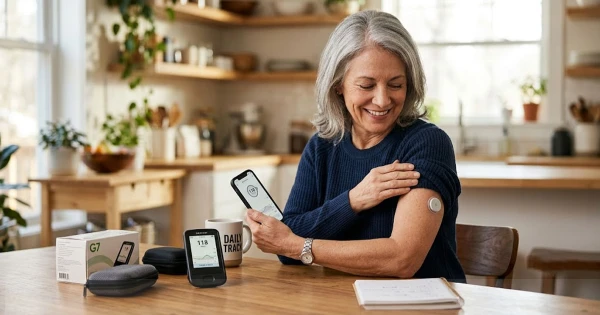
- Continuous Glucose Monitors (CGMs): Small wearable sensors, typically worn on the arm or abdomen, that track glucose levels around the clock, sending readings to a smartphone or receiver every few minutes.
CGMs measure glucose in the interstitial fluid — the fluid surrounding your cells just under the skin — rather than directly in your blood. Because of this, CGM readings may lag behind blood glucose readings by about five to fifteen minutes, especially during periods of rapid change like after a meal or during exercise. This is entirely normal and expected. Most modern CGMs account for this with trend arrows and predictive alerts.
Blood Glucose Meter vs. Continuous Glucose Monitor: Which Is Right for You?
Both types of monitors serve different needs. Here is how they compare:
Blood Glucose Meters (BGMs)
- Require a fingerstick to draw a small drop of blood
- Provide a single, immediate reading
- Typically cost less upfront (meters range from $10–$30; test strips add ongoing cost)
- No prescription needed for the meter itself
- Best for: people who need occasional spot checks, those without insurance CGM coverage, backup use alongside a CGM
Continuous Glucose Monitors (CGMs)
- Use a tiny sensor inserted just under the skin (usually on the back of the upper arm or abdomen)
- Provide real-time readings every one to five minutes
- Can alert you to high or low glucose levels — before you feel symptoms
- Most require a prescription; a few are now available over the counter
- Best for: people managing insulin-dependent diabetes, anyone who needs detailed glucose trend data, wellness users who want metabolic insights
For people with type 1 diabetes or those on intensive insulin therapy, CGMs have largely replaced the daily fingerstick routine. For type 2 diabetes patients not using insulin, both options remain practical — and the choice often comes down to insurance coverage, lifestyle, and how much data you want.
Why Glucose Monitoring Matters: The Health Stakes
Uncontrolled blood sugar takes a serious toll on the body over time. According to the American Diabetes Association (ADA), chronically elevated glucose levels can damage the kidneys, nerves, eyes, and cardiovascular system. Hypoglycemia (low blood sugar) can cause confusion, loss of consciousness, and in severe cases, death.
Real-time glucose data changes the equation. Research published in peer-reviewed journals such as Diabetes Technology & Therapeutics has shown that CGM use is associated with improved time-in-range (the percentage of time glucose stays within a healthy window), lower A1C levels, and a reduced risk of dangerous hypoglycemic episodes.
Even for people without a diabetes diagnosis, understanding your glucose response to meals, stress, and sleep can support better food choices, more effective workouts, and overall metabolic health. This has fueled a wave of over-the-counter CGM products designed specifically for wellness users — not just those managing a medical diagnosis.
The Best Glucose Monitors of 2025: Reviewed
The devices below represent the leading options currently available in the United States, based on clinical accuracy, ease of use, wear time, features, and user feedback.
1. Dexcom G7 — Best Overall CGM
The Dexcom G7 is widely regarded as one of the most accurate and feature-rich CGMs on the market. The device received FDA clearance for up to 15 days of continuous wear, and features a 30-minute warm-up period — the fastest of any prescription CGM available in 2025.
Key features include:
- Accuracy: Best-in-class Mean Absolute Relative Difference (MARD), a measure of how closely the CGM reading matches actual blood glucose
- Connectivity: Sends glucose readings directly to a compatible smartphone or Dexcom receiver in real time
- Alerts: Customizable high and low glucose alerts, including a "Urgent Low Soon" predictive warning
- Integration: Compatible with multiple automated insulin delivery (AID) systems, including the Tandem t:slim X2, Omnipod 5, and others
- Pregnancy: The only CGM currently FDA-cleared for use during pregnancy
The G7 is slightly smaller than its predecessor, the G6, and applies as a single all-in-one sensor and transmitter unit. It is approved for ages 2 and older and requires a prescription.
Who it's best for: Adults and children with type 1 or type 2 diabetes who want the most advanced, accurate monitoring available.
2. Abbott FreeStyle Libre 3 Plus — Best for Affordability and Continuous Real-Time Data
The FreeStyle Libre 3 Plus is the world's smallest and thinnest CGM sensor — roughly the size of two stacked pennies. It sends glucose readings to your smartphone automatically every minute via Bluetooth, with a Bluetooth range of up to 33 feet.
Key features include:
- Wear time: Up to 15 days per sensor
- Readings: Automatic, real-time updates every minute — no scanning required
- Alerts: Real-time high and low glucose alarms
- Compatibility: Works with multiple AID systems including Tandem t:slim, Omnipod 5, iLet Bionic Pancreas, and Twiist
- Age: Approved for children 2 years and older
- Water resistance: Can be worn during bathing and swimming
The Libre 3 Plus is known for its competitive cost relative to other real-time CGMs, and it remains a popular choice among both clinicians and patients for its balance of accuracy, wear time, and convenience. It requires a prescription.
Who it's best for: People with type 1 or type 2 diabetes who want continuous real-time data, a compact sensor, and cost-effective monitoring.
3. Dexcom Stelo — Best Over-the-Counter CGM for Non-Insulin Users
The Stelo is the first FDA-approved glucose biosensor available in the U.S. without a prescription. Built on the same platform as the Dexcom G7, it is designed specifically for adults with type 2 diabetes who do not use insulin, as well as wellness users who want to understand how lifestyle choices affect their blood sugar.
Key features include:
- No prescription needed: Available directly to consumers online
- Wear time: Up to 15 days per sensor
- App-based insights: Tracks glucose trends, showing how meals, exercise, sleep, and stress affect levels
- Oura Ring integration: Pairs with the Oura Ring for a broader wellness picture
- No safety alarms: Unlike the G7, the Stelo does not send critical high/low glucose alerts — it is not intended for insulin dosing decisions
The Stelo costs approximately $99 for a two-pack (about a one-month supply), with a subscription option bringing the price to around $89 per month.
Who it's best for: Adults with type 2 diabetes not on insulin, or health-conscious individuals who want metabolic insights without a doctor's visit.
4. Medtronic Guardian 4 — Best for Insulin Pump Users
The Medtronic Guardian 4 is designed to work seamlessly with Medtronic's MiniMed 780G insulin pump system, enabling closed-loop automated insulin delivery — sometimes called an "artificial pancreas" system. The pump automatically adjusts insulin based on real-time CGM readings, reducing the manual work of diabetes management.
Key features include:
- Predictive alerts: The Guardian system can predict when blood sugar is trending toward a dangerous level and alert you before it happens
- Pump integration: Fully integrated with the MiniMed 780G for automated basal insulin adjustments
- SmartGuard technology: Uses your glucose data and personal patterns to anticipate fluctuations
This device requires a prescription and is most appropriate for people already using — or considering — Medtronic's insulin pump ecosystem.
Who it's best for: People with type 1 diabetes or insulin-dependent type 2 diabetes who are using or considering a Medtronic insulin pump.
5. Abbott Lingo — Best OTC Option for General Wellness
The Lingo is Abbott's over-the-counter CGM designed for people without a diabetes diagnosis who want to track metabolic health. It uses a simplified "Lingo count" scoring system that translates glucose data into easy-to-understand insights about daily habits.
- No prescription required
- App-based only: All data is managed through the Lingo smartphone app
- Focus: Lifestyle optimization rather than clinical diabetes management
Who it's best for: Curious wellness users, fitness enthusiasts, and anyone interested in understanding how their diet and habits affect blood sugar — without a medical diagnosis.
What to Look for When Choosing a Glucose Monitor
Before selecting a device, consider these key factors:
- Your health situation: Do you have a diabetes diagnosis? Are you insulin-dependent? Your clinical needs should drive the decision.
- Prescription requirement: Dexcom G7, FreeStyle Libre 3 Plus, and Guardian 4 require a prescription. Stelo and Lingo do not.
- Insurance coverage: Most major insurance plans and Medicare cover CGMs for people with diabetes. Check with your provider before purchasing.
- Accuracy: Look for a device with a low MARD score — generally 9% or lower is considered excellent. The Dexcom G7 and FreeStyle Libre 3 Plus are among the most accurate available.
- Alert features: If you use insulin or have experienced low blood sugar unawareness, choose a device with real-time high and low glucose alarms.
- Wear time: Longer sensor life means fewer replacements. Most current CGMs last 10–15 days.
- Smartphone compatibility: Confirm the device is compatible with your phone's operating system (iOS or Android).
- Data sharing: Some devices allow you to share glucose data with family members or caregivers — a useful safety feature, especially for children and older adults.
Common Myths About Glucose Monitors — Debunked
Myth: Only people with type 1 diabetes need a glucose monitor. Fact: Glucose monitoring is beneficial for people with type 1 and type 2 diabetes, prediabetes, and even those without a diagnosis who want to understand their metabolic health.
Myth: CGMs are always painful to wear. Fact: Modern CGMs use a very small filament sensor — most users describe the insertion as a brief pinch at most. Many report forgetting the device is there within minutes.
Myth: Fingerstick meters are obsolete. Fact: Blood glucose meters remain an important tool, especially as a backup for CGM users and for people who do not have CGM coverage. They are also highly accurate for single-point measurements.
Myth: Over-the-counter CGMs are just as good as prescription ones for people with diabetes. Fact: OTC devices like Stelo and Lingo are designed for wellness tracking and non-insulin users. They do not send critical safety alerts and are not appropriate substitutes for prescription-grade CGMs in people managing insulin therapy.
Myth: CGMs are too expensive for most people. Fact: Most health insurance plans, Medicare, and Medicaid now cover CGMs for qualifying patients with diabetes. Many manufacturers also offer patient assistance programs.
Products That May Help
If you are exploring glucose monitoring, the following general product categories are worth considering alongside your device:
- Smartphone-compatible CGM systems that sync with existing health apps (such as Apple Health or Google Fit) for a holistic view of your health data
- Glucose meter test strip subscription services for people relying on traditional BGMs
- CGM adhesive patches that help keep sensors secure during workouts, swimming, or hot weather
- Diabetes management apps such as LibreView, Dexcom Clarity, MySugr, or Glooko for tracking trends over time
- Medical ID wristbands or apps that communicate your health status to first responders if you experience a severe glucose event
Always discuss device selection with your healthcare provider or a certified diabetes care and education specialist (CDCES).
Key Takeaways
Managing blood sugar starts with having the right information at the right time. The best glucose monitor for you depends on your health needs, whether you require a prescription, your budget, and how much detail you want from your data.
Here's a quick summary:
- For prescription CGM users with diabetes: The Dexcom G7 or FreeStyle Libre 3 Plus are the top-tier choices for accuracy, wear time, and ease of use.
- For insulin pump users: The Medtronic Guardian 4 paired with the MiniMed 780G offers advanced automated insulin delivery.
- For non-insulin type 2 diabetes patients or wellness users: The Dexcom Stelo provides over-the-counter access without a prescription.
- For lifestyle and metabolic tracking: Abbott Lingo offers simplified, consumer-friendly glucose insights.
- For occasional spot checks or backup monitoring: A standard blood glucose meter remains a reliable, affordable option.
If you have not yet spoken with your doctor about glucose monitoring, now is a good time to start that conversation. Early awareness of your blood sugar trends — whether or not you have a diagnosis — is one of the most powerful steps you can take toward long-term health.
FAQs
1. What is the best glucose monitor for someone with type 2 diabetes? For type 2 diabetes patients using insulin, the Dexcom G7 or FreeStyle Libre 3 Plus are top-rated prescription options. For those not on insulin, the Dexcom Stelo is an excellent over-the-counter choice that requires no prescription.
2. Can I get a continuous glucose monitor without a prescription? Yes. As of 2024, the Dexcom Stelo and Abbott Lingo are both available over the counter in the United States without a prescription. They are designed for wellness monitoring and non-insulin-dependent users.
3. Does insurance cover continuous glucose monitors? Most major health insurance plans, Medicare, and Medicaid cover CGMs for people with a diabetes diagnosis, particularly those on insulin therapy. Coverage policies vary by plan, so contact your insurance provider or ask your doctor's office to verify your benefits.
4. How accurate are continuous glucose monitors compared to fingerstick meters? Leading CGMs like the Dexcom G7 and FreeStyle Libre 3 Plus have MARD scores comparable to many traditional blood glucose meters. However, CGMs measure interstitial fluid rather than blood, so readings may lag slightly during rapid glucose changes — such as right after a meal or during intense exercise.
5. How long does a CGM sensor last? Most current CGMs last between 10 and 15 days per sensor. The Dexcom G7 and FreeStyle Libre 3 Plus both support up to 15 days of wear before the sensor needs to be replaced.
6. Is a glucose monitor safe to use during pregnancy? The Dexcom G7 is the only CGM currently FDA-cleared for use during pregnancy. If you are pregnant and managing diabetes, talk with your OB-GYN or endocrinologist about which monitoring approach is appropriate for your situation.
7. What is the difference between a real-time CGM and a scanned CGM? Real-time CGMs (like the Dexcom G7 or FreeStyle Libre 3 Plus) automatically push glucose readings to your phone or receiver every minute without any action on your part. Scanned (or "intermittently scanned") CGMs require you to wave a reader or your phone over the sensor to see your current glucose level. Real-time CGMs also include automated alerts for high and low glucose; scanned models typically do not.
8. Can people without diabetes use a glucose monitor? Yes. Over-the-counter options like the Dexcom Stelo and Abbott Lingo are designed specifically for people without a diabetes diagnosis who want to understand how food, exercise, stress, and sleep affect their blood sugar. These devices are not intended for clinical diabetes management or insulin dosing.
Medical Disclaimer: This article is for informational and educational purposes only and should not be considered medical advice. It is not intended to diagnose, treat, cure, or prevent any disease. Always consult a qualified healthcare provider before making decisions about your health, medications, diet, or treatment.