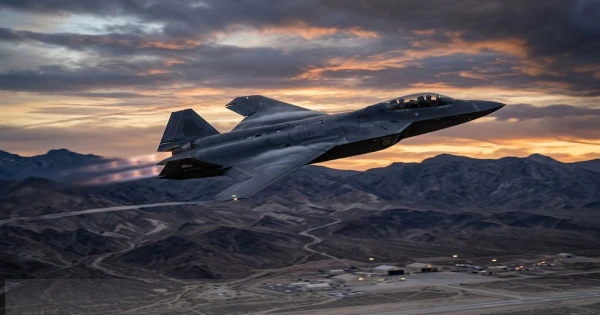
A quieter revolution in airpower is unfolding above runways and research labs: the next-generation U.S. fighter — a blend of stealth, sensors, and software-defined flexibility — is moving from concept to capability faster than many expect. Why it matters: this new class of combat aircraft will reshape tactics, alliances, defense procurement, and how the U.S. projects power for decades. For readers curious about military technology, national security, or the future of aviation, understanding what makes these fighters different and how they will be used offers a window into the next era of warfare.
What "next-generation fighter" means
The term next-generation fighter describes aircraft designed not merely as faster airplanes but as integrated systems. Key features include:
-
Advanced survivability: multi-spectral stealth and electronic warfare (EW) hardening to evade sensors across radar, infrared, and radio frequencies.
-
Sensor fusion: onboard systems that combine radar, infrared, and datalinks to present a single, clear picture to pilots and cooperating assets.
-
Open-architecture systems: software-updatable platforms that accept new sensors, weapons, and AI tools without major hardware redesign.
-
Networked operations: acting as nodes in a broader combat network, sharing targeting data with drones, ships, and ground forces.
-
Optional manning: designs that can operate with a pilot, remote operator, or fully autonomously depending on the mission.

These qualities emphasize adaptability and integration over raw speed or single-role specialization. The result: aircraft that remain relevant longer and can be upgraded iteratively as threats evolve.
Why development is accelerating
Several durable forces are pushing next-gen fighters toward operational reality:
-
Rising complexity of threats: adversaries are fielding advanced air defenses and long-range missiles, requiring aircraft that can survive contested environments.
-
Rapid software evolution: modular, secure software architectures allow capabilities to improve through updates, compressing timelines for fielding new features.
-
Cost discipline: lessons from earlier programs (where costs ballooned) have shifted procurement toward incremental development, prototyping, and competitive industry designs.
-
Unmanned systems integration: growth in tactical drones and loyal wingman concepts necessitates a crewed fighter that can command and collaborate with unmanned assets.
-
International collaboration: allied partnerships share development costs and interoperability requirements, speeding production and deployment.
These drivers favor aircraft that can be produced and updated quickly, making the “next-gen” label more immediate than in past development cycles.
Core technologies to watch
Understanding the hardware and software behind next-generation fighters clarifies why they’ll matter long-term.
H3: Stealth beyond shaping
Stealth now involves materials, coatings, and active signatures management. Rather than only relying on airframe shaping, modern designs use adaptive surfaces, infrared suppression, and electronic countermeasures to reduce detectability across the spectrum.
H3: Sensor fusion and human-machine teaming
Sensor fusion merges inputs from radar, infrared, signal intelligence, and external datalinks into intuitive displays or AI-assisted decisions. Human-machine teams will let pilots focus on mission-critical choices while AI handles sensor processing, threat filtering, and routine control of cooperative drones.
H3: Open mission systems and rapid upgrades
Open computing architectures use standardized interfaces so new sensors or weapons plug in with minimal rework. This model treats fighters more like smartphones with modular apps, enabling continual capability growth without full replacement.
H3: Directed energy and advanced weapons
While not yet ubiquitous, directed energy (laser) systems are increasingly mature for self-protection and counter-drone roles. Hypersonic and advanced air-to-air missiles will also shape tactics; fighters must host and integrate these weapons.
H3: Advanced propulsion and thermal management
Next-gen fighters emphasize efficient, high-thrust engines paired with thermal signature control to reduce infrared detectability. Improved power generation is essential for energy-hungry sensors and potential directed-energy weapons.
How tactics and operations will change
The next-generation fighter will not operate alone; doctrine and mission design will evolve in parallel.
-
Distributed operations: Fighters will disperse across networks, relying on common datalinks and shared situational awareness to coordinate attacks and defense.
-
Multi-domain integration: Air assets will coordinate closely with cyber, space, maritime, and ground forces to exploit openings and protect critical nodes.
-
Layered air defense suppression: Rather than single deep-penetration sorties, operations will use swarms of drones, electronic attack platforms, and manned fighters in staged roles to neutralize defenses.
-
Mission tailoring: Optional manning permits riskier missions to be flown unmanned or by remotely assisted crews, preserving experienced pilots and exposing fewer humans to danger.
-
Persistent sensing and strike: Integration with drones and satellites enables near-continuous tracking and rapid strike, shortening decision cycles.
These operational shifts emphasize flexibility, resilience, and information advantage over brute force.
Industrial and procurement changes that support speed
Getting next-gen fighters fielded sooner depends on industrial process improvements as much as technology.
-
Prototyping and experimentation: Rapid prototyping cycles and live operational demos shorten the transition from lab to squadron.
-
Competition and modular contracts: Multiple design teams and modular contracts incentivize innovation and control costs.
-
Allied co-development: Shared requirements and pooled orders increase production scale and interoperability, lowering unit costs.
-
Digital engineering: Digital twins and model-based systems accelerate testing and reduce physical prototyping needs, compressing schedules.
These business-model changes reduce risk and allow gradual capability insertion—upgrades can arrive while early versions already serve.
Common misconceptions
Many public assumptions about next-generation fighters miss the mark. Clearing up a few common misunderstandings:
-
Misconception: They will be invulnerable. Reality: Improved stealth and EW increase survivability but do not guarantee immunity. The goal is to reduce risk and create operational advantage, not invincibility.
-
Misconception: Speed and maneuverability are obsolete. Reality: Aerodynamics and thrust remain crucial for air combat and survivability; new fighters balance traditional flight performance with digital capabilities.
-
Misconception: Autonomy replaces pilots. Reality: Autonomy augments pilots and extends reach. Optional manning is about mission flexibility and risk management, not immediate pilot elimination.
Understanding these nuances helps set realistic expectations for performance and timelines.
Practical implications for policymakers and the public
Next-generation fighters affect budgets, diplomacy, and industrial policy. Here are practical considerations:
-
Long-term investment vs. lifecycle upgrades: Policymakers should weigh initial procurement with planned upgrade paths to avoid early obsolescence.
-
Export and alliance policy: Shared systems can strengthen alliances but require careful export controls, training programs, and logistical planning.
-
Workforce development: Advanced manufacturing and software skills are critical. Public-private partnerships and vocational programs should align to sustain the supply chain.
-
Cost transparency and oversight: Incremental acquisition models still require clear accountability to prevent cost overruns and ensure value.
These measures help maximize the strategic value while managing fiscal and ethical responsibilities.
What this means for the average reader
You don’t need a pilot’s license to grasp the significance: next-generation fighters will influence global stability, military budgets, and technology spillovers. Advances in materials, AI, and software-driven systems often trickle into civilian industries — from advanced sensors to manufacturing techniques. Understanding these fighters gives insight into where defense innovation is likely to shape broader technology and policy debates.
Conclusion
America’s next-generation fighter represents more than a new plane; it’s an architecture for sustained advantage. By combining stealth, sensors, open systems, and human-machine teaming, these aircraft promise adaptable, upgradeable capability that can respond to evolving threats. For policymakers and citizens alike, the imperative is clear: support transparent acquisition, invest in the industrial base and workforce, and prioritize interoperable designs that extend the value of each platform. The future of aerial combat is closer than many assume — and planning now will determine whether that future strengthens security, innovation, and international collaboration.