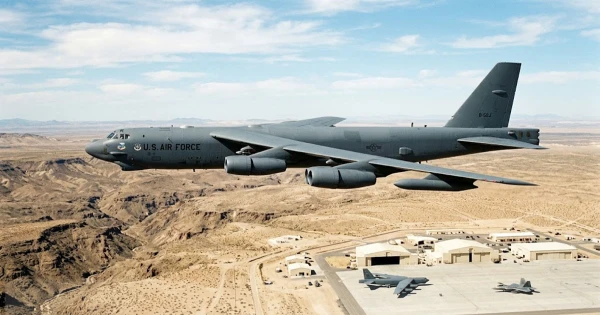
The B-52 bomber upgrades are doing more than giving an old aircraft a refresh. They are extending the life of one of the U.S. Air Force’s most enduring weapons systems, replacing outdated engines, radar, avionics, and communications gear so the Stratofortress can keep flying into the middle of the century and beyond. For defense watchers, the story is not just about preserving a Cold War icon; it is about how the Air Force plans to keep long-range strike credible in an era of faster threats and newer aircraft.
Why the B-52 still matters
The B-52 has remained relevant because it carries a large payload, can operate at long range, and can be adapted for different missions. That flexibility has kept it central to U.S. deterrence even as its original systems have aged far beyond their intended service lives. The Air Force now plans to keep the fleet in service into at least the 2050s, with some estimates pointing even farther, which makes modernization not optional but essential.
What makes the bomber unusual is its longevity. The aircraft first entered service more than six decades ago, yet the Air Force still sees it as a cornerstone of conventional and nuclear strike planning. In practical terms, that means the upgrades are designed not just to preserve the airframe, but to rebuild the aircraft’s mission systems around modern standards.

What B-52 bomber upgrades include
The current modernization effort is broad, and it reaches far beyond a single new part or component. The biggest changes include new engines, a modernized radar, improved avionics, upgraded communications, new wheels and brakes, and digital cockpit displays that replace the bomber’s old analog instruments. Together, those changes are expected to transform the B-52H into the B-52J.
Several upgrades matter especially for long-term viability:
-
Engines: The Commercial Engine Replacement Program will swap in Rolls-Royce F130 engines, which are meant to improve efficiency and reduce the maintenance burden of the aging powerplants.
-
Radar: The Radar Modernization Program is replacing the legacy radar with a modern AESA system, improving navigation and targeting in a wider range of weather conditions.
-
Avionics and displays: New digital systems should simplify cockpit management and make the aircraft more maintainable over time.
-
Communications: Updated conventional and nuclear communications help keep the bomber integrated into modern command-and-control networks.
These changes are not cosmetic. They are the systems that determine whether a large bomber can still be used safely, accurately, and reliably in a modern force.
Engines and the B-52J shift
The engine replacement program is one of the most visible parts of the overhaul. The Air Force awarded Boeing a contract worth more than $2 billion to begin the first engine replacements, with the work involving modification of two B-52s for development and testing. The broader engine program is part of a much larger modernization effort expected to cost $48.6 billion overall.
Once the full package is fielded, the bomber will be redesignated B-52J, a signal that the upgrade is substantial enough to justify a new variant name. The goal is not to create a brand-new airplane from scratch, but to make the existing bomber architecture viable for decades more service. For readers new to military aviation, that distinction matters: in defense procurement, a “new” model often means major systems have been changed, even if the airframe itself is old.
Radar and mission capability
The radar upgrade may be less visible than new engines, but it is just as important. The Air Force says the upgraded AESA radar replaces the bomber’s antiquated and failing legacy system and provides better all-weather navigation and targeting. A B-52 with modern radar can do more than “see” farther; it can operate with better precision and reliability in missions that demand exact timing and accurate sensor data.
The first B-52 with the modernized radar completed a ferry flight to Edwards Air Force Base after installation at Boeing’s San Antonio facility, marking an early milestone in the program. According to the Air Force, ground and flight testing will continue through 2026 to support a production decision. That step-by-step process is typical in major defense upgrades, where integration and testing matter as much as hardware delivery.
Why modernization is necessary
The case for B-52 bomber upgrades is rooted in age, logistics, and mission demand. Older systems become harder to sustain because parts wear out, manufacturers disappear, and maintenance becomes more expensive. That problem is especially sharp in aircraft that were built for a very different technological era.
Modernization also protects mission flexibility. The Air Force plans a bomber force built around upgraded B-52s and at least 100 B-21 Raiders, while retiring the B-2 and B-1 fleets through the 2030s. In that structure, the B-52 remains the payload-heavy workhorse, while the B-21 brings stealth and next-generation penetration capability. The combination gives planners options across a wider range of scenarios than any single aircraft could provide.
Common misconceptions
One common misconception is that upgrading an aircraft this old is a stopgap with little strategic value. In reality, the B-52’s size, payload, and adaptability make it one of the most useful platforms in the inventory, especially when paired with modern weapons and communications. Another misconception is that these upgrades are purely about preserving history. They are not; they are about maintaining operational capability.
It is also easy to assume that a new aircraft is always better than an upgraded one. That is not always true. A mature platform with the right modernization can be more cost-effective, more available, and easier to integrate into current force planning than a brand-new design that still has to prove itself. The B-52 program is a long example of that logic in practice.
What readers should watch
The most important long-term signals are how smoothly the engine replacement program proceeds, how quickly the radar and avionics work move through testing, and whether the Air Force keeps the current timeline intact. The Pentagon has said the modernization effort is expected to be completed by the end of May 2033. That gives the program a long runway, but also a lot of room for technical or budgetary complications.
For defense enthusiasts and general readers alike, the broader lesson is straightforward: military power is often built as much on sustainment as on innovation. The B-52’s future will depend on whether these upgrades keep the aircraft relevant in a threat environment that is changing faster than the bomber itself.
The B-52 bomber upgrades are a reminder that some of the most important defense programs are not about starting over. They are about adapting proven systems with modern technology so they remain useful in a new era. With new engines, radar, communications, and cockpit systems, the B-52 is being reworked for decades of additional service, not just a few more years.
For readers trying to understand U.S. airpower, the key takeaway is simple: the B-52 is not being preserved as a museum piece. It is being rebuilt as a modern strike platform, and that makes its upgrade one of the most consequential military modernization efforts underway today.