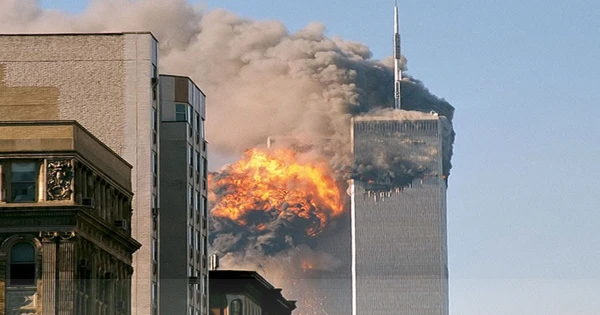
On a clear September morning in 2001, the United States faced one of the deadliest terrorist attacks in its history. Nineteen hijackers affiliated with al-Qaeda crashed four commercial airplanes into the World Trade Center towers in New York City, the Pentagon in Arlington, Virginia, and a field in Shanksville, Pennsylvania. Nearly 3,000 people lost their lives. The events of that day triggered a profound national response that continues to influence U.S. policy, politics, and daily life more than two decades later.
Americans across the country remember exactly where they were when they learned of the attacks. In offices, schools, and homes, people gathered around televisions and radios as images of the burning towers and their eventual collapse replayed. The immediate shock gave way to a sense of national unity. Flags appeared on homes and vehicles, and communities came together to support first responders and victims' families.
In the days and weeks that followed, the U.S. government identified al-Qaeda leader Osama bin Laden as the mastermind. President George W. Bush addressed the nation and launched the Global War on Terror. Less than a month after the attacks, U.S. forces began military operations in Afghanistan to dismantle al-Qaeda and remove the Taliban from power.
The Rise and Rapid Decline of American Global Dominance: What the End of the Unipolar Era Means

The initial military campaign in Afghanistan enjoyed broad domestic and international support. Many viewed it as a necessary action to prevent future attacks. By late 2001, U.S. and coalition forces had disrupted al-Qaeda's operations in the country and helped establish a new Afghan government.
Congress responded swiftly on the home front. In October 2001, lawmakers passed the USA PATRIOT Act with strong bipartisan backing. The legislation expanded surveillance authorities, eased information sharing among intelligence agencies, and strengthened tools for tracking potential terrorists. Supporters argued these measures were essential for national security in a changed world. Critics raised concerns about potential impacts on civil liberties, including privacy rights and government oversight.
Six months after the attacks, the Bush administration made key decisions regarding the treatment of detainees. Policies on interrogation and detention became subjects of intense debate in the years that followed. The administration also authorized military commissions for trying certain terrorism suspects.
In 2003, the United States led a coalition into Iraq. Officials cited concerns about weapons of mass destruction and links to terrorism, though subsequent searches found no active WMD programs. The Iraq War became longer and more costly than anticipated. It contributed to significant instability in the region and tested American resolve.
The human costs of these conflicts were substantial. U.S. military deaths in Afghanistan and Iraq exceeded 7,000, with tens of thousands more wounded. Many veterans returned home facing physical injuries, traumatic brain injuries, and post-traumatic stress. The Department of Veterans Affairs continues to manage long-term care for those who served.
Civilian casualties in the war zones numbered in the hundreds of thousands when including direct violence and indirect effects. Millions of people were displaced across Afghanistan, Iraq, Pakistan, and neighboring areas. The conflicts also strained relationships with allies and affected global perceptions of U.S. leadership.
Economically, the post-9/11 wars carried a heavy price tag. Estimates place direct and indirect costs for the United States at several trillion dollars. This includes military operations, reconstruction efforts, veterans' benefits, and interest on borrowed funds. These expenditures influenced budget priorities and national debt levels for years.
Technological advancements in warfare emerged prominently. Successive administrations expanded the use of unmanned aerial vehicles, commonly known as drones, for targeted operations against terrorist leaders. Presidents Obama, Trump, and Biden each oversaw aspects of this program, with varying levels of strikes and oversight mechanisms. Proponents highlighted precision and reduced risk to U.S. troops, while debates continued over accountability, civilian impacts, and legal frameworks.
At home, 9/11 prompted the largest reorganization of the federal government since World War II. The Department of Homeland Security was created in 2002 to coordinate security efforts across agencies. Airport security transformed through the Transportation Security Administration. Intelligence reforms aimed to connect dots more effectively across agencies.
These changes enhanced preparedness against terrorism. No large-scale foreign terrorist attack on the scale of 9/11 has occurred on U.S. soil since. However, the focus on counterterrorism also shifted resources and attention from other domestic and international priorities.
Society experienced deeper shifts. Initial unity gradually gave way to political polarization. Public trust in government, which spiked after the attacks, declined over time. Concerns about surveillance, immigration, and cultural changes grew in various communities. Incidents of bias against Muslim Americans and people perceived as Middle Eastern increased in the immediate aftermath.
The attacks influenced everything from popular culture to education. Memorials, such as the National September 11 Memorial & Museum in New York, serve as places of remembrance and reflection. First responders and survivors continue to face health challenges from toxic exposures at Ground Zero, with thousands affected by respiratory illnesses and cancers.
Globally, the War on Terror reshaped alliances and conflicts. NATO invoked Article 5 for the first time, committing members to collective defense. Operations extended beyond Afghanistan and Iraq to places like Yemen, Somalia, and Syria. The rise of groups like ISIS later required additional military engagement.
By 2021, the U.S. completed its withdrawal from Afghanistan. The Taliban's return to power marked a difficult end to America's longest war. The outcome prompted reflection on the limits of military intervention and nation-building efforts.
Today, the threat of international terrorism persists but ranks alongside other concerns like great power competition, cyber threats, and domestic extremism. Public opinion polls show Americans remain vigilant about terrorism, though focus has broadened. Many recognize the trade-offs between security and liberty that emerged in the post-9/11 era.
The economic resilience of the United States helped absorb the initial shock. Markets recovered, and the nation avoided the kind of prolonged collapse some feared. Yet the long-term fiscal commitments from the wars continue to influence policy discussions on spending and priorities.
In foreign policy, 9/11 accelerated a shift toward counterterrorism as a central organizing principle. This focus sometimes strained relations with partners and complicated other diplomatic goals. Over time, administrations adjusted strategies to address evolving threats while managing great power dynamics with nations like China and Russia.
American society demonstrated remarkable adaptability. Communities rebuilt, businesses innovated, and citizens volunteered in record numbers. The resilience shown in the immediate aftermath remains a point of national pride. At the same time, ongoing debates about the right balance of security, privacy, and openness reflect the complexity of governing in an age of persistent threats.
Looking back after more than two decades, 9/11 stands as a defining moment. It exposed vulnerabilities in a connected world and tested core American values. The responses—military, legislative, and societal—produced both successes in preventing attacks and challenges in areas of cost, cohesion, and international standing.
The legacy includes strengthened intelligence capabilities and a more vigilant homeland security apparatus. It also includes lessons about the difficulties of asymmetric warfare and the importance of clear objectives in military engagements. As the United States navigates new global challenges, the experiences since 9/11 continue to inform decision-making at the highest levels.
Future generations will study this period to understand how a single day altered the trajectory of the nation and the world. Memorials and museums preserve the stories of those lost and the heroism displayed. The commitment to preventing future atrocities remains strong, even as strategies evolve with new technologies and threats.
In the end, the story of post-9/11 America is one of tragedy, resolve, adaptation, and ongoing reflection. The nation confronted unprecedented dangers and made difficult choices with lasting consequences. As time passes, the focus shifts toward honoring the fallen, supporting those affected, and applying hard-earned wisdom to build a safer and more secure future.