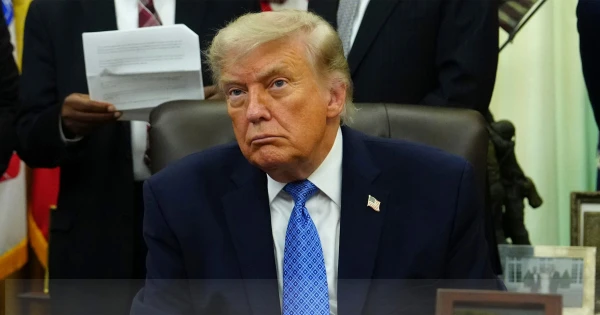
The Trump administration has pursued an active role in shaping the rapidly evolving artificial intelligence industry, balancing efforts to maintain U.S. technological leadership with national security priorities. This approach has drawn attention for its use of export controls, discussions around potential government equity stakes in AI firms, and broader industry engagement, reflecting ongoing debates about the intersection of public policy and private enterprise in critical technologies.
American-style capitalism has long emphasized private ownership, market competition, and limited government intervention. Recent developments under President Donald Trump have tested these principles in the AI sector, where rapid advancements raise both economic opportunities and security concerns. The administration has engaged directly with leading companies like OpenAI, Anthropic, and others to address risks while seeking to ensure benefits flow to the broader public.
Export controls have emerged as a key tool. In mid-2026, the Commerce Department imposed temporary restrictions on certain advanced AI models from Anthropic, citing national security considerations related to foreign access and potential misuse. The company responded by limiting availability to comply. Subsequent reviews led to partial or full lifting of some restrictions after the firm implemented enhanced safeguards, illustrating a dynamic process of negotiation between regulators and industry.

Similar patterns have appeared with other firms. OpenAI reportedly agreed to delay wide release of a new model at the government's request, highlighting how voluntary cooperation and regulatory pressure intersect in efforts to manage frontier AI risks. These steps build on prior export controls targeting advanced semiconductors and computing resources aimed at preventing sensitive technologies from reaching adversaries.
Discussions about government equity stakes in AI companies have added another layer. President Trump has expressed interest in structures that would allow the American public to share in the sector's gains, drawing parallels to the administration's earlier acquisition of a stake in Intel through a deal tied to federal support. Reports indicate talks involving possible voluntary equity contributions or other mechanisms to create public benefit from AI prosperity.
OpenAI CEO Sam Altman has publicly floated ideas around companies providing stakes to support a public wealth fund concept, aiming to distribute economic benefits more widely amid concerns about job displacement and inequality from AI automation. Such proposals remain in early stages but signal a shift toward viewing strategic industries as areas for novel public-private partnerships.
These initiatives occur against a backdrop of broader economic policy. The administration has emphasized reducing regulatory barriers to AI development, including challenging state-level rules seen as hindering innovation. At the same time, targeted interventions address perceived risks in areas like cybersecurity, model safety, and international competition, particularly with China.
Critics argue that such government involvement risks distorting markets and favoring connected players, echoing historical concerns about cronyism in various economies. Supporters counter that strategic guidance is essential for technologies with profound national security implications, where pure market forces may not adequately address externalities like proliferation risks or workforce transitions.
Corporate taxation provides context for fiscal debates. Historically, corporate tax revenues as a share of U.S. GDP have declined from levels around 2.6 percent in the 1970s to roughly half that in recent decades, even as corporate profits grew. The 2017 tax reforms further lowered the statutory rate, influencing revenue patterns while aiming to boost investment and competitiveness. Discussions continue on how best to fund public priorities without undermining growth.
AI's transformative potential spans industries, from healthcare and manufacturing to defense and entertainment. The United States leads in frontier model development, with firms like OpenAI, Anthropic, Google, and others driving progress. Maintaining this edge requires substantial computing infrastructure, talent, and capital—areas where policy can play a supportive role.
National security considerations have intensified focus on export controls. Past actions restricted advanced chips to certain countries, aiming to slow military applications abroad while encouraging domestic production. Recent AI-specific measures extend this logic to model weights and capabilities, seeking to prevent unauthorized access that could enable harmful uses.
Industry responses vary. Some companies have strengthened internal safety protocols and collaborated with government reviewers. Others express concern that unpredictable interventions could slow innovation or push development overseas. The administration has signaled a preference for voluntary frameworks over heavy mandatory licensing in many cases.
Economic historians note that successful industrial policies often rely on transparent, rules-based processes insulated from short-term political pressures. Examples from allied nations show mixed results, with some achieving technological gains and others facing inefficiencies or capture by special interests. In the U.S. context, independent institutions like courts and regulatory bodies help maintain checks and balances.
Public opinion reflects divided views. Polls indicate strong support for U.S. AI leadership and job creation, alongside worries about concentration of power in a few tech giants and potential societal disruptions. Proposals for public stakes or revenue-sharing aim to address these by broadening ownership, though implementation details matter greatly for effectiveness and fairness.
Broader implications extend to democracy and governance. Robust institutions, rule of law, and competitive markets have underpinned American economic success. Policies perceived as overly interventionist or selective invite scrutiny to ensure they serve national interests rather than narrow ones. Transparency in decision-making remains crucial for sustaining public trust.
Looking ahead, AI development will likely continue at a rapid pace. The administration's approach combines promotion of domestic investment, security-focused controls, and exploration of new models for public benefit. Outcomes will depend on execution, adaptability to technological change, and ability to foster genuine competition and innovation.
Global competition adds urgency. China and other nations invest heavily in AI, prompting U.S. efforts to secure supply chains, attract talent, and set international standards aligned with democratic values. Multilateral coordination on export controls and safety could complement domestic actions.
In summary, the evolving relationship between the U.S. government and the AI sector highlights tensions inherent in governing breakthrough technologies. As policymakers weigh security, economic growth, and equity, the core challenge remains preserving the entrepreneurial dynamism that has defined American capitalism while addressing legitimate public concerns. The coming years will test whether these efforts strengthen or strain the nation's innovative edge and institutional foundations.
This situation underscores the complexity of modern economic governance. Effective policy requires careful calibration—supporting innovation without stifling it, mitigating risks without creating new distortions, and ensuring broad-based benefits. Ongoing dialogue among government, industry, experts, and the public will shape how the United States harnesses AI for long-term prosperity and security.