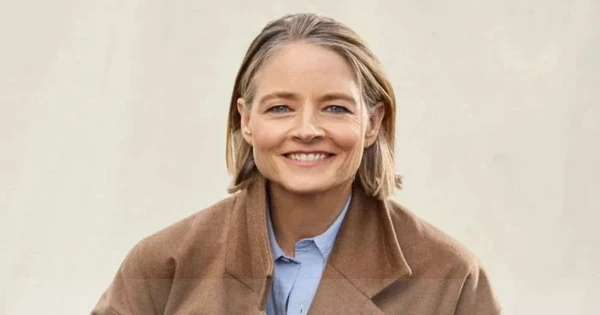
Oscar-winning actress and director Jodie Foster has ignited a fresh conversation about artificial intelligence in filmmaking after suggesting that the Brad Pitt-led racing drama "F1" feels like it was generated by a computer.
During a Tuesday session at the Aspen Ideas Festival in Colorado, Foster sat down with media executive and former Sony boss Michael Lynton to discuss the forces reshaping the entertainment industry. The conversation covered shifting audience habits, the lingering effects of the pandemic, and recent labor strikes that have disrupted production schedules across Hollywood.
When the discussion turned to artificial intelligence, Foster questioned whether humanity can maintain control over the technology for more than a few years. She expressed skepticism about the industry's ability to dominate AI in the long term, pointing to how quickly the technology is advancing and being adopted across creative sectors.
Spider-Man Takes the GOAT for a Swing: Tom Holland and Lionel Messi Team Up in Epic New Promo

Lynton asked whether AI could genuinely replace human writers and actors. In response, Foster noted that the industry is already using technology to swap faces in films, comparing it to what ordinary people can do on an iPhone, only more advanced for major productions. She elaborated that many contemporary films already feel entirely computer-generated, not just in their visual effects but in their fundamental structure.
"I don't say this disparagingly, how could I? This movie went on to make millions of dollars but look at a movie like F1. I'm, like, F1 was made by AI," Foster remarked to the live audience, using the film as a conceptual example rather than making a literal claim about its origins.
The critique carries particular weight given the film's prestigious pedigree. "F1" received four Academy Award nominations, including Best Picture, and won the Oscar for Best Sound. Director Joseph Kosinski co-wrote the script with Oscar-nominated screenwriter Ehren Kruger. The production team also included heavyweight producers Jerry Bruckheimer and Brad Pitt, along with Formula One champion Lewis Hamilton, who served as a producer and consultant on the project.
The filmmakers have previously emphasized their commitment to practical effects throughout production. Visual effects supervisor Ryan Tudhope explained that the team intentionally relied on real racing sequences whenever possible, using digital enhancements primarily to ensure driver safety on the track. He revealed that stunt drivers would sometimes use smaller F3 cars for particularly risky maneuvers, with the visual effects team later replacing those vehicles with the signature APXGP car used in the film.
Foster's comments have sparked a broader debate about creativity in modern Hollywood. While she acknowledged that the film was commercially successful, her observations raise questions about whether audiences can detect the difference between human-crafted storytelling and computer-generated narratives. The discussion comes at a time when the entertainment industry is grappling with how to integrate AI tools while preserving the human element that has long defined cinematic artistry.
As studios continue to explore AI applications in pre-production, writing, and post-production, Foster's remarks highlight growing concerns among filmmakers about the technology's role in shaping the future of storytelling. The debate is likely to intensify as AI tools become more sophisticated and accessible throughout the industry.