Steven Spielberg’s latest sci-fi thriller, "Disclosure Day," arrives at a moment when the line between fiction and government transparency has rarely been blurrier. Last month, the Trump administration released a substantial cache of files related to Unidentified Anomalous Phenomena, the official term for what many still call UFOs. While the timing appears coincidental, it is undeniably perfect for a film centered on a rogue effort to expose classified extraterrestrial evidence. Yet, for all its real-world relevance, the movie struggles to deliver the sense of wonder that defined the director’s earlier masterpieces.
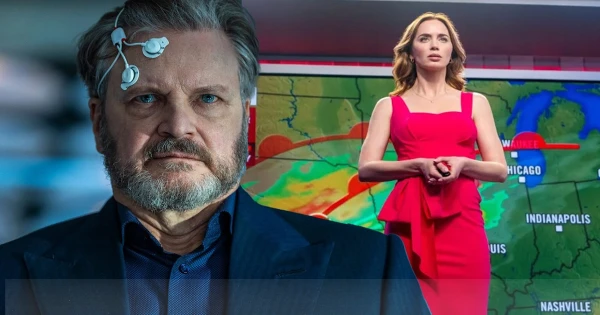
The film follows Daniel Kellner, portrayed by Josh O’Connor, a man on the run from Wardex, a shadowy organization reminiscent of "Men in Black." Wardex, led by the cunning strategist Noah Scanlon, played by Colin Firth, has taken Daniel’s girlfriend hostage to retrieve a stolen object. The narrative bypasses the traditional first contact scenario, plunging viewers into a world where the truth of alien existence is already known to a select few. Daniel works with a splinter group of former Wardex agents, led by Hugo Wakefield, played by Coleman Domingo, who possess damning video evidence of extraterrestrial encounters and interrogations.
The plot’s catalyst is Margaret Fairchild, a Kansas City weather presenter portrayed by Emily Blunt, who inexplicably gains extraordinary abilities. She suddenly speaks fluent Russian, reads strangers’ life stories from their eyes, and later broadcasts in an unknown language that only Daniel can understand. The film weaves four parallel storylines—Daniel, Margaret, Hugo, and Noah—that converge in a prolonged chase sequence as Wardex desperately tries to prevent the duo from reaching Hugo and triggering "Disclosure Day," the moment all records are released to the public.

At two hours and twenty-five minutes, "Disclosure Day" is technically impressive and features a masterful score by John Williams. Cinematographer Janusz Kaminski, the Oscar-winning talent behind "Schindler’s List" and "Saving Private Ryan," delivers a kinetic visual experience. The camera is in near-constant motion, swirling around characters and creating intentional unease. A long take of Daniel approaching a farmhouse and a stunning action sequence involving a car and train collision are standout moments. The performances are strong, with O’Connor and Blunt bringing a sense of uncertainty and discomfort that sets their characters apart from typical heroes. Blunt shines as she navigates the tension of becoming the spokesperson for history’s most significant day.
However, the film’s ambition leads to a convoluted narrative. David Koepp’s screenplay occasionally loses its thread amidst the constant action. While "Disclosure Day" is an entertaining blend of sci-fi and thriller elements, it often feels more like an advanced "alien autopsy" video or a special episode of "The X-Files" than a groundbreaking cinematic event. Viewers deeply familiar with UFO lore or regular YouTube footage may find themselves ahead of the film’s revelations. The final hour weakens significantly, and important questions, such as the nature of the threat from Korea and the function of a metallic device, remain frustratingly unclear.
Ultimately, "Disclosure Day" feels less like the visionary work that defined Spielberg’s career and more like a reflection of the tropes and legends his earlier films helped create. It conjures memories of classic summer blockbusters but lacks the sharp, confident direction that made "Close Encounters of the Third Kind" a seminal work. While it is an enjoyable ride, the movie is unlikely to leave the lasting imprint of its director’s best films, feeling more like a follower of pop culture mythology rather than a leader.