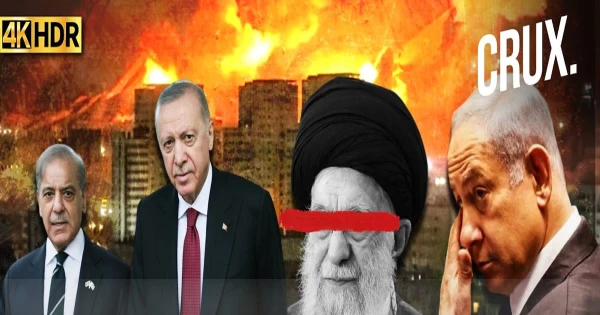
Israeli leaders have signaled a strategic pivot in recent months, identifying new potential sources of tension in the Middle East even as operations against Iranian-backed networks wind down. Senior officials, including former Prime Minister Naftali Bennett and current Prime Minister Benjamin Netanyahu, have highlighted concerns about a possible alignment of Sunni-majority states and other actors that could challenge Israel's regional position.
This shift comes after years of intense focus on Iran's nuclear ambitions and its network of proxies. While that campaign achieved significant setbacks for Tehran, Jerusalem is now assessing a broader landscape of military capabilities and geopolitical ambitions among neighboring and distant powers. Turkey stands out prominently in these discussions due to its size, military strength, and assertive foreign policy.
Turkey maintains one of NATO's largest armed forces, with hundreds of thousands of active personnel and a growing defense budget. Its indigenous drone technology, including advanced models like the Kızılelma, has demonstrated sophisticated capabilities in combat scenarios. Turkish naval activities in the Eastern Mediterranean have also raised eyebrows, particularly near areas of Israeli interest such as offshore energy resources.

Relations between Israel and Turkey have deteriorated notably. Once strategic partners, the two countries now find themselves in open rivalry over influence in Syria, the Mediterranean, and broader regional dynamics. Turkish leadership has been vocal in its criticism of Israeli policies, contributing to a freeze in diplomatic and economic ties. Israeli figures have responded by framing Ankara as a rising strategic competitor.
Egypt represents another significant military presence. With a large standing army and substantial reserves, Cairo has invested in modernizing its forces through acquisitions from multiple suppliers, including American tanks, French jets, and Russian aircraft. Israeli officials have publicly noted the need to monitor these developments closely, acknowledging that today's Egyptian military differs markedly from the forces Israel faced in past conflicts.
Despite historical peace agreements, the balance of conventional power requires ongoing attention. Egypt's strategic location and its role in regional stability, including Gaza border management, add layers of complexity to bilateral relations. Both nations continue to cooperate on security matters, but the evolving capabilities prompt careful assessment.
Saudi Arabia adds further nuance. Riyadh has pursued diversified security partnerships while maintaining quiet channels with Israel on shared concerns like Iranian influence. Efforts toward potential normalization have faced hurdles, particularly tied to Palestinian issues, yet practical cooperation in areas like airspace and intelligence has persisted in various forms.
Saudi military assets, including advanced fighter jets, provide meaningful deterrence capabilities. The kingdom's economic weight and diplomatic outreach give it substantial regional sway. Israeli strategists weigh these factors alongside Riyadh's interest in stability and countering extremism.
Pakistan emerges as a distinct concern due to its nuclear arsenal and delivery systems. As the only Muslim-majority nation with confirmed nuclear weapons, Islamabad's capabilities draw attention, even from a distance. Recent military modernizations, including new fighter jets and missile developments, factor into long-term threat evaluations.
However, geographic separation and differing strategic priorities limit immediate direct confrontation risks. Pakistan's focus has historically centered on its eastern border, though its broader ideological stances and occasional alignments warrant monitoring.
Analysts emphasize that these countries do not form a cohesive, Iran-style axis. There is no unified command structure, shared ideology, or formal defense pact binding Turkey, Egypt, Saudi Arabia, and Pakistan. Longstanding peace treaties between Israel and Egypt, alongside practical understandings with others, remain intact without public moves toward abrogation.
Internal Israeli debates reflect this complexity. Some voices urge vigilance against potential coalitions, while others caution against overstating threats for domestic political reasons. Former Defense Minister Yoav Gallant, for instance, described Turkey's role as that of an ambitious regional power rather than an imminent foe. Experts outside government have similarly noted that framing certain actors as existential threats could risk self-fulfilling dynamics.
Netanyahu has spoken of building a "hexagon" of alliances involving partners like India, Greece, and Cyprus to bolster Israel's position. This vision aims to create a counterbalance to any emerging challenges, leveraging economic, technological, and military ties across multiple regions.
The broader context includes the aftermath of major regional operations. With Iranian influence diminished, power vacuums have emerged in Syria and elsewhere, intensifying competition for influence. Turkey has expanded its footprint in northern Syria, while other actors pursue their own interests. Energy resources in the Mediterranean remain a flashpoint, as do competing visions for post-conflict arrangements.
Israel's technological edge, intelligence superiority, and strong alliance with the United States provide significant advantages. Its military continues to innovate in areas like missile defense, cyber capabilities, and precision strikes. These strengths have proven decisive in recent engagements and serve as deterrents against multiple fronts.
Yet conventional military metrics alone do not tell the full story. Economic interdependence, diplomatic isolation risks, and the human costs of prolonged tensions influence decision-making. Public opinion across the region, shaped by ongoing conflicts and humanitarian concerns, adds pressure on governments to balance security with legitimacy.
For ordinary Israelis, these strategic discussions translate into questions of long-term safety and prosperity. Many seek stability that allows focus on domestic issues like economy, technology, and social cohesion. The government faces the challenge of addressing real risks without escalating rhetoric that could alienate potential partners or heighten unnecessary fears.
Looking ahead, Israel's approach will likely blend deterrence, diplomacy, and alliance-building. Maintaining qualitative military superiority remains a cornerstone, complemented by efforts to deepen ties with moderate Arab states and global partners. Engagement through multilateral forums and economic incentives could help manage frictions.
Egypt and Israel continue security coordination vital for border stability. Saudi Arabia and Gulf partners share interests in countering instability. Even with Turkey, channels for de-escalation exist despite heated public exchanges. Pakistan's nuclear posture primarily concerns its immediate neighbors but factors into wider non-proliferation considerations.
The Middle East's fluid geopolitics demands adaptability. Shifts in U.S. policy, global energy markets, and internal politics across key capitals will shape outcomes. Israel's leaders must navigate these currents while prioritizing citizen security and regional peace prospects.
In summary, while Iran represented a centralized ideological and proxy threat, emerging dynamics involve more dispersed capabilities and competing national interests. Israel is positioning itself through new partnerships and heightened awareness to address this evolving environment. Success will depend on precise intelligence, strategic restraint where possible, and fostering conditions that discourage unified opposition. The coming years will test Jerusalem's ability to turn potential rivalries into manageable competitions rather than open conflicts, securing a safer future for the region.