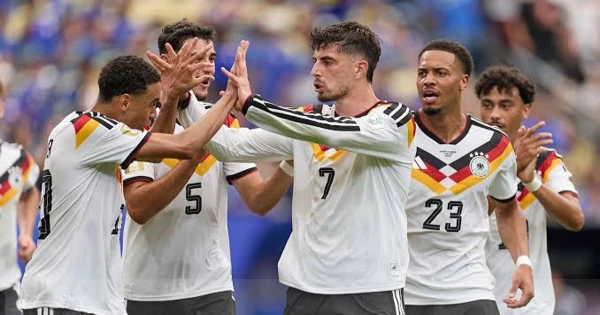
Germany secured a late, dramatic victory over Ivory Coast at Toronto’s BMO Field, advancing to the World Cup knockout stage for the first time since their 2014 title run. A stoppage-time strike turned a game that seemed headed for a draw into a 2–1 win for the four-time champions, underscoring Germany’s resilience and reviving the nation’s World Cup fortunes after two consecutive group-stage exits.
Ivory Coast took the lead in the 30th minute when Franck Kessié converted, putting the African side ahead through much of the match. Germany struggled to break through until coach Julian Nagelsmann made a series of tactical substitutions in the second half. That decision paid off: substitute Jamal Musiala was replaced in the 60th minute by Denis Undav, and Nadim Amiri also entered the match. Amiri’s pass unlocked the defense and set up Undav to equalize in the 68th minute.
With momentum shifting, both teams traded chances. Ivory Coast pressed for a winner late in regular time, including a clear chance inside the penalty area in the 88th minute that the Ivorians failed to convert. That miss proved costly. In the fourth minute of stoppage time, Undav struck again, finding the net to complete his brace and send Germany into the knockout rounds.

The outcome revived a familiar line of commentary about Germany’s pedigree: no team that combines world-class personnel with tactical discipline is ever truly out of contention. This result snaps a difficult stretch for the national team, which has missed the knockout stage at the last two World Cups after lifting the trophy in 2014. It also highlights Nagelsmann’s willingness to use his bench decisively when a game is in jeopardy.
Germany’s comeback win also updated World Cup record books. The team now holds the tournament record for the most matches won after trailing at some point in the game, having reached 16 such victories—a mark that moves them past Brazil. The match also featured a personal milestone for goalkeeper Manuel Neuer, who set a new record for goalkeepers by appearing in his 21st World Cup match, surpassing previous tallies for appearances in that position.
Tactically, the match illustrated contrasting styles. Ivory Coast showed discipline and threat on the break, defending deep after taking the lead while looking to exploit quick transitions. Germany maintained possession more often and sought to overload the final third, but needed halftime adjustments to create meaningful chances. Nagelsmann’s triple substitution at 60 minutes—bringing on Amiri, Undav and a third attacking option—altered Germany’s shape and tempo, producing the decisive moments.
Key incidents shaped the scoreline. An early second-half German goal was disallowed following a foul by Musiala, while Ivory Coast squandered multiple opportunities to extend their advantage or hold the draw. The late equalizer and winning strike by Undav crowned an intense finish and underscored the fine margins at this stage of the tournament, where a single lapse or a single inspired substitution can decide the result.
Group E now features Germany on top with six points from two matches, while Ivory Coast sits second with three points. Ecuador and Curaçao remain without points after one game each; the group still has three fixtures remaining, which will determine final standings and knockout opponents. Germany’s progression marks a turning point for a side that faced scrutiny heading into the tournament, while Ivory Coast leaves with both pride in a resilient performance and frustration over missed opportunities.
Beyond the immediate standings, the win raises questions and talking points for the coming rounds. Germany’s capacity to overturn a deficit will be seen as a psychological boost heading into the knockout phase, but tactical adjustments and finishing efficiency will remain under evaluation. Ivory Coast’s tournament is far from over, and the team retains a chance to qualify depending on upcoming results, yet the late defeat will sting after a match in which they led for more than half of the contest.
The match also carried narrative weight for players and coaches. Undav’s late heroics elevated him into national conversation as a clutch performer, while Nagelsmann’s substitutions will be cited as effective risk-taking. For Ivory Coast, Kessié’s opener confirmed the team’s ability to challenge top opponents, even as defensive lapses and missed chances prevented a celebrated upset.
As Group E continues, Germany will aim to build on this momentum and address the finishing questions that surfaced during their victory. Ivory Coast must regroup quickly, emphasizing conversion of scoring opportunities and concentration in closing minutes if they are to advance. The World Cup’s knockout rounds now await a German squad that reclaimed its stride in dramatic fashion.