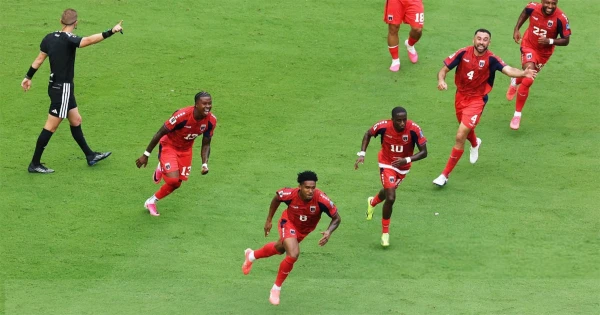
Cape Verde secured a second consecutive World Cup draw on Tuesday, holding two-time world champion Uruguay to a 2-2 result at Miami’s Hard Rock Stadium in a performance that reinforced the small West African nation’s surprising impact at the tournament.
The island nation — home to just over 500,000 people and making its first World Cup appearance — opened the match with an early shock when midfielder Garry Rodrigues scored from a direct free kick in the 21st minute. The strike gave Cape Verde a lead against a heavily favored Uruguay side and set the tone for a tense, competitive game.
Uruguay responded before halftime, equalizing late in the first period and then taking a brief lead during stoppage time. Cape Verde, however, again showed resilience and tactical discipline, leveling the match in the 61st minute. From that point on, Uruguay pressed for a winner but could not break down Cape Verde’s organized defense and counterattacking threat, leaving the scoreline even at full time.
Brazil’s Flair Missing: Brazil Struggles to Find Its Signature Style Despite 3-0 Win Over Haiti

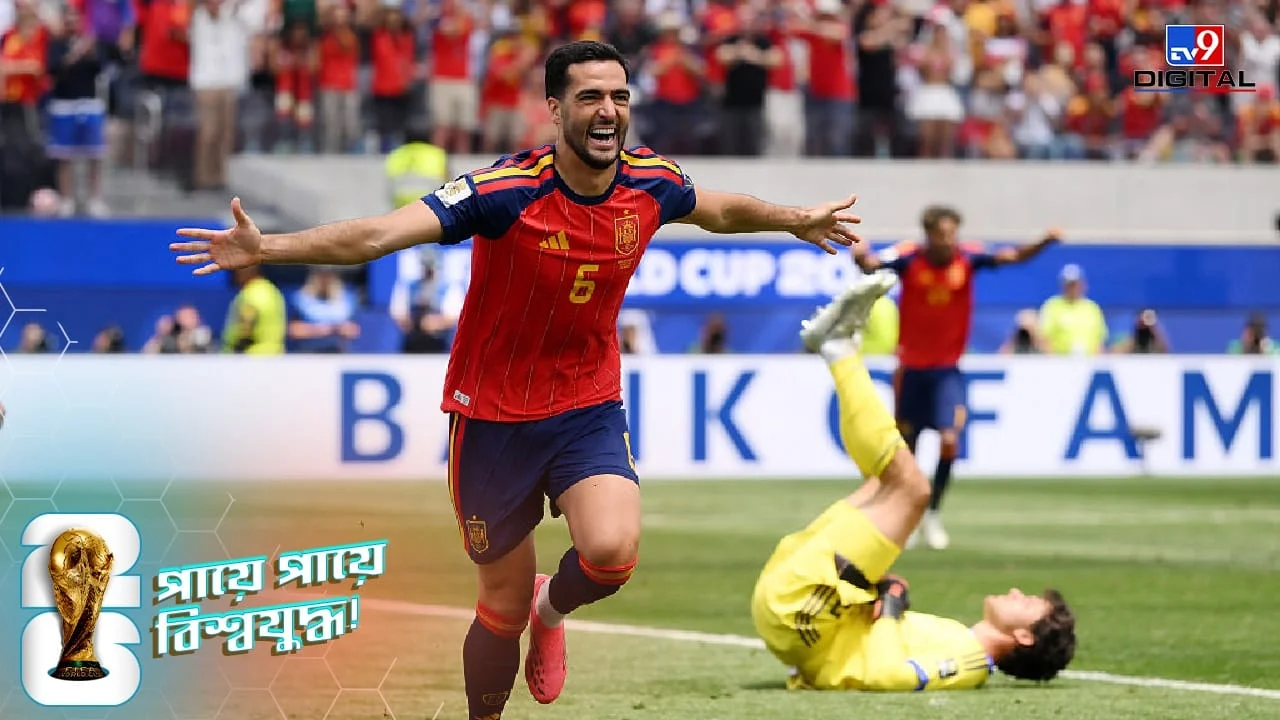
The draw followed Cape Verde’s earlier 0-0 result against European champion Spain, a match in which Cape Verde earned a deserved point by defending compactly and disrupting Spain’s build-up play. Taken together, the two draws have already made Cape Verde one of the tournament’s most talked-about stories: a debutant nation that has taken four points from two matches against former champions.
Cape Verde’s results are notable both for their sporting significance and for their historical rarity. By population, the country ranks among the smallest ever to qualify for the World Cup, and its competitive showing in the group stage underlines the growing parity in international soccer. Smaller federations that maximize tactical discipline, strong set-piece execution and efficient counterattack strategies can now challenge traditional powers on the biggest stage.
Tactically, Cape Verde’s approach blended stout defending with rapid transitions. The opening goal came from a well-executed set piece: Rodrigues’ free-kick showed both technical precision and the team’s focus on capitalizing on dead-ball opportunities. Defensively, Cape Verde maintained a compact block that limited Uruguay’s most dangerous forwards and funneled attacks away from central scoring areas. When possession turned over, Cape Verde’s counters were direct and purposeful, creating the best chances after halftime.
Uruguay’s game plan relied on experience and a steady share of possession, but finishing proved inconsistent. The South American side dominated certain phases and engineered the equalizer and stoppage-time go-ahead in the first half, yet it struggled to convert control into a decisive advantage after Cape Verde’s second equalizer. The statistical edge in possession and attempts did not translate into a clear victory, underscoring the fine margins that have defined several matches in this World Cup.
Beyond tactics, Cape Verde’s emergence has narrative weight. For fans and observers, the team’s performance recalls other memorable underdog runs at major tournaments, where organization, belief and opportunistic play overcome disparities in resources and player pool. Cape Verde’s squad blends players from domestic leagues and international clubs — many with professional experience in Europe — and has leveraged that mix to build cohesion and a pragmatic identity suited to single-elimination and group-stage pressures.
The social and symbolic impact is also significant. For a nation of roughly half a million people, each point at the World Cup carries outsized national meaning: visibility on the global stage, a boost to national pride and potential long-term benefits for the country’s football development. Cape Verde’s match results will likely inspire investment in coaching, youth development and infrastructure back home, while raising the profile of Cape Verdean players among clubs worldwide.
From a tournament perspective, Cape Verde’s two draws create ripple effects in Group dynamics. Groups that include one of the smaller or less-fancied teams can become more open, forcing favorites to approach each match with heightened caution. The psychological influence of dropping points to a debutant can alter the strategies of stronger teams in subsequent matches and intensify competition for qualification to the knockout stages.
Cape Verde’s 2-2 draw with Uruguay is now part of a larger story being written at this World Cup: one that highlights the tournament’s unpredictability and the leveling of international soccer. While Cape Verde will still need strong results in its remaining matches to advance, the nation’s back-to-back draws against two former world champions mark a remarkable beginning to its first World Cup campaign.
As the group stage continues, Cape Verde will look to build on its disciplined play and set-piece effectiveness to pursue further points. For Uruguay and other established powers, the result is a reminder that reputation alone does not secure wins; adaptability and execution on the day remain decisive. The small island nation has already changed how opponents prepare, and its presence in the tournament will be watched closely as it seeks to translate early promise into a lasting tournament run.