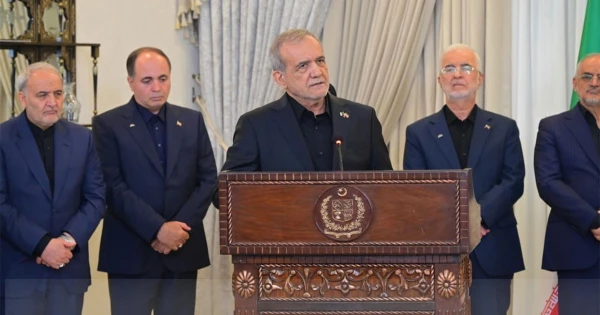
Iranian President Masoud Pezeshkian declared on Tuesday that his country’s ballistic missile program is a non-negotiable red line, asserting that without these weapons, Iran would have suffered the same fate as Gaza at the hands of the United States and Israel .
"If the missiles we have for our defence did not exist, Israel and the United States would have ploughed Iran just like Gaza, showing no mercy to either the old or the young," Pezeshkian stated during a diplomatic visit to Pakistan .
He further emphasized Tehran's steadfast position, adding, "We will never negotiate with anyone, under any circumstances, ever, about our defensive capabilities" .
Trump Shelves Bipartisan Housing Bill Signing, Demands Action on Voter Integrity Legislation

The Iranian leader's remarks come amid ongoing discussions facilitated by Pakistani mediators seeking to permanently end the conflict between Washington and Tehran. The preliminary agreement signed by the U.S. and Iran, according to Pakistani Prime Minister Shehbaz Sharif, notably does not address the issue of Tehran's ballistic arsenal . The memorandum of understanding, brokered with Islamabad’s assistance, focuses on reopening the Strait of Hormuz and easing financial restrictions but omits any missile limitations .
Sharif confirmed the exclusion, stating, "There cannot be double standards... that some countries can have ballistic missiles and Iran shouldn't have. You cannot digest this duplicity" .
The Strategic Significance of Iran’s Missile Program
Iran’s missile capabilities were originally developed to compensate for the country's weak air defenses during the war with Iraq in the 1980s . Since that time, the program has significantly advanced, with the missiles gaining both range and accuracy. Israel, located approximately 1,500 kilometers (930 miles) from Iran, has long viewed the arsenal as an existential threat due to its reach and destructive potential .
The Islamic Republic launched hundreds of missiles and thousands of drones at Gulf neighbors and Israel during the recent war ignited by joint U.S.-Israeli strikes on Iran . The conflict severely disrupted regional stability and global energy markets, with Iran capable of firing roughly 2,300 missiles throughout the duration of the fighting .
A Shift in U.S. Policy
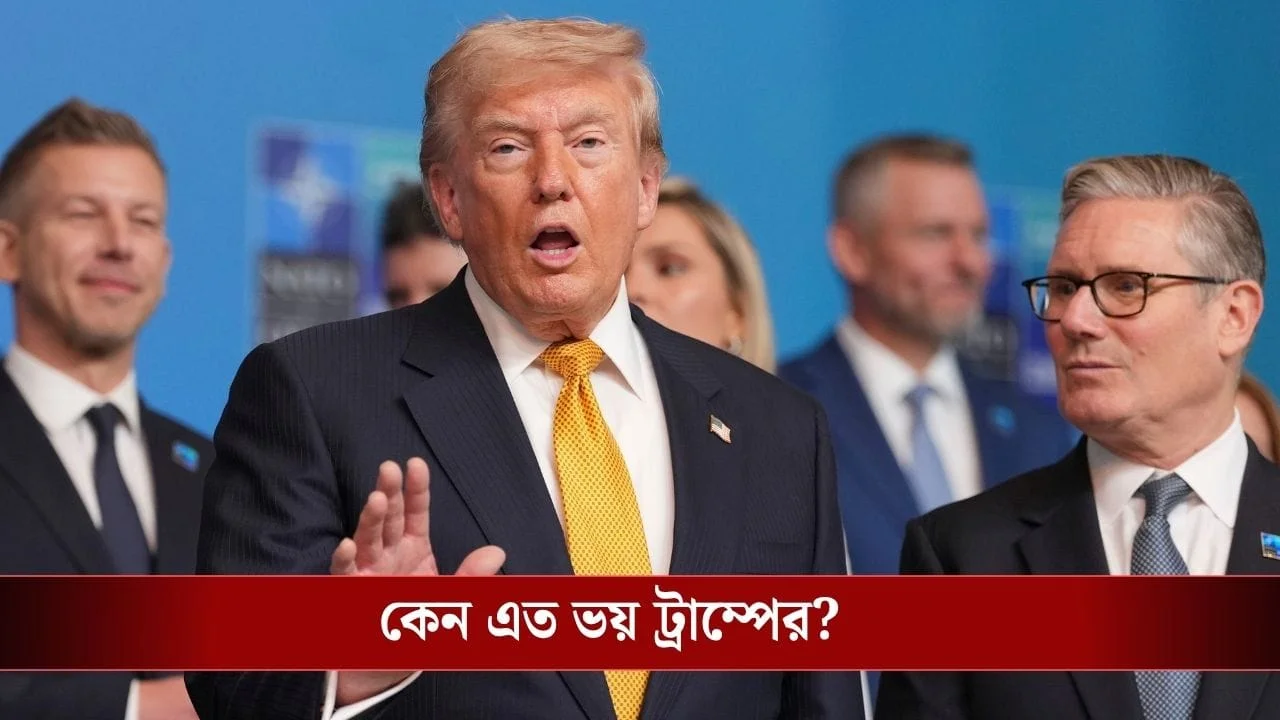
Prior to the outbreak of hostilities, the United States had sought to include restrictions on Iran's ballistic missile program and its regional proxies in any nuclear negotiations . However, in a notable shift, President Donald Trump has appeared to soften his stance. Speaking last week at the G7 summit in France, Trump suggested that Iran should be allowed to retain some missiles.
"I'm saying that if other countries have them, it's a little bit unfair for them not to have some," Trump told reporters in France . He later added that "missiles aren't the problem" compared to nuclear weapons and that it would be "OK" for Iran to have them in relative proportion to other nations in the region .
This reversal marks a significant departure from his administration's initial war aims. At the onset of the U.S. military campaign in February, Trump vowed to "destroy their missiles and raze their missile industry to the ground," a goal that Israel has strongly advocated for . Israel continues to view Tehran's missile program, combined with its support for armed proxies, as a major security threat that cannot be ignored in any long-term agreement .