



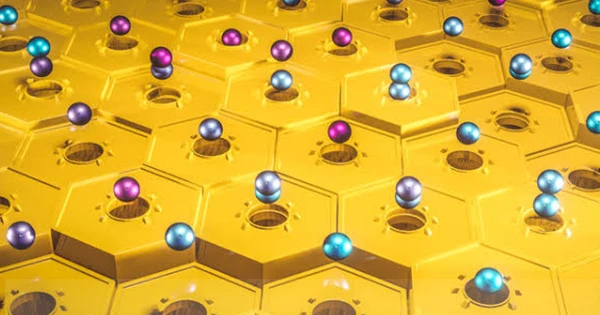
Chicago-based startup EeroQ has demonstrated a new way of building quantum computers using electrons floating on liquid helium, adding a seventh major approach to the field and potentially overcoming key limitations of existing technologies.
The company announced that its research team successfully achieved strong coupling between a microwave photon and the charge state of an electron on helium. This peer-reviewed finding, published in Nature Physics, marks the first time this critical interaction has been demonstrated in an electron-on-helium system .
The Challenge of Building a Quantum Computer
Building a practical quantum computer remains one of the most difficult technological challenges of the modern era. Six primary approaches currently dominate the field: superconducting circuits, ion traps, neutral atoms, photonics, silicon spin, and topological qubits. Major technology companies including IBM, Google, Microsoft, Amazon Web Services, Intel, and Honeywell have invested billions of dollars pursuing these paths .

Despite these massive investments, existing quantum computers remain limited to a few hundred qubits in most cases. Industry analysts estimate that commercial applications will require millions of qubits to solve truly meaningful problems .
The Promise of Electrons on Helium
The concept of using electrons floating on the surface of liquid helium as qubits was first proposed in 1999 by researchers at Bell Labs and Michigan State University. The approach was later developed further by Stephen Lyon, EeroQ's Chief Technology Officer and a professor at Princeton University .
Electrons on helium offer a compelling combination of characteristics that researchers have long sought. The surface of superfluid helium is remarkably clean, lacking the defects and electrical noise that plague solid materials. This purity helps preserve the fragile quantum states needed for computation .
The system also offers scalability advantages because it is compatible with existing CMOS semiconductor manufacturing technology. This means EeroQ could potentially leverage the same fabrication processes used to produce today's computer chips and smartphones .
The Scientific Achievement
EeroQ's research team demonstrated strong coupling by placing a single electron above the surface of superfluid helium inside a microscopic channel etched into a silicon device. They cooled the system to temperatures near absolute zero, approximately 7 millikelvin, using a dilution refrigerator .
The team used a high-impedance superconducting microwave resonator to create strong enough electric fields from individual photons to interact with the electron. They measured a coupling strength of 118 megahertz, which exceeded both the resonator's linewidth of 23 megahertz and the electron's minimum decoherence rate of 61 megahertz .
This achievement allowed the system to enter the strong-coupling regime. Scientists observed vacuum Rabi splitting, where a single resonance peak divides into two distinct modes, confirming that the electron and resonator had become hybridized and were sharing quantum information .
Future Potential and Challenges
The electronic qubit demonstrated in this experiment serves as a stepping stone toward a more powerful goal. EeroQ plans to eventually use the system to read out the spin state of electrons, which theoretical studies suggest could maintain coherence for more than ten seconds, outperforming many existing quantum technologies .
Nick Farina, co-founder and CEO of EeroQ, described the achievement as a seminal moment for quantum computing. He noted that while researchers have long recognized the potential of electrons on helium, no one had previously demonstrated the ability to couple to an actual electron qubit state in this system .
However, significant challenges remain. The team identified pure dephasing as the dominant source of decoherence, possibly caused by ripplons on the helium surface or stray charges introduced during the electron-loading process. Decoherence rates also increased substantially with temperature, rising by nearly an order of magnitude when temperatures increased from 7 millikelvin to 450 millikelvin .
Industry experts estimate that it could take up to seven years to demonstrate multi-qubit entanglement and achieve commercial fault tolerance. The quantum computing market is projected to grow substantially, potentially reaching $20 billion by 2030 .
The research team included scientists from EeroQ Corporation in Chicago, many of whom maintain close ties to the broader University of Chicago quantum ecosystem .