


The Pentagon has officially restored the name of its largest military command from U.S. Indo-Pacific Command to U.S. Pacific Command, reversing a high-profile 2018 decision that was widely viewed as a strategic signal elevating India's role in countering China's rise .
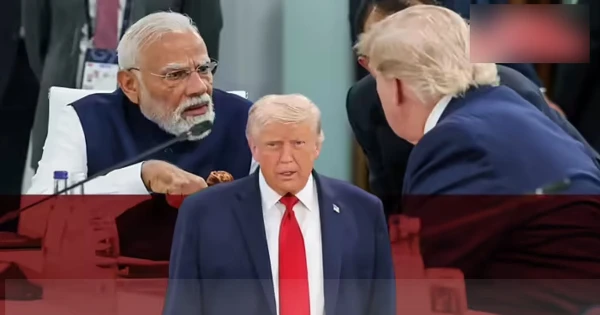
The announcement, made on June 16, stated the change was a move to "restore legacy" and honor the command's deep historical roots . However, the timing of the rebranding—occurring just before a meeting between President Donald Trump and Indian Prime Minister Narendra Modi at the G-7 summit in France—has sparked significant unease in New Delhi and among strategic observers .
Officials insist that the command's mission and its area of responsibility remain unchanged, stretching from the U.S. West Coast to India's western border . A Department of War statement emphasized that the move does not alter the command’s commitment to a free and open theater alongside its allies and partners .
B-52 Crash at Edwards AFB: What the 2026 Stratofortress Accident Reveals About an Aging Bomber Fleet

Despite these assurances, critics and analysts view the move as laden with symbolism that suggests a downgrading of India's strategic centrality in Washington's defense architecture . The 2018 decision, announced by then-Defense Secretary Jim Mattis, explicitly recognized the growing connectivity between the Indian and Pacific Oceans and positioned India as a central pillar of American efforts to balance China's influence .
G-2 Theory and a New U.S.-China Dynamic
The reversal has fueled speculation that President Trump is recalibrating relations with Beijing, leaning toward a more transactional and less confrontational approach that some strategists have termed a G-2 dynamic . This theory suggests a potential understanding where the U.S. and China would manage global affairs without direct conflict, potentially leaving India on the periphery.
Some experts argue that the name change clarifies where the U.S. will focus its competition with China: the Pacific theater, particularly the Taiwan Strait, not the Indian Ocean . This perspective suggests the U.S. is signaling that it will rely on allies like Japan and the Philippines for operations in the Pacific, while expecting India to take greater responsibility in the Indian Ocean and South Asia .
The decision also comes at a time when the future of the Quadrilateral Security Dialogue, or Quad—comprising the U.S., India, Japan, and Australia—appears uncertain. The grouping, which was framed around the Indo-Pacific concept, has yet to hold a leaders' summit in 2026, adding to speculation that it has lost momentum under the current administration . Indian lawmaker Shashi Tharoor publicly questioned whether the name change represented "another nail in the coffin of the Quad" .
Strategic Reassessment and Defense Expert Concerns
Strategic observers note that the shift reflects a broader trend in Washington under Trump’s second term, which emphasizes measurable outcomes over strategic potential . While India has grown in economic and military power, some analysts argue that the U.S. is reassessing whether India has delivered on the strategic expectations set during the first Trump administration .
Military experts in India have also voiced alarm, suggesting that the U.S. may be signaling a reduced willingness to intervene in regional conflicts involving India. They point to the absence of a Quad summit and a perceived U.S. pivot away from India in favor of other partners, including a renewed engagement with Pakistan .
Pakistan's role has reportedly gained renewed utility in Washington, particularly as a backchannel to Tehran and for its strategic position amid China's westward pivot to Eurasia . This has led some Indian strategists to warn that China could become more aggressive toward India in the coming years, and that New Delhi must rapidly increase its military capabilities to address future challenges independently .
While the Pentagon maintains the change is merely a restoration of legacy, the renaming has undeniably raised questions about the U.S. commitment to the Indo-Pacific framework and India's place within it. For now, the move stands as a powerful signal that Washington is carefully recalibrating its strategic priorities in a rapidly changing geopolitical landscape .