


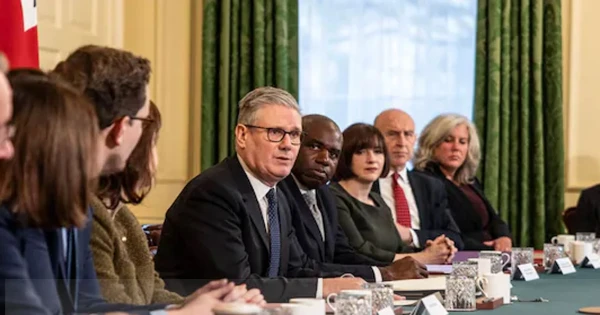
Labour Party sources say Prime Minister Keir Starmer is preparing to resign after a rapid erosion of support among MPs and Cabinet ministers following Andy Burnham’s by-election victory in Makerfield. Allies describe a flurry of private conversations and shifting allegiances that have prompted senior figures around Starmer to urge an orderly timetable for his departure rather than a bruising leadership contest.
Within government, several senior ministers privately told Starmer over the weekend that his position is increasingly untenable. Those close to the prime minister say he has begun reflecting on how best to protect his political legacy and to ensure an orderly handover. Some sources describe a sense that the “game is up” and that continuing to fight a leadership battle would risk deeper division across the party.
Support among MPs for Starmer has reportedly dropped to a small core of personal friends and close staff, with a number of former loyalists now advocating a clear exit plan. Multiple Cabinet members who were previously publicly supportive have privately urged Starmer to set a timetable for leaving office rather than contest the leadership. The requests, according to those briefed on the conversations, have come from figures across the party’s senior ranks.

Andy Burnham’s backers say the mayor has built significant momentum since winning the Makerfield by-election, with claims that close to 300 MPs are prepared to back him. Burnham’s allies told colleagues that this scale of support would make any leadership contest unlikely to succeed for the incumbent, and that his accession could be achieved through a largely uncontested transition.
Several senior Labour figures expressed concern that a head-to-head leadership fight would be damaging. Some Cabinet sources said it would be “humiliating” for Starmer to fight a contest he was unlikely to win, while others warned that refusing to step aside risked triggering mass resignations from ministers and office-holders seeking to accelerate change. Starmer’s chief whip has reportedly conveyed to the prime minister the growing desire among backbenchers for an orderly transfer of power.
Prominent members of the shadow cabinet and former ministers have privately urged a swift resolution. The Transport Secretary and the Foreign Secretary are among those said to have told Starmer to announce a departure timetable, while other senior figures who previously supported him have also made similar representations. Those advisers argue that a planned exit would preserve institutional stability and allow the party to regroup ahead of the next general election.
Allies who remain close to Starmer acknowledge the political realities are shifting. Some describe his decision as a duty to avoid prolonged turmoil within both government and party structures, suggesting that standing down voluntarily would limit damage and allow Labour to present a united front under new leadership. The language used by those around him suggests an acceptance that remaining in post could do more harm than good to both policy continuity and electoral prospects.
Wes Streeting, the former health secretary, has been mentioned as a potential rival to Burnham, and sources say he has prepared campaign materials and messaging for a leadership bid. Streeting’s team has insisted he is ready to run, with campaign assets and a slogan prepared. Yet insiders also report ongoing private discussions between Streeting and Burnham, with both men meeting and talking regularly in recent days. While some within Streeting’s circle play down any deal-making, political observers say that practical considerations and the concentration of support behind Burnham make a contest less likely.
Labour insiders describe a period of careful restraint from potential challengers, with both Burnham and Streeting giving Starmer space to make a decision. That restraint is framed as an effort to avoid inflaming tensions and to allow an orderly transition that would minimize disruption to government operations. Party sources say the preferable outcome for many senior figures is for Starmer to announce a clear timetable for stepping down, enabling a managed selection process for a successor.
Concerns about instability extend beyond immediate leadership mechanics. Some MPs and ministers argue that prolonged infighting would distract from urgent policy responsibilities, potentially undermining public services and weakening Labour’s position with voters. Advocates for an orderly handover emphasize that a rapid but managed transition would help the party focus on policy development and rebuilding public trust ahead of national elections.
The scale of Burnham’s reported backing has intensified those calls. Supporters frame him as a unifying figure capable of broadening Labour’s electoral coalition, pointing to his regional appeal and record in local and mayoral politics. Critics, meanwhile, warn that any abrupt change in leadership carries risks, including internal disputes over policy direction and personnel reshuffles that could unsettle civil servants and Whitehall departments.
As pressure mounts, those close to Starmer say he is weighing options carefully, with some allies predicting an announcement on timing within days. Others caution that until an official statement is made, plans remain fluid and negotiations among leading figures could reshape the path forward. The coming week is likely to be decisive, party insiders say, with key actors watching whether Starmer will set a departure timetable or instead fight to remain.
If Starmer does move to step aside, Labour faces the immediate task of managing a leadership transition while safeguarding government functions and broadening its appeal to voters. A controlled, transparent process that limits disruption and provides clarity to ministers, civil servants, and the public will be central to restoring stability and preparing the party for the electoral tests ahead.