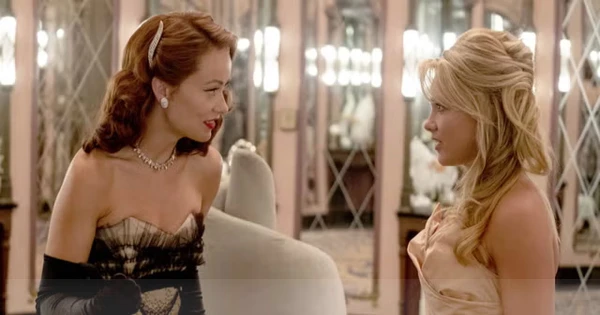
Olivia Wilde is finally pushing back against the explosive rumors that plagued the production of her 2022 film "Don't Worry Darling," insisting that the alleged on-set drama involving star Florence Pugh never happened the way tabloids reported.
In a candid new interview, the director addressed the swirling speculation that consumed the film's release cycle, including claims of a heated confrontation with Pugh and accusations of unprofessional behavior on set. Wilde revealed that she was explicitly instructed by the studio to remain silent as gossip spiraled out of control, a decision she now admits she resents.
"I've never had a screaming match on my set. I was never not available on set. I wanted to be like, 'None of this is true,'" Wilde told The Cut, pushing back against years of speculation that painted a chaotic picture behind the scenes of her psychological thriller.

The film, which starred Pugh and Harry Styles, became tabloid fodder long before its theatrical release in September 2022. Reports surfaced alleging tension between Wilde and Pugh, with anonymous sources claiming the director was frequently absent from set due to her budding romance with Styles, who had joined the cast.
Vulture reported shortly before the film's debut that a "blowout argument" occurred between the director and her leading lady approximately three-quarters of the way through production. According to the report, Pugh had grown frustrated with what she perceived as Wilde's unexplained absences and allegedly contacted New Line Cinema's then-chairman Toby Emmerich to ensure she would not have to participate in the film's promotional campaign.
Wilde now says the studio and others involved in the production pressured her to stay silent despite the damaging narratives circulating in the press.
"I was told, 'Don't say a f---ing word. Just go out there and smile,'" she recalled. "I resent that, but it taught me it's not the way I want to handle things."
The director previously expressed regret over her decision to remain quiet during the press fiasco in an appearance on the "Call Her Daddy" podcast. She described feeling profoundly disconnected from the person being portrayed in the media, watching complete fiction be presented as fact.
"I never felt more disconnected from the person that people were talking about," Wilde said at the time. "It was also very strange to see complete fiction traded as fact."
She admitted feeling frustrated that she couldn't defend herself, particularly when the reputation of the entire production team was at stake. "I felt I was working on behalf of hundreds of people who worked on this movie," she explained. "I felt frustrated that I couldn't defend myself but it was not about me."
The rumors of unprofessionalism on set prompted an unusual response from the film's crew. Approximately 40 members who worked on "Don't Worry Darling" issued a joint statement in support of Wilde following the Vulture report, collectively denying that any screaming match ever occurred.
The crew, which included producer Katie Silberman, cinematographer Matthew Libatique, and costume designer Arianne Phillips, praised Wilde as "an incredible leader and director who was present and involved with every aspect of production." They firmly rejected what they called "allegations about unprofessional behavior" as "completely false."
"As a crew, we've avoided addressing the absurd gossip surrounding the movie we're so proud of, but feel the need to correct the anonymous 'sources' quoted in a recent article," the statement read. "There was never a screaming match between our director and anyone, let alone a member of our cast."
The crew members insisted on attaching their names to the statement, describing themselves as "real people who worked on the film, and who have witnessed and benefitted from the collaborative and safe space Olivia creates as a director and leader."
Reflecting on the intense scrutiny she faced during that period, Wilde turned to advice actress Jennifer Garner gave her more than a decade ago. Garner had likened the public's tendency to assign celebrities archetypal roles, comparing it to being cast in a soap opera.
"She said it's like you get cast in a soap opera by the public. And they assign you an obvious archetype: the damsel in distress, the good girl, the pretty girl," Wilde recalled. "I became the full-on villain. Like Cruella."
The director's experience highlights the challenges female filmmakers often face when navigating the intersection of celebrity culture and professional credibility. Despite the tabloid frenzy, "Don't Worry Darling" went on to gross over $86 million worldwide against a production budget of approximately $35 million.
Wilde's willingness to address the rumors directly now marks a departure from the strategy she was advised to adopt during the film's release, when silence was seen as the safer route. While she acknowledges that staying quiet may have protected the film's commercial prospects, she makes clear that it came at a personal cost.
The director's comments offer a rare behind-the-scenes look at how studios manage public relations crises during high-profile releases, particularly when personal relationships become entangled with professional projects. Wilde's experience underscores the pressure celebrities face when forced to choose between defending their reputation and protecting a project that involves hundreds of collaborators.
Since the "Don't Worry Darling" release cycle, Wilde has remained active in the entertainment industry, developing new projects and continuing her work as both director and producer. The lessons learned from that tumultuous period, she suggests, have shaped her approach to handling public scrutiny moving forward.
The crew's unified defense of Wilde also raises questions about the reliability of anonymous sources in entertainment journalism, particularly when those sources may have their own agendas. The incident has been cited by media critics as an example of how unverified gossip can dominate coverage of female-led productions.
For now, Wilde appears determined to move forward, even as she continues to process the experience of being cast as Hollywood's villain du jour. Whether the public perception of that period will shift remains to be seen, but the director seems at peace with finally setting the record straight.