The 2026 FIFA World Cup expanded format has transformed the tournament’s knockout phase into a sprawling, high-stakes contest where bracket strategy, third-place qualifications and smart predictions matter as much to fans as each match result. The event’s new 48-team layout produces a Round of 32 that reshapes the competition’s dynamics, and a growing ecosystem of printable brackets and prediction tools lets supporters map every possible road to the final. This guide explains how the bracket works, where to get and customize printable PDFs, how common predictor tools operate, which third-place scenarios matter most and what the Round of 32 means for the title race.
How the 48-team format builds the bracket
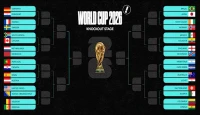
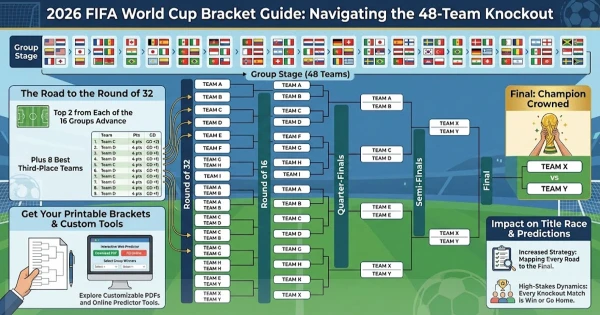
FIFA’s 2026 format expands the field from 32 to 48 teams, divided into 12 groups of four, with the top two teams from each group advancing alongside the eight best third-place finishers. This arrangement produces a Round of 32 rather than the Round of 16 familiar from previous editions. The extra knockout round increases the number of direct-elimination matches, elevates the importance of group tiebreakers and creates more complex bracket permutations for fans to follow and predict. The extended bracket rewards depth and consistency: teams that navigate six or seven matches to reach the final must sustain form across more opponents, more travel and a longer tournament timeline.
Printable brackets and why fans use them
Printable World Cup brackets remain one of the most popular ways fans track the knockout stage. A printable bracket — usually offered as a PDF — visually lays out all knockout pairings, dates, venues and potential matchups based on group finishing positions. Fans download and fill these brackets before the group stage concludes or after it locks, using them for office pools, family competitions or personal tracking. Many printable brackets add features such as spaces for tiebreaker notes, tables for the best third-place qualifiers and built-in schedules to help with planning viewings across time zones. For content creators and publishers, downloadable PDFs are easy assets to share across social platforms, newsletters and video descriptions.
World Cup 'Has Been Sold Out,' Claims German Legend Philipp Lahm in Scathing Attack on FIFA

Where to find high-quality printable PDFs
Reputable sports publishers, federation websites and mainstream media outlets typically supply updated, printer-ready World Cup brackets in PDF format. These files are designed for clarity, with large type for team names, match times, and knockout paths that are simple to read on mobile and paper. Many providers also offer editable versions optimized for desktop or tablet annotation. When choosing a downloadable bracket, look for one that clearly marks the Round of 32 pairings, lists kickoff times in your preferred time zone, and includes an explicit section for selecting the eight third-place teams that will advance — this avoids confusion when filling the bracket manually.
Predictor tools: simulators, expert brackets and community picks
A wide range of prediction methods is available, broadly falling into three categories: simulation engines, expert brackets and community-driven pools. Simulation engines use historical data, team ratings, player availability and probabilistic models to run thousands or tens of thousands of tournament simulations. These tools generate percentage chances for each team to reach certain rounds or to win the title, and they frequently power interactive “bracket predictor” widgets that let users test hypothetical outcomes. Expert brackets are produced by seasoned journalists, national team analysts and former players, and while subjective, they incorporate qualitative knowledge about tactics and team form. Community picks aggregate millions of user-submitted brackets and provide an informal crowd-based consensus. Each approach has strengths: simulations give objective odds, experts supply context, and crowds reveal popular sentiment.
How third-place qualifiers complicate brackets
The eight best third-place teams create significant bracket uncertainty because group rankings and tie-breaking criteria — goal difference, goals scored and disciplinary points — determine which third-place sides advance. For bracket holders, correctly identifying which third-place teams will qualify can yield major points in pools and dramatically change projected knockout matchups. Many bracket competitions incorporate bonus points for correctly choosing third-place qualifiers or the correct order of every group. Predictors that integrate probability models perform better at this task because they can simulate tie-break scenarios that determine which third-place teams move forward.
Round of 32 matchups: competitive balance and travel implications
The Round of 32 pairs group winners and runners-up with third-place qualifiers in a complex web of cross-group matchups, increasing variability in opponent quality from one knockout tie to the next. This structure can produce early, high-profile clashes as well as lopsided contests where a strong group winner faces a lower-ranked third-place team. For a tournament hosted across a large geographic footprint — including multiple host nations and stadium regions — travel and rest cycles become crucial. Teams advancing to the Round of 32 must manage logistics and recovery carefully; scheduling disparities and long-distance flights can influence performance in successive rounds. For fans filling brackets, accounting for travel and rotation depth can improve the accuracy of predictions.
Using bracket predictors effectively
To make smart picks, combine probabilistic simulations with qualitative scouting. Start with a simulation engine to generate a baseline set of odds and likely matchups, then overlay expert assessments about injuries, coaching changes and recent form. For example, if simulations show a narrow chance for a particular third-place team to advance but that team is missing key starters or faces a difficult goal-difference tiebreaker, adjusting picks away from that outcome may be prudent. Conversely, teams on upward momentum or with favorable schedules often outperform raw Elo or ranking-based predictions. Many successful bracket entries blend analytics and context rather than relying on a single source.
Common predictor features and how to use them
Predictor platforms typically include drag-and-drop bracket builders, multi-bracket capability, matchup simulators and social sharing tools. Drag-and-drop interfaces let users quickly craft custom scenarios and lock multiple versions of the bracket to hedge against surprises. Matchup simulators provide head-to-head probabilities based on team metrics and can help users decide between two plausible finalists. Multi-bracket entries — allowed by several sites — permit users to submit several different scenarios and increase their odds in bracket contests. When using any predictor, verify its lock time (most close bracket edits at the first knockout kickoff) and note whether the tool supports regional time zones for accurate scheduling.
How publishers and creators can leverage brackets
For digital content creators, brackets are invaluable engagement drivers. Publishing a printable PDF or an interactive bracket on a site encourages downloads, social sharing and newsletter signups. Bracket-related content performs well on discovery platforms because it invites repeat visits: fans often return to update their picks after group matches conclude or as knockout fixtures change. Multimedia creators can expand reach by producing quick explainer videos on how to fill brackets, analytic breakdowns of probable Round of 32 matchups, and printable bracket promotions timed to coincide with bracket lock deadlines.
To attract a U.S. audience and perform well on platforms such as Google Discover, title tags and metadata should target timely queries: “World Cup 2026 bracket printable PDF,” “Round of 32 bracket predictor,” and “best third-place strategies.” Content that offers free downloads, interactive bracket builders, and live-updated match listings tends to earn higher engagement. Pages optimized for mobile loading, clear visual hierarchy and fast downloads for PDF assets also rank better in search and surface more prominently in discovery feeds. Creators should include structured data for sporting events and update pages as each round locks to maintain freshness — a critical factor for discovery algorithms.
Practical tips for fans filling brackets
-
Lock a primary bracket early, then use one or two hedge brackets to cover plausible upsets and third-place qualifiers.
-
Track tiebreaker metrics: goal difference and goals scored often decide third-place advancement.
-
Consider squad depth and rotation policy; teams with deeper benches often fare better through multiple knockout rounds.
-
Use matchup-specific analysis instead of pure rankings; matchup styles can neutralize higher-ranked teams.
-
Check kickoff times and venue changes when planning watch parties to avoid scheduling surprises.
The Round of 32’s impact on the title outlook
The additional knockout round increases variance: a favored team can be eliminated sooner by a single poor performance, but the format also rewards sustained excellence across more matches. Historically strong nations still enter as favorites, but dark horses with favorable Round of 32 draws or timely form surges can quickly become contenders. For bettors, pool players and predictive-modelers, the Round of 32 introduces both risk and opportunity — predicting which third-place qualifiers carry momentum can be as valuable as picking a finalist.
The 2026 World Cup bracket presents fans and content creators with new complexity and opportunity. Printable PDFs, advanced simulators and expert brackets help translate group-stage results into clear knockout pathways, while the Round of 32 reshapes strategy, prediction and scheduling considerations. Whether you’re filling a bracket for a friendly pool, publishing a downloadable PDF for your audience or testing simulation tools, combining probabilistic models with tactical context offers the best route to accurate, engaging predictions. Use updated printable brackets, track third-place tiebreakers closely and adapt picks when injuries or scheduling variables change — those steps will make your bracket both competitive and credible.