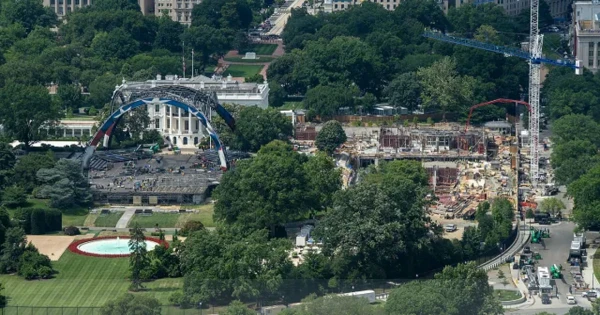
The Trump administration quietly approved a no-bid contract worth up to $500 million to construct a grand new ballroom in the White House’s East Wing. This unusual arrangement has drawn attention for bypassing standard federal procurement rules intended to ensure competition and control taxpayer costs.
White House officials routed the agreement through the Executive Residence, an office responsible for repairs and furnishings that operates under exemptions from typical competitive bidding requirements. The contract was awarded to Clark Construction, a major firm with extensive experience on high-profile projects in the Washington area.
Construction of the new facility follows the demolition of the original East Wing in late 2025. Planners envision a significantly larger space capable of hosting major state events and accommodating up to 900 or more guests, addressing long-standing limitations in the White House’s existing event areas.

Project costs have risen steadily since initial announcements. What began as an estimated $200 million endeavor has grown substantially, with internal projections at times reaching $600 million. Supporters emphasize private donations from corporations and individuals as the primary funding source, though records indicate a notable portion may draw on public resources.
President Trump has taken a personal role in aspects of the project, including negotiations over specific expenses such as materials. Administration officials maintain the ballroom will enhance the White House’s ability to host diplomatic gatherings and official functions for future presidents, preserving architectural harmony with the historic main residence.
The initiative reflects broader efforts to modernize White House facilities while navigating complex funding and oversight processes. Critics have raised questions about transparency and the use of no-bid procedures, highlighting ongoing debates over government contracting practices during major renovations.
As work progresses on the East Wing site, the new ballroom is positioned to become a signature addition to the presidential complex. It aims to provide a secure, large-scale venue suitable for high-level receptions and national ceremonies well into the future. Officials expect completion within the current term, though timelines can shift with large-scale builds involving historic preservation standards and security requirements.
This development underscores the challenges of balancing ambitious infrastructure goals with public accountability. The project continues amid scrutiny over costs and contracting methods, as the administration pushes forward with plans to elevate the White House’s event capabilities for generations to come.