


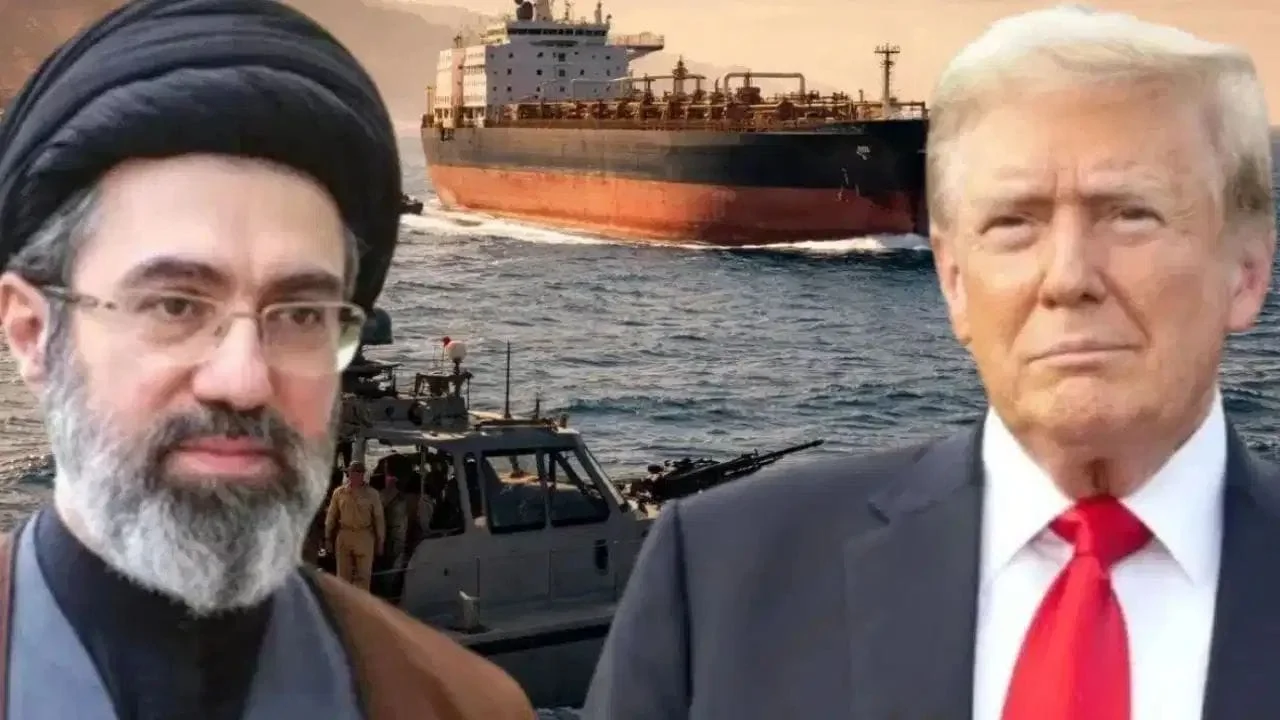
Just days after a landmark agreement reopened one of the world’s most critical waterways, Iran has ordered the Strait of Hormuz closed once more. The Iranian military announced the decision on Saturday, citing what it described as "clear violations" of the new ceasefire by both the United States and Israel, specifically pointing to ongoing Israeli military operations in southern Lebanon .
The move represents a dramatic escalation in tensions and casts immediate doubt on the durability of the interim agreement signed earlier this week. The announcement was made by Iran's Khatam al-Anbiya Central Command, the country's top coalition military headquarters, and was followed by a separate statement from the naval arm of the Islamic Revolutionary Guard Corps (IRGC) .
The IRGC Navy issued a stark warning to all vessels, declaring the strait closed and advising commercial ships to stay away, stating that their security would be "jeopardized" if they approached . Iran has framed this action as the "first step" in its response to what it perceives as aggression, with military officials warning that subsequent phases are planned if the alleged violations continue .

US Offers Contradictory Assessment
In a confusing turn of events, the United States military has offered a starkly different assessment of the situation on the water. U.S. Central Command (CENTCOM) released a statement indicating that commercial traffic through the strait actually increased on Saturday, with 55 merchant ships transiting the waterway .
CENTCOM confirmed that "safe passage through the international waterway remained intact today," and reported that more than 17 million barrels of oil had moved to global markets . This contradicts Iran’s declaration of a complete closure. U.S. officials maintain that they are monitoring the situation to ensure the freedom of navigation and that they possess no evidence that Iran has effectively shut down the strait .
The Fragile Ceasefire in Lebanon
The root of this fresh crisis lies in the volatile situation in Lebanon. The 14-point memorandum signed by the U.S. and Iran stipulated an "immediate and permanent termination of military operations on all fronts, including in Lebanon" . However, Israel has continued to conduct strikes against Hezbollah targets in southern Lebanon, leading to dozens of reported casualties in the past 24 hours alone .
Iran has accused the United States of failing to enforce the first clause of the deal, which was intended to halt the fighting in Lebanon. Israel and Hezbollah have both accused each other of violating the newly announced ceasefire, and a Hezbollah official has stated the group does not recognize the agreement announced by U.S. officials . The conflict persists as Israeli forces continue operations to remove what they describe as immediate threats in the region .
Talks Proceed Amid Tension
Despite the rising military tension, diplomatic channels remain partially open. Negotiations between the U.S. and Iran regarding a final nuclear agreement are still scheduled to begin in Bürgenstock, Switzerland, on Sunday .
However, Iran's foreign ministry spokesman, Esmail Baghaei, has signaled that the talks will be focused on demanding that the U.S. fulfill its existing commitments. He emphasized that negotiations toward a final deal will only commence when the U.S. implements key provisions of the memorandum, including ending the fighting in Lebanon .
Vice President JD Vance, who was originally scheduled to travel to Switzerland for the talks, remains in the U.S. but confirmed that top American negotiators are already in place . Vance has publicly defended the agreement as a win for the United States, despite growing criticism from Israeli lawmakers and some U.S. political figures who argue the deal provides economic relief to Iran without addressing its nuclear program or ballistic missile capabilities .
Global Economic Concerns
The re-imposition of the strait closure raises immediate concerns for global energy markets. The Strait of Hormuz is a critical chokepoint through which approximately one-fifth of the world's oil supply passes .
Just days ago, markets had begun to calm after the initial signing of the deal, with oil prices dropping significantly from wartime peaks. The new closure threatens to re-introduce volatility and instability into the global economy . Analysts note that even before this new development, the recovery of shipping traffic had been slow and fraught with caution due to logistical hurdles and security fears .
The international community will be watching closely as the situation unfolds, with the potential for further strategic and economic consequences if the disagreement cannot be resolved quickly. For now, the brief window of calm appears to have closed, leaving the future of the U.S.-Iran deal and regional stability in serious question.