The intersection of international sports and global politics has long been a source of intense debate. Recently, this friction has sparked widespread discussions regarding how Western media outlets approach athletes from different nations during major tournaments. Questions about journalistic consistency are growing.
Comedian and political commentator Trevor Noah recently highlighted a glaring discrepancy in sports journalism. He questioned why athletes from African or Middle Eastern nations are routinely forced to answer for their governments' actions, while European players face no similar scrutiny. This observation resonated globally.
Noah’s comments emerged following the intense media pressure placed on Iranian athletes during international matches. Western journalists repeatedly directed politically charged questions toward these players immediately after their games. The situation underscored a broader pattern of selective accountability within global sports broadcasting.

This dynamic extends far beyond the Iranian team. It highlights a pervasive disparity in global journalism. Some athletes are treated purely as competitors, while others are suddenly transformed into political ambassadors, defendants, or subjects of intense moral examination based entirely on their national origin.
Major soccer tournaments, particularly the FIFA World Cup, are frequently promoted as apolitical spaces where the beautiful game transcends global conflicts. However, history demonstrates that this idealized vision is an illusion. Politics and geopolitical tensions have always been deeply embedded in international sports.
International governing bodies have historically excluded nations based on their governmental policies. Russia currently faces bans from global competitions due to its invasion of Ukraine. Decades ago, South Africa was similarly banned from international sporting events because of its institutionalized apartheid system and severe racial segregation.
Conversely, other nations with controversial military actions or domestic policies continue to participate without facing similar institutional bans. The Israeli national team competes in qualifiers despite ongoing conflicts in Palestinian territories, Lebanon, and Syria. Meanwhile, the United States has never faced a ban despite its involvement in numerous overseas conflicts.
This perceived inconsistency is not limited to the soccer pitch. International cultural events, such as the Eurovision Song Contest, also face severe scrutiny regarding their participant selection. The inclusion of Israel in Eurovision has generated significant controversy, reflecting the same geopolitical tensions and debates over selective moral enforcement.
Trevor Noah’s critique targets a journalistic framework that claims to hold power accountable but often reflects existing power structures. Western media extensively debated the appropriateness of Russia and Qatar hosting the World Cup in 2018 and 2022. Human rights discussions dominated the news cycle for months.
However, similar scrutiny is rarely applied to the United States when it hosts global tournaments. Despite controversial foreign policy decisions, military interventions, and strict border enforcement, the United States frequently hosts major international events without widespread calls for sporting boycotts or intense moral evaluations.
This selective accountability is evident within both sporting organizations and media coverage. Governing bodies decide which nations are banned and which are allowed to host. Simultaneously, media outlets determine which teams face relentless political questioning and which are allowed to focus solely on athletic performance.
Western soccer players are generally perceived as autonomous individuals representing their nations on a strictly athletic level. They are celebrated for their skills and rarely asked to defend their governments. Their participation is framed as a pure sporting endeavor, entirely separate from their nations' political trajectories.
In contrast, athletes from nations like Iran, Egypt, Saudi Arabia, Morocco, Senegal, and Ghana are frequently cast as direct representatives of their respective regimes. Their individual identities are often overshadowed by Western geopolitical concerns. They are expected to explain, defend, or apologize for complex national policies.
During a match in Seattle promoted locally as a pride event, both Iranian and Egyptian teams faced persistent questions regarding LGBTQ rights. Despite attempts by team officials to keep the focus on soccer, journalists remained relentless. The players were treated as official spokespeople for their nations' domestic policies.
The core issue is not the importance of LGBTQ rights, global conflicts, or systemic oppression. These are undeniably critical human rights issues that warrant serious global attention. Journalists absolutely have a responsibility to ask difficult questions and uncover truths in regions where freedoms are restricted.
The problem arises when these rigorous journalistic standards are selectively applied. When tough questions become a mandatory requirement only for athletes holding specific passports, the practice reveals a clear double standard. It transforms sports journalism into a tool for geopolitical bullying rather than objective reporting.
American athletes are rarely asked to account for extensive military interventions, controversial border policies, systemic racism, or police brutality during international press conferences. They step onto the field as unburdened competitors. The actions of the United States government are effectively shielded from the sporting arena.
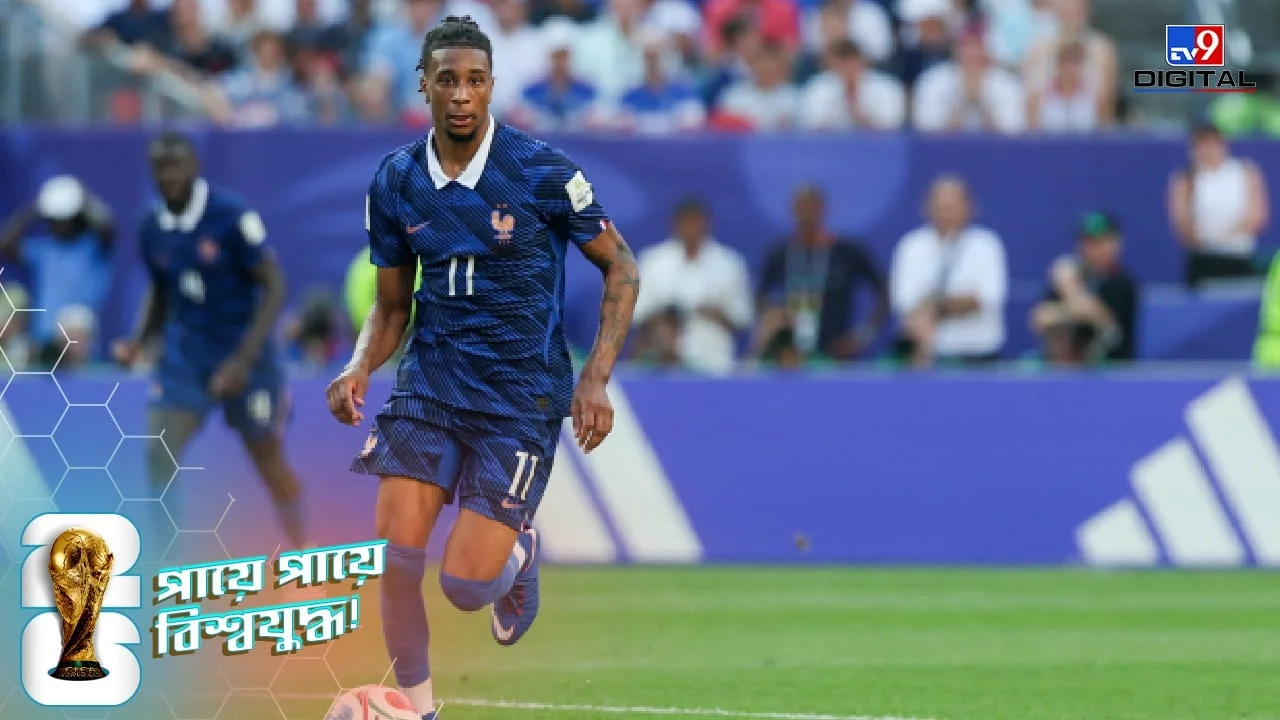
Similarly, English players are not typically interrogated about Britain's complex colonial history or its ongoing arms exports. French athletes are not pressured to explain their nation's military interventions across various African nations. German players are not subjected to intense questioning regarding domestic protests or strict policing policies.
Even when European teams engage in political acts, it is framed differently. During the Qatar World Cup, European teams wearing "OneLove" armbands or covering their mouths were viewed as exercising their freedom of expression. Their protests were voluntary actions, not forced confessions extracted by journalists as a precondition for playing.
This voluntary activism stands in stark contrast to the mandatory political defense expected from Global South athletes. Western players speak out on their own terms, choosing which causes to support. They are never forced to denounce their own governments before being allowed to discuss game strategy, injuries, or opponents.
For many athletes from the Global South, pre-match press conferences feel like ideological checkpoints. Before they can address tactical formations or recovery routines, they are expected to explain their country's religion, legal system, or military actions. This environment creates an incredibly hostile and unfair playing field.
This framework is deeply familiar to observers of Middle Eastern geopolitics. Palestinians, for instance, have historically been pressured to explicitly condemn Hamas before being permitted to discuss the humanitarian crisis in Gaza. This requirement acts as a moral checkpoint before their grievances are considered valid.
The intention behind these mandatory condemnations is not genuine clarification. Instead, it serves as a system of classification. It establishes a predetermined moral hierarchy at the very beginning of the conversation. Western narratives are positioned as the ultimate standard, requiring absolute compliance before any dialogue can proceed.
This exact logic is applied during international soccer tournaments. Iranian athletes are required to denounce Iran. Egyptian players are expected to critique Egypt. African and Middle Eastern athletes must prove they understand and subscribe to Western moral terminology before their athletic achievements are recognized.
Meanwhile, American and British athletes are never subjected to these ideological purity tests. They are not required to condemn their nations' foreign policies or historical misdeeds as a prerequisite for competition. This imbalance perpetuates a flawed system where Western nations are exempt from the accountability they demand.
The underlying issue is not the existence of politics in sports. Political tensions have always been intertwined with international athletic competition. The central problem is determining who is forced to carry the burden of political representation and who is granted the privilege of competing as a simple athlete.
Western media outlets are not merely asking questions in these environments. They are actively reinforcing a narrative constructed by Western governments over decades. This narrative suggests that the West represents the ultimate moral authority, while the rest of the world must continuously justify its right to exist on the global stage.
Ultimately, the goal of international sports should be fair competition. However, when media coverage applies unequal standards of accountability, it diminishes the spirit of the game. Recognizing and addressing these journalistic double standards is essential for creating a truly equitable environment for all global athletes.